
How to Identify the 1936 Voyageur Silver Dollar
The final Voyageur dollar of George V's reign, sharing the 1935 design, with a famous ultra-rare 'dot' variety struck posthumously after his death.
Read the full 1936 Voyageur Silver Dollar encyclopedia entry →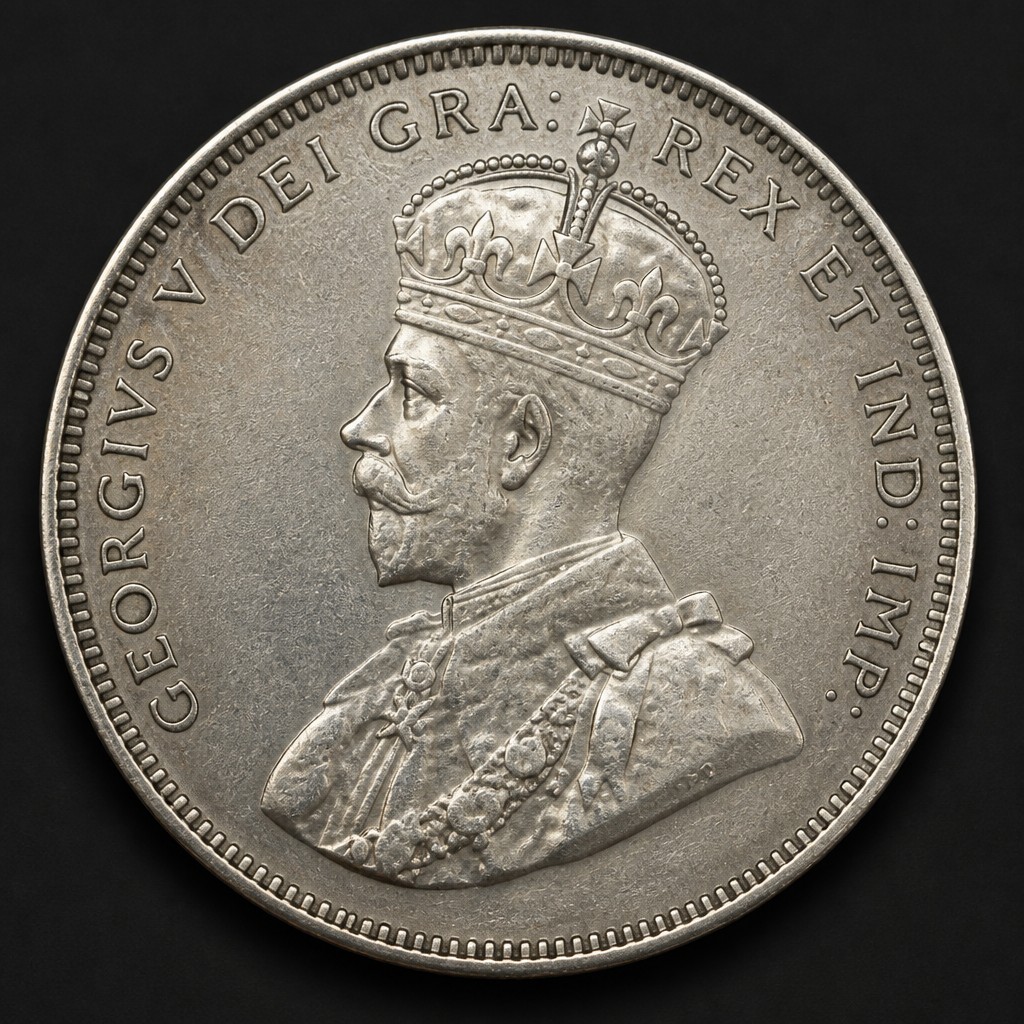
What Is This Coin?
This coin continues the Voyageur silver dollar design introduced in 1935, struck during George V's final year on the throne (he died in January 1936). It also gave rise to one of Canada's most celebrated rarities, the "1936 dot" dollar, discussed below. The standard 1936 issue is otherwise a straightforward continuation of the series and is generally comparable in availability to the 1935 dollar that preceded it.
Obverse Design
The obverse repeats the mature George V portrait used the previous year, facing left, with "GEORGIVS V DEI GRA REX ET IND IMP" around the bust. There is no visible change from the 1935 obverse design.
Reverse Design
The reverse shows the same Voyageur and Indigenous guide canoe scene by Emanuel Hahn, with "CANADA" and "1936" around the design. On the rare "dot" variety, a small raised dot appears below the date on the reverse, marking coins that were actually struck in 1937 using leftover 1936 dies while new George VI dies were being prepared.
Size, Weight & Metal
Specifications match the 1935 issue: .800 fine silver, about 23.33 grams, 36 mm diameter, with a reeded edge.
Mint Marks & Where to Find Them
No conventional mint mark exists, but the small dot below the date on certain 1936-dated dollars functions as a special identifying mark for this famous variety, positioned just beneath the "6" in the date. Because the dot is tiny and easily worn away or obscured by dirt, a clean coin and good magnification are essential before drawing any conclusions.
Telling It Apart From Similar Coins
Because the standard 1936 design matches 1935 so closely, the date is the main differentiator between those two years. Separately, checking carefully for the small dot beneath the date distinguishes the ordinary 1936 dollar from the celebrated dot variety, which is exceptionally scarce and requires close, magnified examination to confirm. It should also not be confused with later commemorative-themed dollars, since the plain Voyageur canoe scene without any special anniversary dates identifies it as a regular-issue coin rather than a commemorative.
Judging Condition at a Glance
As with the 1935 issue, look at the paddler's shoulders, the canoe's gunwale, and George V's hair for wear. Full, crisp water ripple detail and sharply defined figures indicate a higher-grade coin, while smoothed, flat surfaces point to significant circulation. Retained luster in the fields around "CANADA" and the date is also a useful sign of a lightly circulated or uncirculated example.
Authenticity Red Flags
Given the fame and value of the dot variety, be especially cautious of coins with an added or fabricated dot beneath the date — genuine dots have a specific size, shape, and position that specialists check closely, and professional authentication is strongly recommended before assuming a coin is a genuine dot variety. For standard 1936 dollars, the same casting and weight red flags apply as with other silver dollars of this design. Never assume a dot is genuine based on a photograph alone; in-hand examination under magnification, ideally by a specialist, is the only reliable way to confirm this variety.
Frequently asked questions
What is the 1936 'dot' dollar?
It's an extremely rare variety struck in 1937 using leftover 1936 dies marked with a small dot below the date, produced while new George VI dies were being finalized.
How do I check for the dot on my coin?
Examine the area directly below the date on the reverse under magnification; the dot is small and easy to miss without careful inspection.
Is every 1936 Voyageur dollar rare?
No, the standard 1936 dollar without the dot is a normal circulation-era silver dollar; only the dot variety is exceptionally scarce and valuable.
Why did George V's reign affect this coin's production?
He died in January 1936, and the mint had to continue using his older dies briefly into 1937 before George VI's coinage was ready, creating the unusual dot-marked pieces.