
How to Identify the 1936 Doubled Die Lincoln Cent
A guide to spotting doubling in the lettering and date of the 1936 doubled die Lincoln cent, one of the earliest and most famous doubled die varieties.
Read the full 1936 Doubled Die Lincoln Cent encyclopedia entry →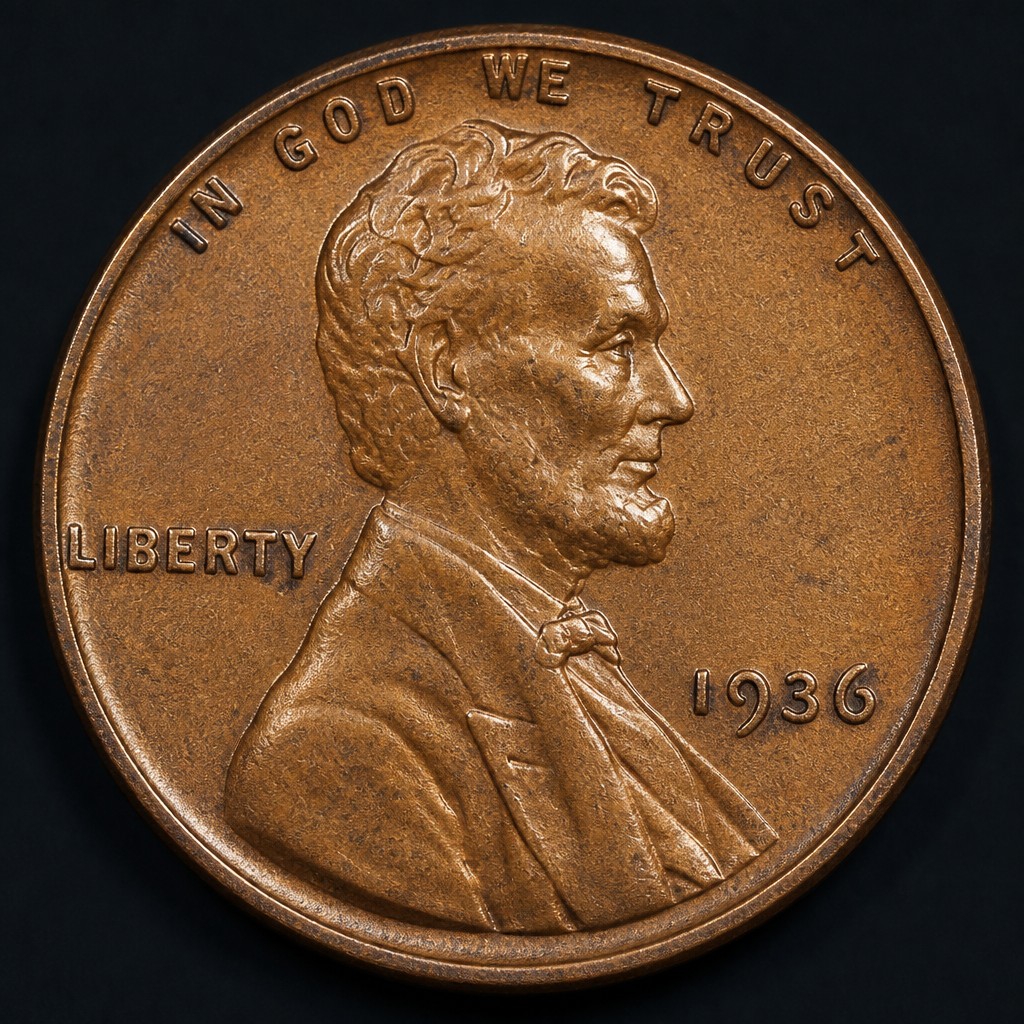
What It Is
The 1936 doubled die Lincoln cent is a well-known variety created when the working die used to strike the coin received a misaligned second impression from the hub during manufacturing. This produced visible doubling on parts of the obverse design. Several distinct doubled die varieties are known for 1936, differing in how strong and where the doubling appears.
Obverse Design
The base design is the standard wheat-reverse Lincoln cent obverse: a right-facing bust of Abraham Lincoln by Victor David Brenner, "IN GOD WE TRUST" above, "LIBERTY" to the left of the bust, and the date to the right. On the doubled die varieties, look for a shadow-like or stepped doubling most often visible in the lettering of "LIBERTY," "IN GOD WE TRUST," and the digits of the date "1936," which appear as if two overlapping impressions were struck slightly offset from each other.
Reverse Design
The reverse is unchanged from the standard Lincoln wheat cent: two stylized wheat ears flank the words "ONE CENT" and "UNITED STATES OF AMERICA," with no doubling associated with this variety.
Size, Weight, Metal, and Edge
The coin follows standard Lincoln cent specifications for the era: 95% copper with 5% tin and zinc, weighing about 3.11 grams, 19mm in diameter, with a plain edge.
Mint Marks
The known 1936 doubled die varieties are associated with the Philadelphia Mint and show no mint mark. Any coin with an added mint mark claiming to be this variety should be viewed skeptically.
Telling It Apart from Similar Coins
Because doubling can also occur from machine damage, worn dies, or simple strike doubling (a shelf-like flattening rather than a true second design), it's important to look for doubling that shows clear separation and rounded, distinct letter shapes rather than a flat, shelf-like smear. True doubled die doubling typically shows consistent thickness and direction across multiple letters, while mechanical or strike doubling tends to look flat and only affects the tops of letters.
Judging Condition at a Glance
Grade this coin the same way as any wheat cent: check Lincoln's cheek, jaw, and coat for smoothness from wear, and examine the wheat stalks on the reverse for full separation of the lines. The strength of the doubling itself does not change with wear, but a well-preserved coin makes it easier to confirm the doubling is genuine and not disguised by circulation wear.
Authenticity Red Flags
Because doubled die varieties can command a premium over ordinary dates, watch for coins that have had doubling artificially created through tooling, machine damage, or acid etching to mimic a true doubled die. Genuine doubling should look like a natural extension of the letter or digit shapes rather than a scratched-in or gouged appearance, and it should match known photographs of the specific 1936 doubled die variety being claimed.
Frequently asked questions
Where should I look for doubling on the 1936 doubled die cent?
Check 'LIBERTY,' 'IN GOD WE TRUST,' and the date '1936' on the obverse for a shadow-like second image offset from the main lettering.
How do I tell real doubling from strike doubling or damage?
True doubled die doubling shows rounded, separated letter shapes with consistent thickness, while strike doubling or damage usually looks flat, shelf-like, or scratched.
Does the 1936 doubled die cent have a mint mark?
No, the known varieties are Philadelphia coins and show no mint mark.
What metal is this coin made of?
It's the standard bronze alloy of the era, 95% copper with 5% tin and zinc.