
How to Identify the 1936 Dot Cent
A George V bronze cent dated 1936 but struck in 1937 with a tiny raised dot on the reverse, making it one of Canada's rarest and most valuable small cents.
Read the full 1936 Dot Cent encyclopedia entry →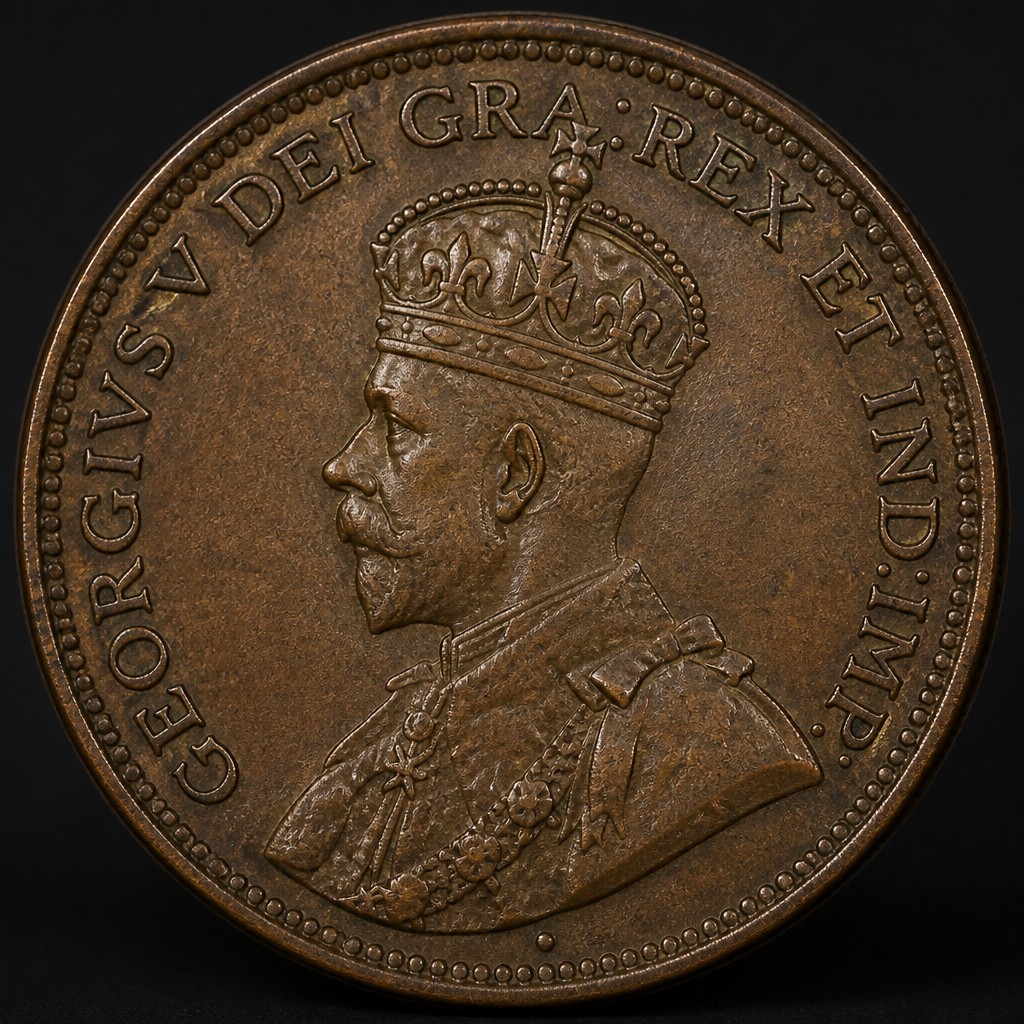
What It Is
The 1936 Dot Cent is a Canadian bronze one-cent piece that carries the date 1936 but was actually struck in early 1937. When King Edward VIII abdicated in December 1936, new dies bearing his portrait were never finished, leaving the Royal Canadian Mint without approved dies for 1937. To meet demand, the mint kept using 1936-dated George V dies into the new year, adding a small raised dot to the reverse to internally flag these late strikes. Only a tiny number are known today, making this one of the most famous and valuable coins in Canadian numismatics.
Obverse Design
The obverse shows King George V facing left, with the legend GEORGIVS V DEI GRA REX ET IND IMP arcing around the portrait and the date 1936 below the bust. This is identical to every other 1936 Canadian cent; the obverse alone cannot identify a dot cent.
Reverse Design
The reverse carries the familiar two maple leaves on a twig design, with CANADA arched above and the date repeated below. The feature that separates this variety from an ordinary 1936 cent is a small raised dot low on the reverse, near the ribbon that ties the maple twig above the date. It is easy to overlook without magnification and is often confused with die chips, dirt, or planchet flaws on common coins.
Size, Weight, Metal & Edge
Like all Canadian small cents of the era, it is struck in bronze (roughly 95.5% copper, 3% tin, 1.5% zinc), measures about 19.1mm across, weighs approximately 3.24 grams, and has a plain (unreeded) edge.
Mint Marks
All Canadian cents of this period were produced at the Royal Canadian Mint in Ottawa, and no mintmark letter appears on the coin. Identification rests entirely on the presence of the raised dot, not on any mint-location marking.
Telling It Apart From Common 1936 Cents
The vast majority of 1936-dated cents are ordinary, low-value coins with no dot. Before assuming you have found a rarity, examine the reverse under strong magnification in good light, comparing the suspect area to published photographs of the genuine variety. Random surface marks, grease-filled dies, or corrosion pits can mimic a dot to the naked eye but usually look different under a loupe from a deliberately raised, rounded mint mark.
Judging Condition
Grade a 1936 cent the way you would any small cent: check the high points of George V's cheek and hair, and the ribs of the maple leaves on the reverse, for flattening or loss of detail. Because so few genuine dot cents exist, condition matters less to collectors than simple confirmation of authenticity, but a well-preserved example is still more desirable.
Authenticity Red Flags
It is worth remembering that the 1936 Dot Cent is a die-variety rarity rather than a distinct design, so its value comes entirely from the tiny raised dot combined with the correct date, not from any difference in the overall look of the coin, and anyone encountering a 1936 cent should first rule out the far more common possibility of an ordinary coin before assuming they have found the variety. Given the coin's extraordinary rarity and value, any example claiming to be a genuine 1936 Dot Cent should be treated with real caution. Watch for dots that look scratched, added, or tooled into the surface rather than raised smoothly as part of the original strike, and be alert to added metal or re-engraving near the ribbon area. Because so much value rides on a single tiny feature, professional grading and authentication by a recognized numismatic service is strongly advised before treating a coin as genuine.
Frequently asked questions
Why does a 1936-dated coin have a mint-made dot?
The dot was added to dies used briefly in 1937 to distinguish that late striking from the regular 1936 production, after Edward VIII's abdication delayed new 1937 dies.
Where exactly is the dot located?
It sits low on the reverse, near the ribbon binding the maple twig just above the date, and is small enough to require magnification to see clearly.
Is every 1936 cent valuable?
No. Only the small number bearing the raised dot are considered rare; ordinary 1936 cents without the dot are common and worth only a modest premium over face value.
Can dirt or a die flaw be mistaken for the dot?
Yes, grease in the die or surface corrosion can create a dot-like mark, so comparison with verified reference photos and magnified examination is important before drawing conclusions.
Should I get a suspected example certified?
Yes, because of the coin's rarity and value, third-party grading and authentication is strongly recommended before assuming a coin is genuine.