
How to Identify the 1922 Canadian Nickel Five Cents
The transitional 1922 issue that replaced Canada's tiny silver five-cent coin with a larger nickel-metal piece featuring a new beaver design, setting the format used for decades afterward.
Read the full 1922 Canadian Nickel Five Cents encyclopedia entry →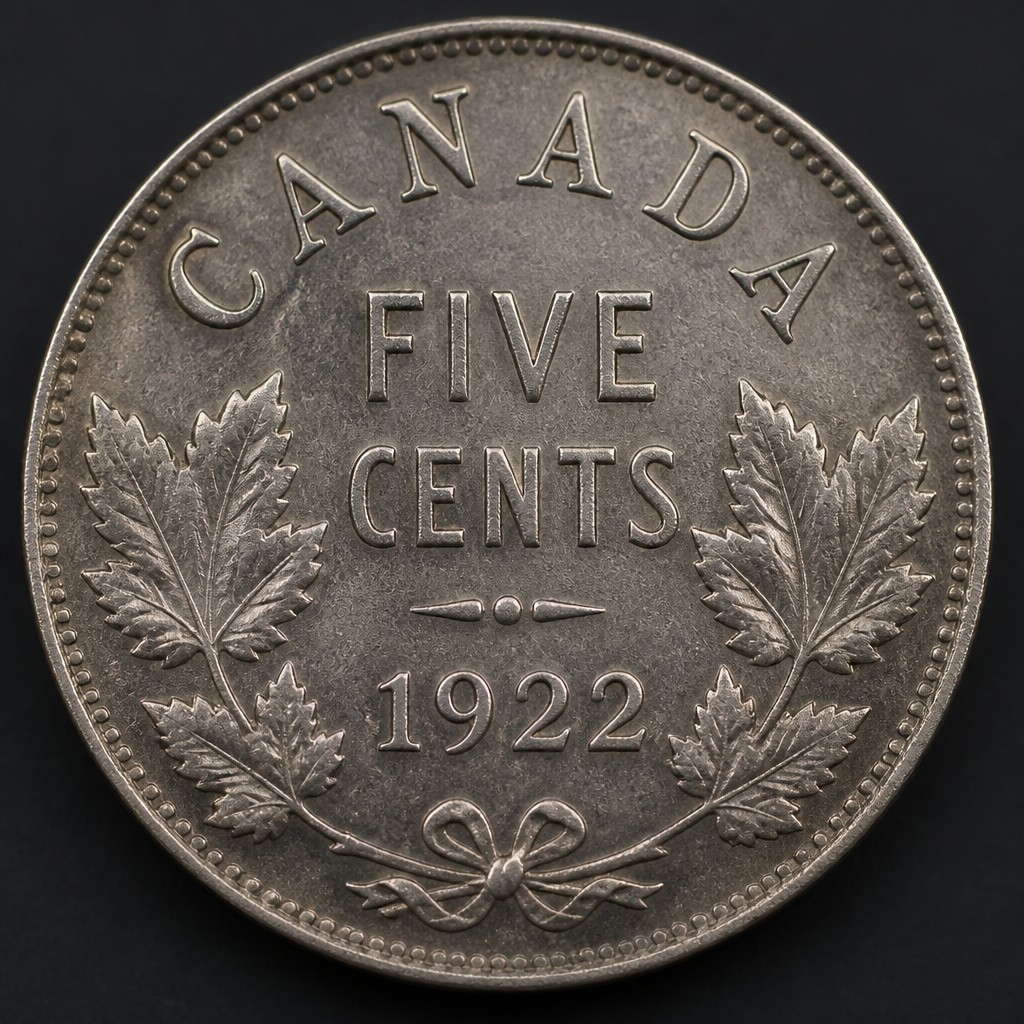
What It Is
The 1922 five-cent piece marks a major turning point for Canadian coinage: it was the first time the five-cent denomination was struck in nickel metal rather than silver, and it introduced a larger, thicker coin format that Canadians would recognize for generations afterward.
Obverse Design
The obverse shows King George V facing left, with the standard legend including "DEI GRATIA," restored after the 1911 Godless controversy on the silver five-cent series.
Reverse Design
The reverse introduced an entirely new design: a beaver standing on a rock or log beside rippling water, with CANADA arched above and the denomination and date arranged around the scene. This beaver motif would go on to represent the Canadian five-cent coin for most of the twentieth century.
Size, Weight, Metal & Edge
The coin is struck in nearly pure nickel metal, giving it a distinctive grey-white color quite different from silver. It measures about 21.2mm in diameter, noticeably larger than the tiny silver five-cent piece it replaced, and has a plain, unreeded edge.
Mint Marks
The coin was produced at the Royal Canadian Mint in Ottawa and carries no mintmark.
Telling It Apart From Similar Coins
The most obvious distinction from earlier five-cent pieces is size and color: the old silver "fish scale" coins are tiny and bright white, while this nickel piece is larger and duller grey. It should also not be confused with the twelve-sided nickel coins issued during the Second World War (1942-1945), which have a distinctly angular, non-round shape, or with the later round beaver-design nickels of the Elizabeth II era, which share a similar look but carry a different obverse portrait.
Judging Condition
Check the beaver's back, head, and the log or rock beneath it for flattening, along with George V's portrait details on the obverse. A well-struck, lightly worn example will show crisp fur texture and sharp lettering, while a heavily circulated piece will show a smooth, rounded beaver silhouette with little remaining texture.
Authenticity Red Flags
This is a widely available coin from a large mintage era, so outright counterfeits are uncommon. The main things to verify are correct grey nickel coloring and proper weight and diameter; a coin of this design in an unusual color or noticeably off in size or weight should be examined carefully. Because pure nickel is a hard metal, genuine examples tend to wear relatively evenly, so patchy or oddly textured surfaces are worth a second look. As the first year of this larger nickel format, an 1922 example should match the same size and weight as later beaver-design nickels from the following two decades, which provides a simple way to sanity-check a given coin.
Frequently asked questions
What changed with the 1922 five-cent coin?
It switched Canada's five-cent piece from tiny silver to a larger nickel-metal coin and introduced the new beaver reverse design.
How can I tell it apart from the older silver five-cent coin?
The nickel coin is noticeably larger and has a dull grey color, while the older silver piece is tiny and bright white.
Is this the same design as the twelve-sided wartime nickels?
No, the 1922 coin is round, while nickels from 1942-1945 were struck in a distinctive twelve-sided shape.
What metal is the coin made of?
It is struck in nearly pure nickel, which gives it its characteristic grey-white appearance.
Does it carry a mintmark?
No, it was produced at the Royal Canadian Mint in Ottawa without a mintmark.