
How to Identify the 1919-D Standing Liberty Quarter
A visual guide to the 1919-D Standing Liberty Quarter, a semi-key Denver issue, explaining its design, mint mark location, and how to judge condition.
Read the full 1919-D Standing Liberty Quarter encyclopedia entry →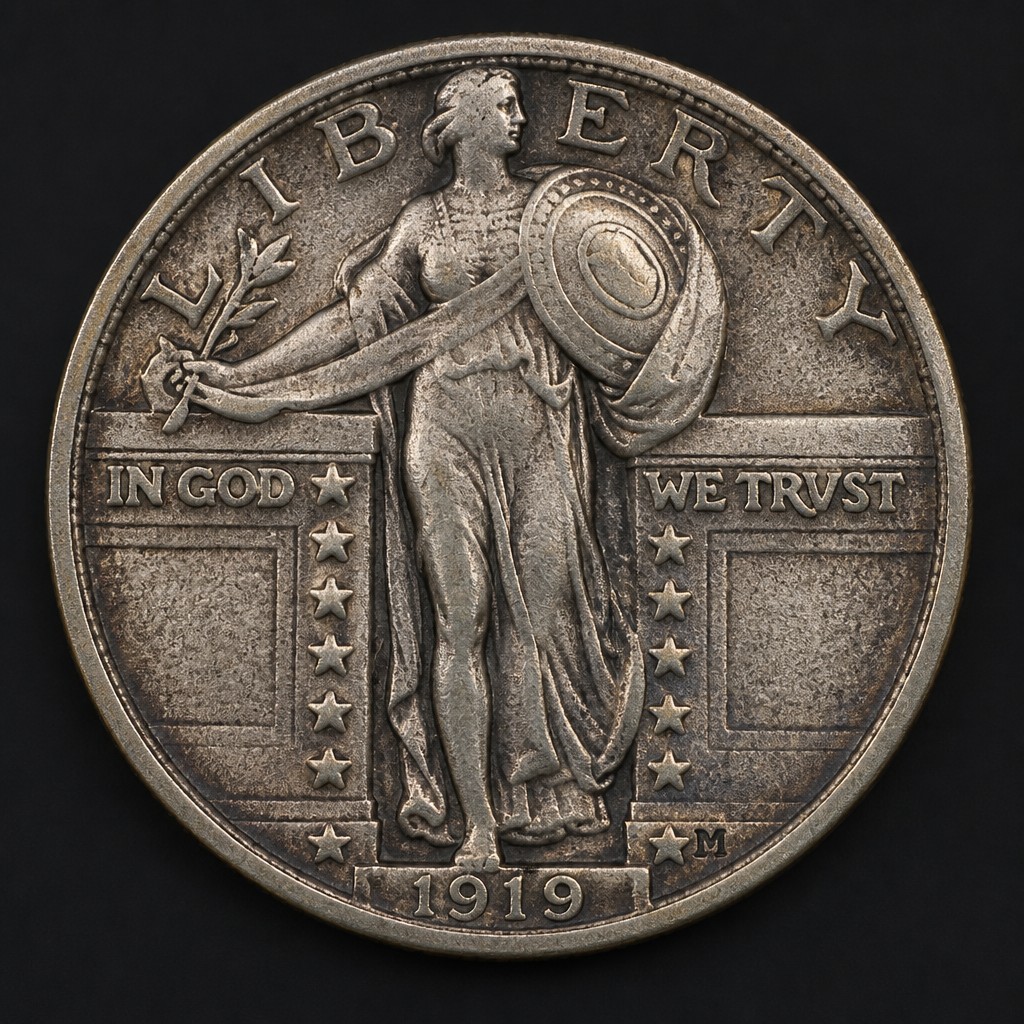
What This Coin Is
The 1919-D is a semi-key date in the Standing Liberty quarter series, struck at the Denver Mint using the Type 2 design. It is scarcer than most Denver issues of the era, particularly in well-preserved condition.
Obverse Design
The design keeps MacNeil's standing Liberty figure holding an olive branch and shield within the gateway, "LIBERTY" arched at top and "IN GOD WE TRUST" to the right, but on this "Type 2" version a chainmail vest covers Liberty's previously bare right breast, a modification made partway through 1917.
Reverse Design
The same flying eagle fills the center, but on the Type 2 reverse three stars were added directly beneath the eagle, and the remaining stars were rearranged around the border, giving the lower field a noticeably different look from the Type 1 reverse.
Size, Weight, Metal, and Edge
Standing Liberty quarters are struck in 90% silver, 10% copper, weigh 6.25 grams, measure 24.3 mm across, and have a reeded edge, matching the specifications of the Barber and early Washington quarters that bracket the series.
Mint Mark Location
Unusually for a coin of this era, the mint mark sits on the obverse rather than the reverse: look just to the left of the date, near Liberty's leading foot. No mark means Philadelphia; a "D" indicates Denver and an "S" indicates San Francisco. A "D" mint mark in this spot paired with the 1919 date confirms the Denver issue; the Philadelphia and San Francisco quarters from the same year share the same design but differ in mint mark.
Telling It Apart from Similar Coins
Because 1919-S and 1919 (no mint mark) quarters share an identical design, the mint mark is the only visual difference. Compare the "D" shape and placement carefully against verified genuine 1919-D coins if authenticity is in question, since added or altered mint marks are a known issue on scarcer Standing Liberty dates.
Judging Condition at a Glance
Wear appears first on Liberty's head and the rounded shield rim on the obverse, and on the eagle's breast and the leading wing edge on the reverse. On Type 1 coins, the date sits unprotected at the rim, so it wears down or disappears entirely on well-circulated pieces; the head, shield, and date's legibility together give a quick read on grade. As with other Type 2 issues, a full, sharp head on Liberty and clear shield rivets are relatively hard to find well-struck, so these details are worth close attention when assessing a specific coin.
Authenticity Red Flags
Because several dates in this series carry low mintages, watch for added or re-engraved mint marks on the obverse, and for full dates that look freshly re-cut on coins that should otherwise show wear consistent with the rest of the design. A mint mark or date that appears sharper or more raised than the surrounding worn surface is a sign to look closer.
Frequently asked questions
What mint produced the 1919-D quarter?
The Denver Mint, indicated by a small D mint mark on the obverse to the left of the date.
Is the 1919-D rarer than the 1919 Philadelphia issue?
Yes, it had a smaller mintage and is scarcer overall, especially in higher grades.
What type of Standing Liberty design does it use?
The Type 2 design, with chainmail covering Liberty's chest and stars added beneath the eagle.
How can I verify the mint mark hasn't been altered?
Compare its exact shape, size, and position to verified genuine 1919-D examples, and check for tool marks in the surrounding field.