
How to Identify the 1918/7-D Buffalo Nickel
A famous Denver Buffalo nickel overdate showing a visible 7 beneath the 8 in the date, created when a leftover 1917 die was repunched with the new year.
Read the full 1918/7-D Buffalo Nickel encyclopedia entry →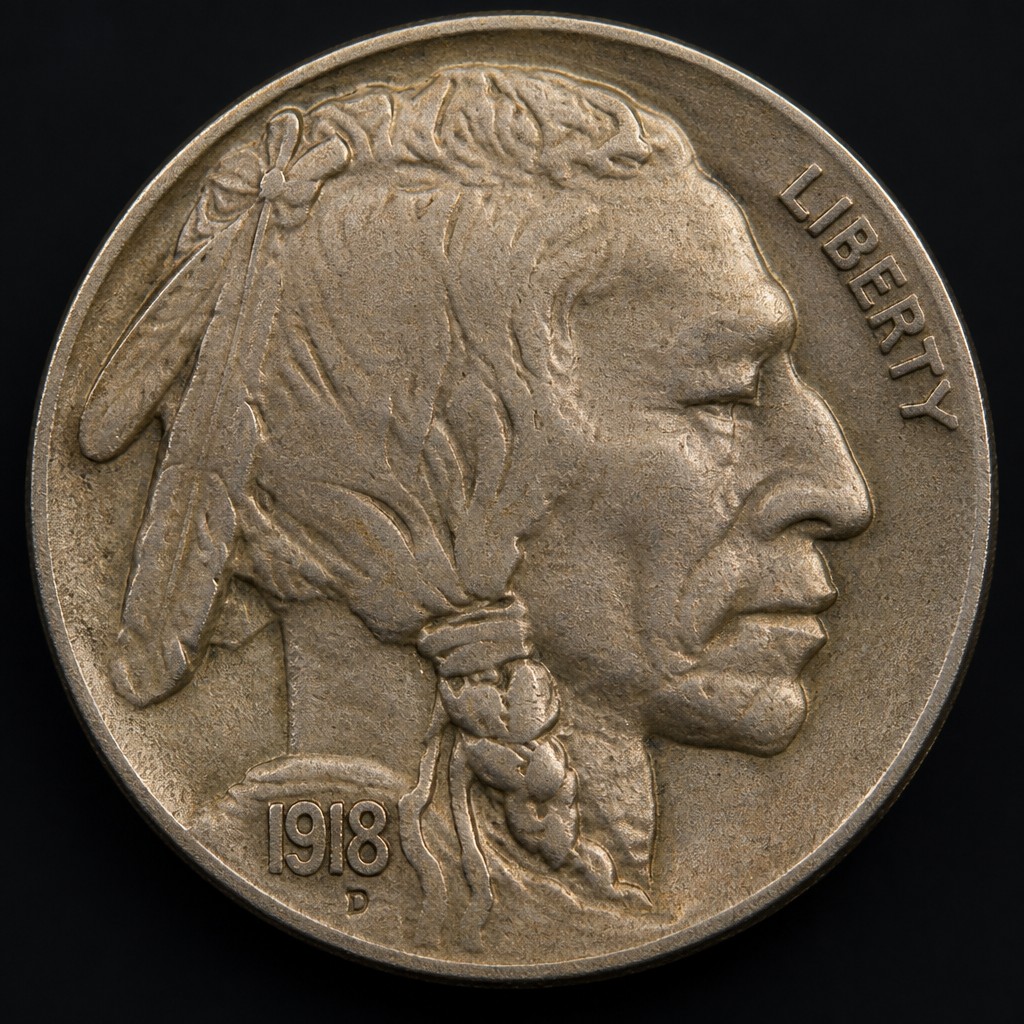
What the Coin Is
The 1918/7-D Buffalo nickel is one of the most celebrated overdate varieties in United States coinage. It occurred when the Denver Mint reused a working die still bearing the 1917 date and repunched it with 1918, leaving a clear remnant of the earlier "7" beneath the final "8."
Obverse Design & Inscriptions
The obverse shows a Native American man's profile facing right, with LIBERTY inscribed at the right edge and the date at the bottom. The overdate is visible in this date area: look closely at the bottom loop of the "8," where the curve of the underlying "7" should show through.
Reverse Design & Inscriptions
The reverse features an American bison standing on a mound, with FIVE CENTS below and UNITED STATES OF AMERICA arched above. E PLURIBUS UNUM appears along the design as well. The reverse itself shows no doubling; the variety is confined to the date on the obverse.
Size, Weight, Metal & Edge
Buffalo nickels are struck in a copper-nickel alloy (75% copper, 25% nickel), weigh 5.00 grams, measure 21.2mm in diameter, and have a plain edge.
Mint Marks & Where to Find Them
The mint mark appears on the reverse below FIVE CENTS. This variety requires a "D" for Denver; without it, the coin is not the overdate variety, since the doubling was specific to a Denver working die.
Telling It Apart From Similar Coins
Because this variety is highly sought after, it is frequently confused with ordinary date wear or a filled die, both of which can make the "8" look irregular without a true overdate present. Genuine overdate evidence shows the distinct curved shape of a "7" nested within or below the loop of the "8," not just a blurred or mushy digit.
Judging Condition at a Glance
Check the high points on the Indian's cheekbone and hair braid, and the bison's shoulder and hip, for smoothing from wear. On this variety, the date must remain legible enough to show the overdate detail, so coins with excessive wear in the date area are harder to confirm and typically less desirable.
Authenticity Red Flags
Given its significant collector value, this variety is a common target for alteration, including tooled or added "7" shapes meant to simulate the overdate on an ordinary 1918-D nickel. Look for consistent metal flow and natural die wear around the date; an artificially added overdate often shows sharp tool marks, uneven depth, or a texture that doesn't match the rest of the coin's surface.
Frequently asked questions
Where exactly does the overdate appear?
Look at the bottom loop of the final 8 in the date on the obverse; a genuine example shows the curve of an underlying 7 peeking through.
Does this variety exist without a D mint mark?
No, the overdate is specific to Denver-minted coins, so a genuine example must carry the D mint mark below FIVE CENTS on the reverse.
What metal is a Buffalo nickel made from?
It is a copper-nickel alloy, 75% copper and 25% nickel, weighing 5.00 grams.
How can I avoid mistaking a worn date for an overdate?
Ordinary wear blurs the whole digit evenly, while a genuine overdate shows the distinct curved shape of the earlier 7 nested within the 8.