
How to Identify the 1916-D Mercury Dime
A guide to identifying the key-date 1916-D Mercury Dime, covering the winged Liberty design, the fasces reverse, correct mint mark placement, and how to spot commonly altered fakes.
Read the full 1916-D Mercury Dime encyclopedia entry →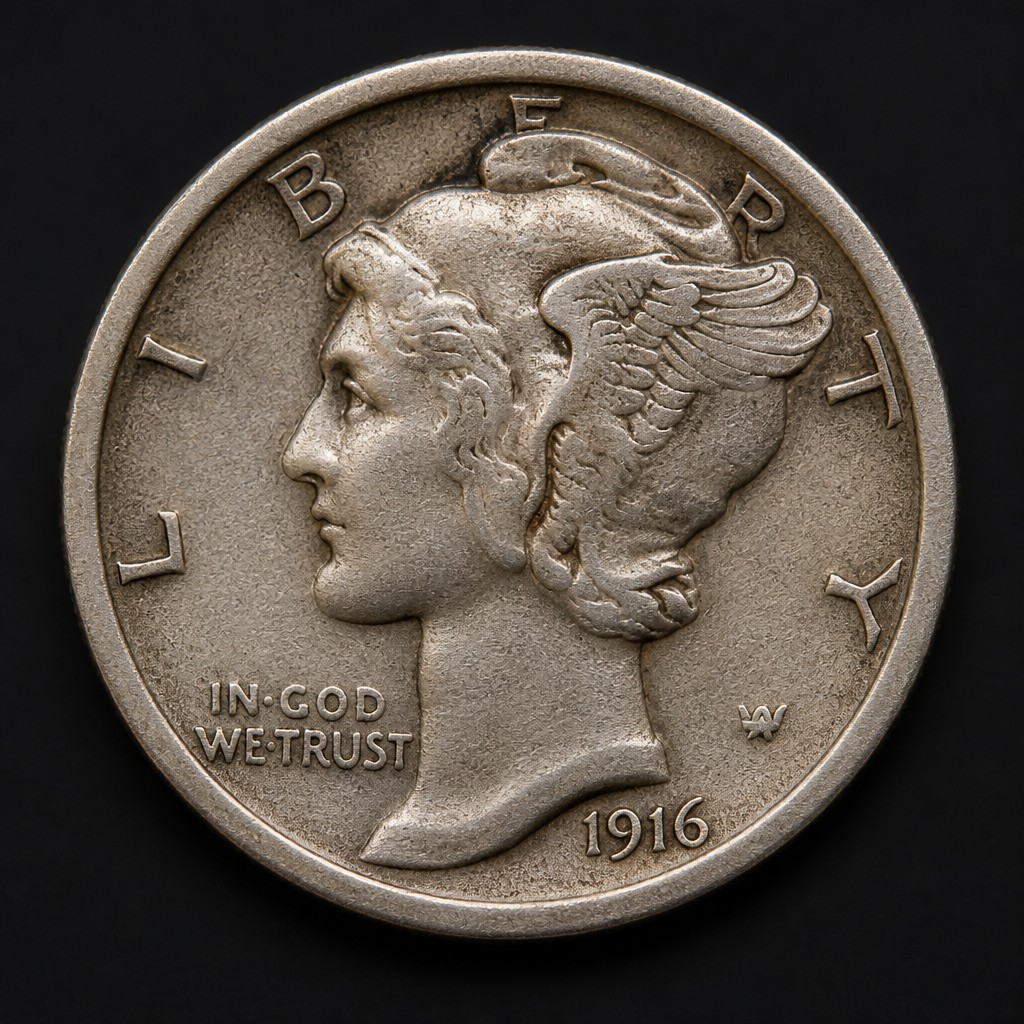
What It Is
The 1916-D Mercury Dime is the most famous key date in the Mercury (Winged Liberty Head) Dime series, struck from 1916 to 1945 and designed by Adolph Weinman. Its low mintage of the Denver issue in the series' first year makes it the coin most collectors need to complete a set.
Obverse Design
Liberty is shown facing left wearing a winged cap, a design meant to symbolize freedom of thought rather than a depiction of the Roman god Mercury, though the nickname stuck. "LIBERTY" arcs around the upper border, and the date sits below the portrait.
Reverse Design
The reverse shows a fasces, a bundle of rods bound around an axe, symbolizing unity and readiness, with an olive branch beside it representing peace. "UNITED STATES OF AMERICA" and "E PLURIBUS UNUM" arc around the border, and "ONE DIME" appears at the bottom.
Size, Weight, Metal, and Edge
The coin measures 17.9 mm in diameter and weighs 2.50 grams, struck in 90% silver and 10% copper, with a reeded edge.
Mint Mark Location
The "D" mint mark sits on the reverse, in the lower left area near the rim, positioned close to the base of the fasces beside the word "ONE." Correct size, font, and placement of this mint mark are essential to confirming a genuine 1916-D dime.
Telling It Apart from Similar Coins and Common Fakes
Because a genuine 1916-D carries substantial value while an ordinary 1916 Philadelphia (no mint mark) or 1916-S dime is far more common, this date is one of the most frequently counterfeited by adding a fake "D" to a common coin. Warning signs of an added mint mark include a slightly different color or texture compared to the surrounding metal, tool marks or file lines around the letter, a mint mark that sits in the wrong position relative to the fasces, or letter proportions and serifs that don't match genuine Denver dies of the period. The date itself can also be a target for alteration, so it is worth checking that the numerals show no signs of re-engraving or added digits.
Judging Condition at a Glance
Collectors often look for "Full Bands," meaning the two horizontal bands wrapping the fasces show complete separation without wear bridging them together; this designation indicates an exceptionally well-struck, lightly circulated coin. On the obverse, Liberty's hair above the ear and along the temple are the first spots to flatten with wear.
Authenticity Notes
Given how often this date is faked, a professional grading service authentication is strongly recommended before relying on any 1916-D Mercury Dime as genuine, especially since a well-made added mint mark can be difficult to detect without magnification and comparison to verified examples.
Frequently asked questions
Why is the 1916-D Mercury Dime so valuable?
It had a low mintage at the Denver Mint in the series' very first year, making it the scarcest date collectors typically need for a complete Mercury Dime set.
Where exactly is the mint mark on this coin?
The 'D' appears on the reverse, in the lower left near the rim, close to the base of the fasces and beside the word 'ONE.'
How can I tell if the mint mark has been added to a common dime?
Look for differences in color or texture around the letter, tool or file marks, incorrect positioning relative to the fasces, or letter shapes that don't match genuine Denver mint marks of the period; magnification and comparison to verified examples help spot these issues.
What does 'Full Bands' mean for this coin?
It describes a strike sharp enough that the two horizontal bands on the fasces show complete separation, a mark of an especially well-preserved, well-struck example.