
How to Identify the 1914-D Lincoln Wheat Cent
A guide to identifying this classic Lincoln Wheat cent key date, covering its Denver mint mark, design details, and the alterations commonly used to fake it.
Read the full 1914-D Lincoln Wheat Cent encyclopedia entry →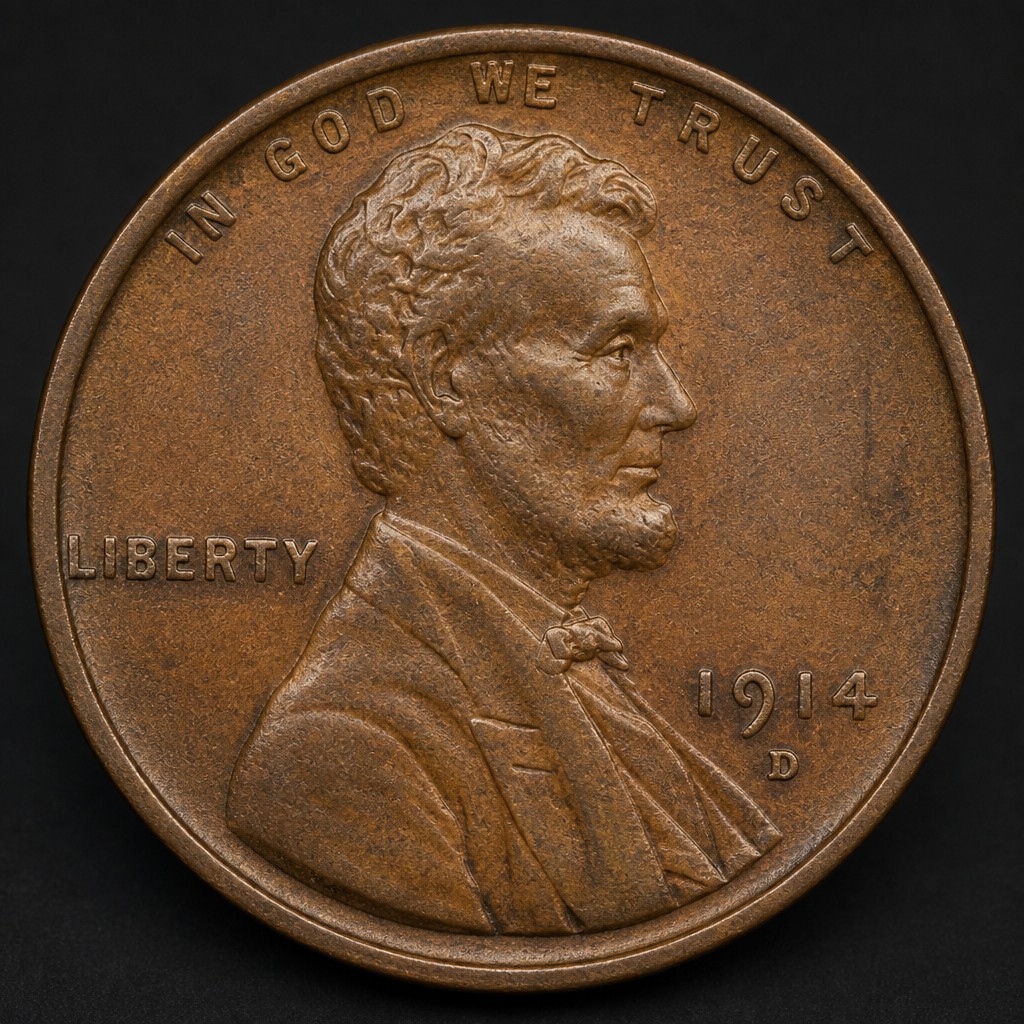
What It Is
The 1914-D Lincoln cent is one of the classic key dates of the Wheat cent series (1909-1958), prized for its relatively low original mintage from the Denver Mint compared to most other dates in the series. It sits alongside the 1909-S VDB and the 1931-S as one of the three most sought-after regular-issue dates in the entire run.
Obverse Design
Lincoln faces right, with "IN GOD WE TRUST" above his head, "LIBERTY" to the left, and the date "1914" to the right of his shoulder. This is the standard Victor David Brenner portrait used throughout the Wheat cent series, with no designer initials visible on the obverse in this early period.
Reverse Design
Two stylized wheat stalks curve around the left and right sides, framing "ONE CENT" and "UNITED STATES OF AMERICA," with "E PLURIBUS UNUM" appearing in small letters just above the center of the design.
Size, Weight, and Metal
Struck in 95% copper bronze alloy, with the balance made up of tin and zinc, weighing 3.11 grams, measuring 19 mm across, with a plain edge — the standard specification for cents of this era.
Mint Mark
A small "D" appears on the obverse directly below the date, positioned close to the rim. Its size, shape, and font style should match the medium-sized, slightly rounded serif lettering used at the Denver Mint during this period, consistent across other Denver cents from the mid-1910s.
Telling It Apart From Similar Coins
The 1914-D is often confused with, or substituted with, the far more common 1914 (no mint mark, Philadelphia) and 1914-S cents. Look carefully for a mint mark below the date and confirm its style matches genuine Denver coinage; a real "D" should look naturally struck into the die along with the rest of the design, not added or engraved afterward.
Judging Condition
Grade by examining Lincoln's cheek, jaw, and hairline for the smoothing that comes with circulation wear, along with the sharpness of the wheat stalks and lettering on the reverse. Because this date is scarce even in heavily worn grades, overall condition has an outsized effect on how collectible a given piece is.
Authenticity Red Flags
This is one of the most commonly altered Lincoln cents in the series. Typical alterations include adding a "D" to a genuine 1914 Philadelphia cent, or reshaping the last digit of a 1944-D cent so the "4" resembles a "1." Warning signs include a mint mark that looks tooled, glued, or oddly shaped compared to genuine examples; irregular spacing, small bumps, or scratches around the date digits; and a "1" that appears to have started out as a different numeral. Comparing the numeral style and mint-mark font against verified genuine examples is the best defense against these alterations.
Frequently asked questions
Why is the 1914-D considered a key date?
It had a relatively low mintage for its series, making genuine examples scarce today.
What's the most common fake version of this coin?
A 1944-D cent with the '4' reshaped into a '1,' or a genuine 1914 Philadelphia cent with an added 'D.'
Where exactly is the mint mark located?
Directly below the date on the obverse, to the right of Lincoln's shoulder.
What metal is a 1914-D cent made from?
95% copper bronze alloy, weighing about 3.11 grams.