
How to Identify the 1914-D Lincoln Cent
A key date in the Lincoln wheat cent series struck at the Denver Mint in low numbers, making genuine examples scarce and a frequent target for counterfeiting through added or altered mint marks.
Read the full 1914-D Lincoln Cent encyclopedia entry →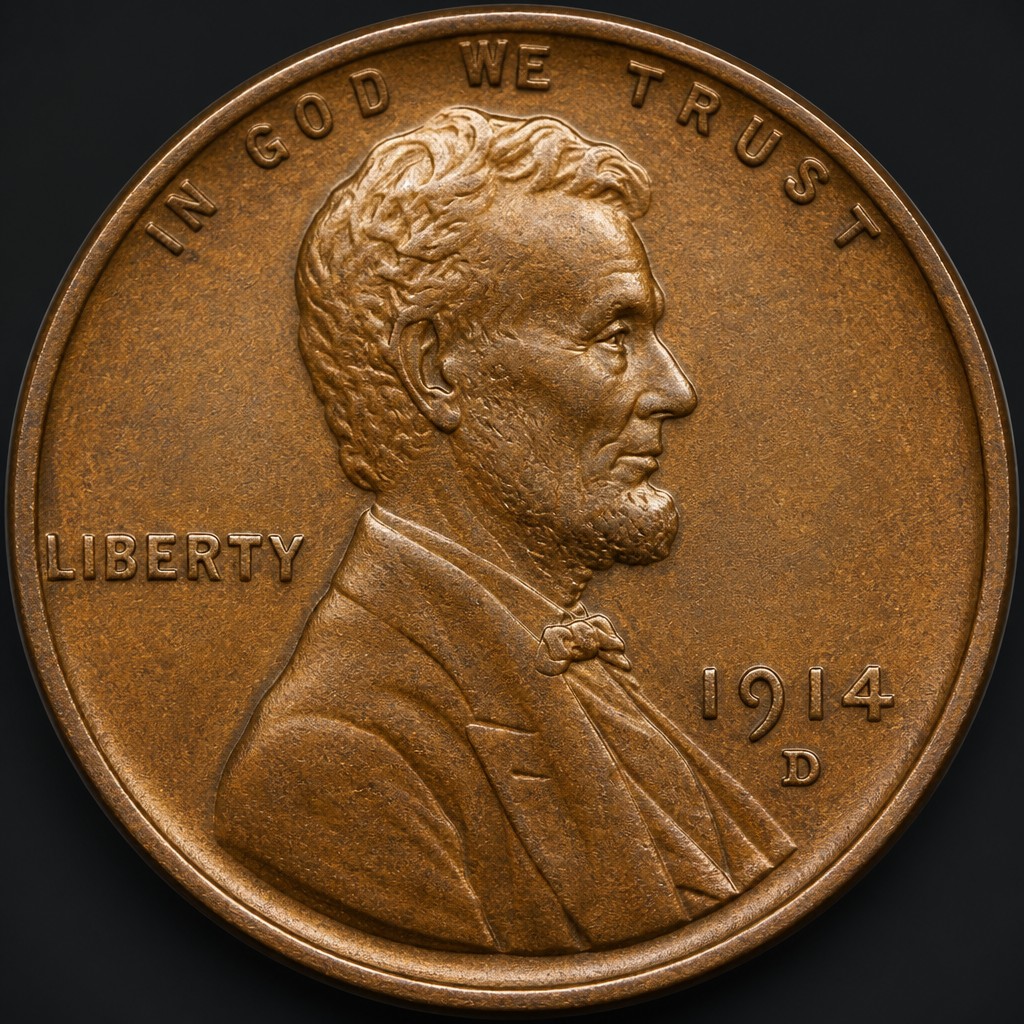
What This Coin Is
The 1914-D is widely regarded as one of the key dates in the Lincoln wheat cent series, prized for its relatively low mintage compared to other cents of the era. Its combination of scarcity and steady collector demand has made it one of the most counterfeited dates in the series, so careful identification matters more than usual.
Obverse Design & Inscriptions
The obverse shows the standard right-facing Lincoln portrait, "IN GOD WE TRUST" above, "LIBERTY" to the left, and the date "1914" to the right, consistent with other wheat cents of the period.
Reverse Design & Inscriptions
The reverse displays the wheat ears design flanking "ONE CENT" and "UNITED STATES OF AMERICA," the standard reverse used throughout the wheat cent series from 1909 to 1958.
Size, Weight, Metal & Edge
This cent uses the standard bronze-alloy composition of the era, weighing about 3.11 grams, with the typical diameter and plain edge shared by wheat cents from this period.
Mint Marks & Where to Find Them
The defining feature is a small "D" mint mark positioned just beneath the date, indicating Denver Mint production. Because this mark is small and its placement precise, comparing its size, font, and position against verified genuine examples is essential, since this is exactly the detail most often manipulated on altered coins.
Telling It Apart From Similar Coins
The most common deception involves taking a common Philadelphia-struck 1914 cent, which has no mint mark, and adding a fake "D" beneath the date, or altering the mint mark on a different date entirely. Genuine mint marks were hand-punched into the die and have a distinctive shape and depth; added marks often look too crisp, oddly shaped, show tool marks under magnification, or sit at a slightly different height or angle compared to authentic examples.
Judging Condition at a Glance
Because well-preserved, high-grade examples of this key date are especially valuable relative to worn ones, look for original surfaces, natural wear patterns consistent with genuine circulation, and untouched luster on higher-grade pieces. Cleaned or artificially toned coins, or ones with suspiciously uniform wear that doesn't match typical handling patterns, should raise caution.
Authenticity Red Flags
Given how frequently this date is counterfeited or altered, magnification of the mint mark is the single most important check, looking for file marks, an unnatural sheen around the "D," or a mark that appears to sit on top of the surface rather than blending naturally into it. Given the value at stake, professional third-party authentication is strongly recommended before treating any 1914-D cent as genuine.
Frequently asked questions
Why is the 1914-D such an important date to verify carefully?
It is a genuine key date with low mintage, which makes it a frequent target for adding or altering the D mint mark on more common coins.
Where is the mint mark located?
Directly beneath the date on the obverse, a small D indicating Denver Mint production.
What's the most common way this coin is faked?
Adding a fake D mint mark to a common Philadelphia 1914 cent, or altering another date's mint mark to resemble a 1914-D.
How can I check if the mint mark is genuine?
Examine it under magnification for natural shape and depth, comparing against verified genuine examples, and consider professional authentication given the coin's value.