
How to Identify the 1911 Canadian Silver Dollar (Pattern)
The 1911 Canadian silver dollar is an extremely rare pattern coin never released into circulation, known from only a handful of surviving silver and gold specimens struck to test a proposed dollar denomination.
Read the full 1911 Canadian Silver Dollar (Pattern) encyclopedia entry →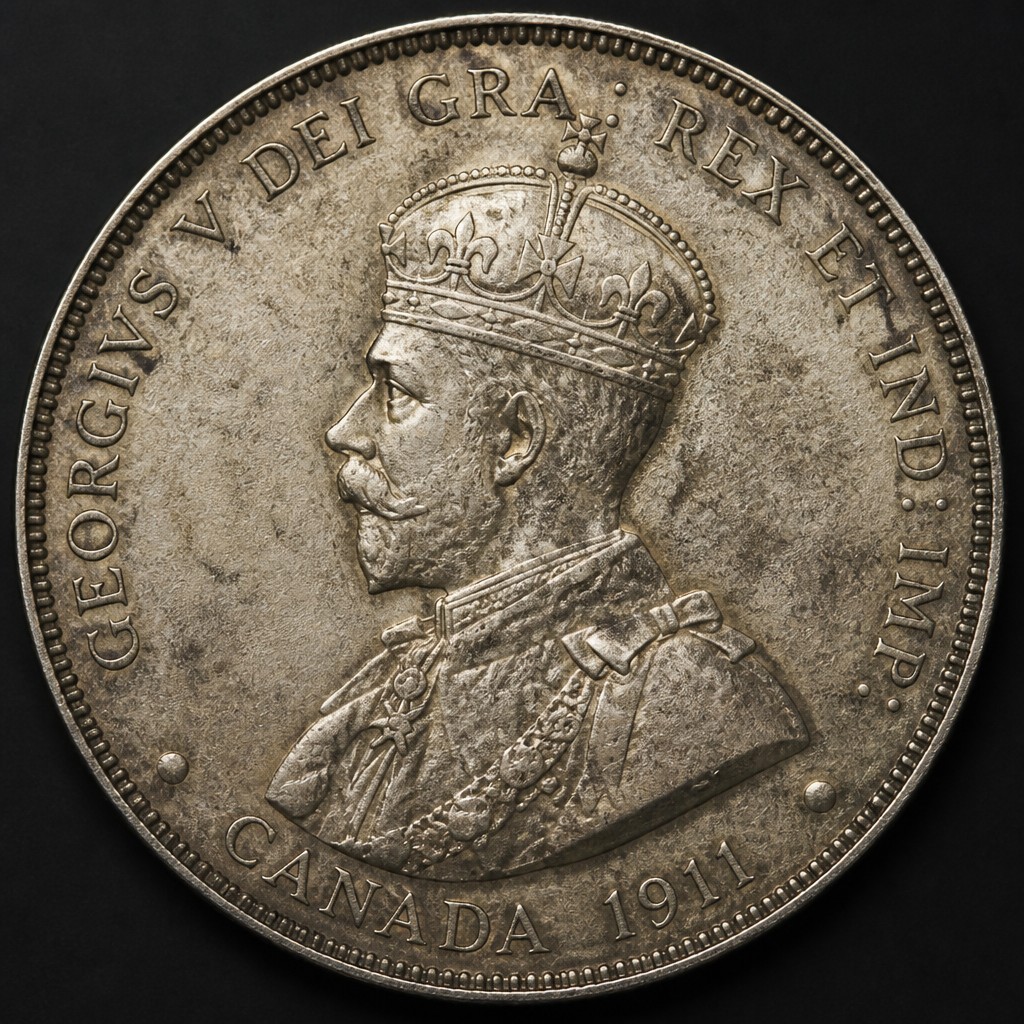
What It Is
The 1911 Canadian dollar is a pattern coin, meaning it was a trial or proposal piece struck to evaluate a design before any decision to mint dollars for circulation. Canada did not issue a circulating silver dollar until 1935, so this 1911 piece represents an earlier, ultimately shelved attempt. Only a very small number of pieces are known to survive, in both silver and gold, making it one of the rarest and most valuable coins in Canadian numismatics.
Obverse Design
The obverse shows King George V facing left, wearing no crown, with the legend "GEORGIVS V DEI GRA REX ET IND IMP" around the rim and the date "1911" below the portrait. The portrait style matches other Canadian coinage introduced early in George V's reign.
Reverse Design
The reverse is comparatively simple, featuring a wreath encircling the word "DOLLAR" or the coin's value, along with "CANADA" and the wreath design, without the elaborate imagery later designs would carry. Because this was a pattern rather than a finished circulating design, the reverse layout is plainer than the Voyageur design later adopted in 1935.
Size, Weight & Metal
Known specimens were struck in both silver and gold, and diameter and weight are consistent with a large dollar-sized coin of the era, roughly comparable to other silver dollar patterns of the period. Because genuine specimens are so scarce, exact weight should be cross-checked against documented, certified examples rather than assumed.
Mint Marks
As a pattern piece produced at the Royal Mint (or a Royal Mint-affiliated facility) rather than for general circulation, this coin does not carry a standard mintmark in the way branch-mint coins do.
Telling It Apart from Similar Coins
Given its extreme rarity, any coin claimed to be a genuine 1911 pattern dollar should be treated with significant caution and compared against documented, certified specimens held in major collections or previously sold at recognized auctions. The obverse portrait style and plain wreath reverse are the key design cues, but because so few genuine examples exist, matching general appearance is not sufficient proof of authenticity.
Judging Condition at a Glance
Because surviving specimens were essentially never circulated, they typically exist in proof or near-proof condition with sharp strike detail and strong luster or mirror fields. A coin claiming this identity that shows heavy circulation wear would be highly inconsistent with the known population of genuine pieces.
Authenticity Red Flags
This is one of the coins most worth professional, third-party certification before any assumptions are made, given both its rarity and value. Red flags include incorrect weight or diameter, mismatched metal color or density for the claimed composition, soft or blurry design details suggesting a cast copy, and any absence of a credible ownership or auction history. Because so few genuine examples are known, provenance and expert certification matter enormously for this particular coin.
Frequently asked questions
Was the 1911 Canadian dollar ever released for circulation?
No, it is a pattern piece struck to test a design; Canada's first circulating silver dollar came later, in 1935.
How many 1911 pattern dollars are known to exist?
Only a small handful of silver and gold specimens are documented, making it one of the rarest coins in Canadian numismatics.
What does the obverse show?
A left-facing portrait of King George V with the standard Latin royal titles and the date 1911 below.
Why is this coin so hard to authenticate?
Because genuine examples are extremely scarce, comparisons rely on matching known certified specimens, and professional third-party certification is strongly recommended.
What condition would a genuine specimen typically be in?
Since these were never circulated, genuine pieces are typically found in proof or near-proof condition with sharp detail, not worn from handling.