
How to Identify the 1909-S Indian Head Cent
A visual guide to the 1909-S Indian Head Cent, the final and scarcest branch-mint issue of the series, covering where to find the S mint mark, its design elements, and how to check for added mint marks.
Read the full 1909-S Indian Head Cent encyclopedia entry →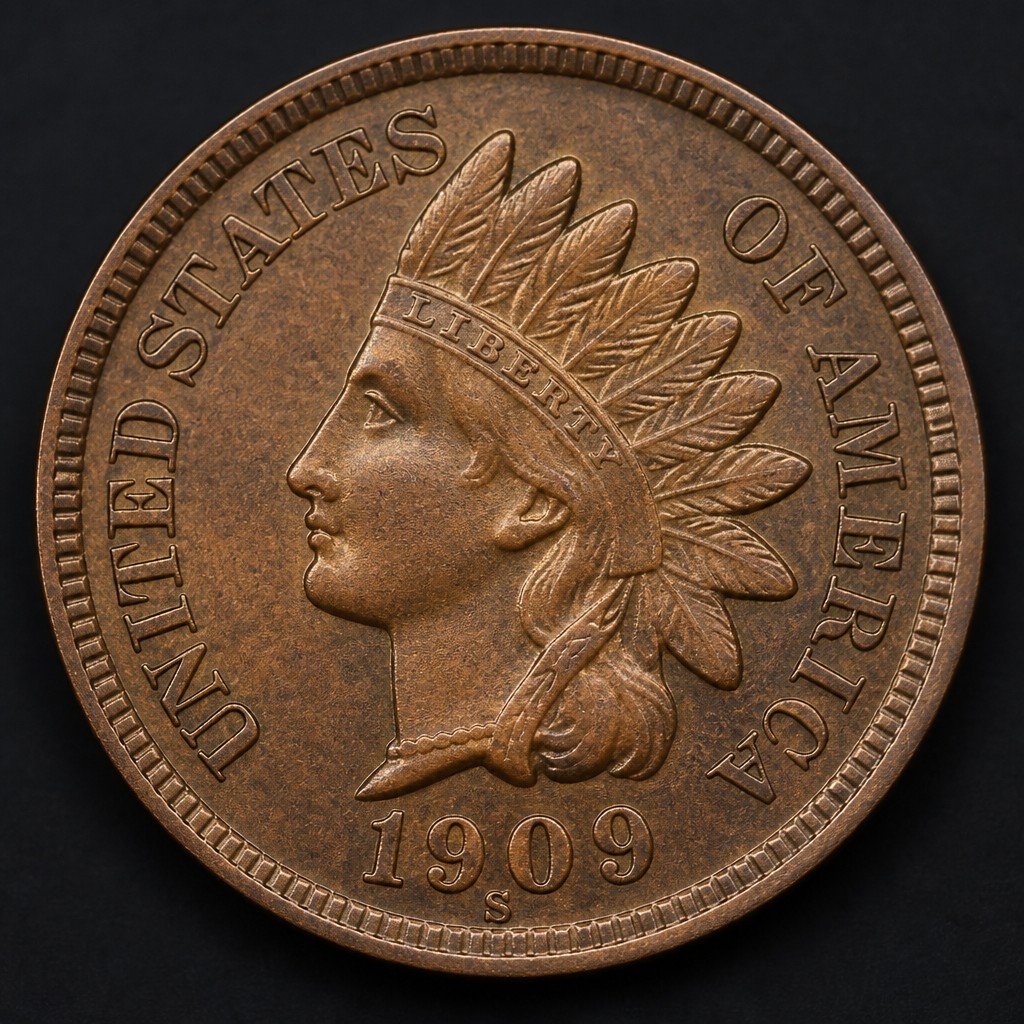
What It Is
The 1909-S Indian Head Cent is the final year of the long-running Indian Head design and, thanks to a low mintage at the San Francisco Mint, is one of the key dates collectors seek most within the series.
Obverse Design
Liberty wears a Native American-style feathered headdress, facing left, with UNITED STATES OF AMERICA around the border and the date, 1909, below.
Reverse Design
An oak wreath tied with a ribbon and topped by a shield surrounds the words ONE CENT.
Size, Weight, Metal, and Edge
The coin is bronze, about 95% copper with the remainder tin and zinc, weighing approximately 3.11 grams with a diameter of 19mm and a plain edge, matching other late-date Indian Head cents.
Mint Marks
The small letter "S" mint mark is located on the reverse, positioned below the wreath, near the ribbon knot where it meets the bottom of the design just above the rim. This is the only place a mint mark appears on this coin, and its correct size, shape, and placement are essential to confirming an authentic San Francisco strike.
Telling It Apart From Similar Coins
The 1909-S is easily confused with the far more common 1909 Philadelphia issue if the mint mark area is not checked, since the two share an identical design apart from the mint mark. It should also not be confused with the famous 1909-S VDB Lincoln cent, a different coin entirely that replaced the Indian Head design that same year and carries a completely different obverse portrait.
Judging Condition
Examine the headdress feather tips, the "LIBERTY" lettering on the headband, and the ribbon and wreath detail on the reverse for sharpness. Because this is a scarce, sought-after date, coins are often studied closely at every grade level, from heavily worn to uncirculated, so consistent, natural wear patterns across the whole coin are an important check.
Authenticity Notes
Because of the significant value gap between the common 1909 Philadelphia cent and the scarce 1909-S, added or altered mint marks are a well-known concern. Warning signs include an "S" that looks pasted on, has different color or texture than the surrounding metal, sits in a slightly wrong position, or shows tooling marks around its edges under magnification. A mint mark that appears too crisp compared to the wear on the rest of the coin is also worth extra scrutiny.
Frequently asked questions
Where is the mint mark on a 1909-S Indian Head Cent?
The small "S" is on the reverse, below the wreath near the ribbon knot, just above the rim.
Why is the 1909-S Indian Head Cent valuable?
It had a low mintage at the San Francisco Mint and is the final year of the Indian Head design, making it a key date for the series.
Is the 1909-S Indian Head Cent the same as the 1909-S VDB cent?
No, the 1909-S VDB is a Lincoln cent with a different obverse portrait; the 1909-S Indian Head Cent still uses the feathered headdress design.
How can I check if the S mint mark is genuine?
Compare its size, shape, and position to reference images, and look under magnification for signs of tooling, added metal, or a mismatched surface texture around the mint mark.