
How to Identify the 1900-O/CC Morgan Dollar
A New Orleans Morgan dollar struck from a reverse die that originally carried a Carson City mint mark, leaving faint traces of the CC letters beneath the final O.
Read the full 1900-O/CC Morgan Dollar encyclopedia entry →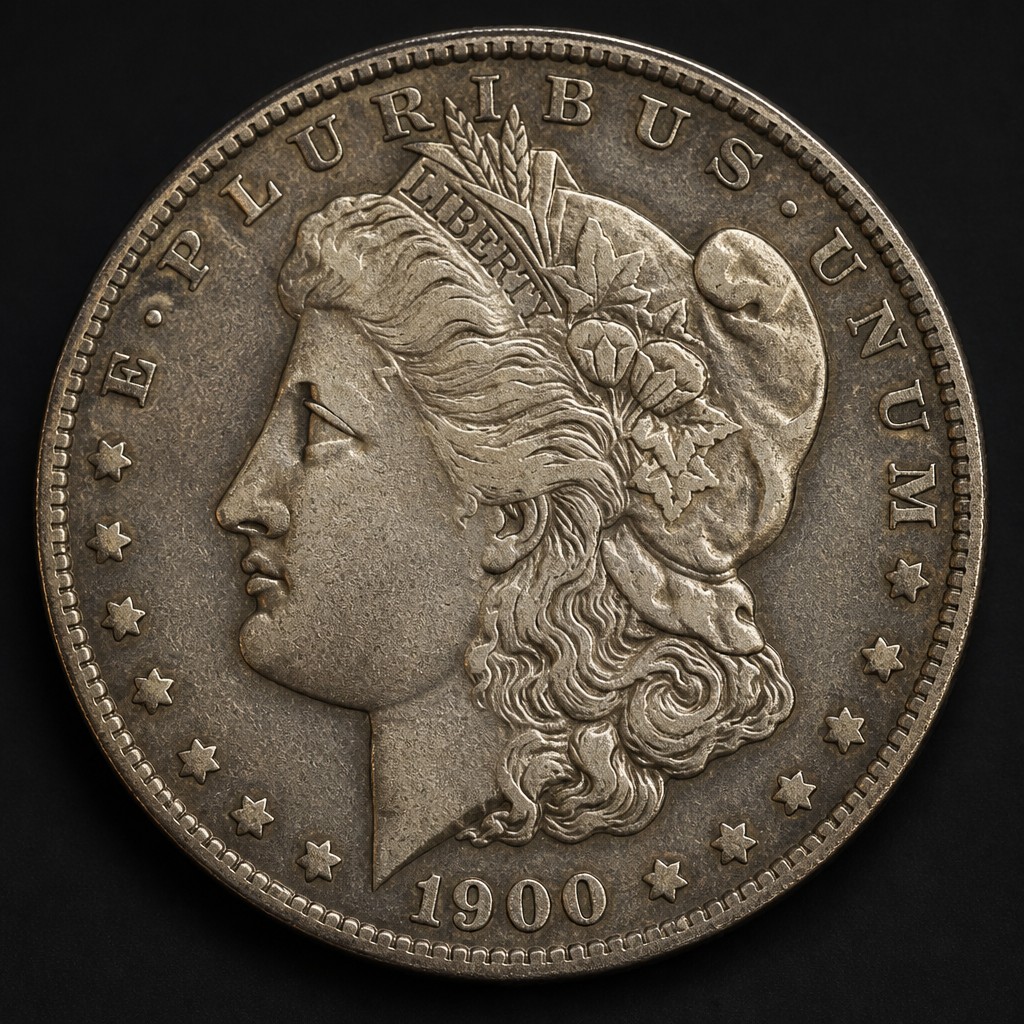
What the Coin Is
This variety arose when a reverse die intended for, or previously punched with, a Carson City "CC" mint mark was repunched with an "O" for New Orleans and used in production. The result is a coin dated 1900 with an O mint mark that shows underlying remnants of the original CC letters, a well-known variety among Morgan dollar collectors.
Obverse Design & Inscriptions
The obverse depicts Liberty's head facing left, wearing a cap inscribed LIBERTY, framed by a wreath of wheat and cotton, with stars around the rim and the date 1900 below the portrait.
Reverse Design & Inscriptions
The reverse shows an eagle with wings spread holding arrows and an olive branch, above a wreath tied with a bow. UNITED STATES OF AMERICA and IN GOD WE TRUST surround the design, with E PLURIBUS UNUM above the eagle and ONE DOLLAR below.
Size, Weight, Metal & Edge
The coin is 38.1mm in diameter, weighs 26.73 grams, is composed of 90% silver and 10% copper, and has a reeded edge.
Mint Marks & Where to Find Them
The mint mark sits on the reverse just below the wreath bow. On this variety, look closely at the O for faint traces of the C letters peeking out from its sides, top, or bottom, best seen under magnification and angled light.
Telling It Apart From Similar Coins
A normal 1900-O dollar shows a clean, single O with no extra marks nearby. The overmintmark variety will show curved remnants that don't belong to the O's own shape, often appearing as small bumps or lines at specific points around the letter. Comparing the suspect coin to a known normal 1900-O under magnification helps confirm the difference.
Judging Condition at a Glance
Examine Liberty's cheek and hair details and the eagle's breast feathers for wear, since these high points smooth out first with circulation. A well-preserved mint mark area also helps when trying to detect the underlying CC remnants, as heavy wear can obscure the diagnostic marks.
Authenticity Red Flags
Because this variety carries collector interest, be alert for mint marks that have been artificially altered or added with tooling to simulate an overmintmark. Genuine die-doubled remnants show the same metal flow and luster as the surrounding surface, while an altered mint mark often shows tool marks, an unnatural texture, or interruptions in the surface finish around the letter.
Frequently asked questions
What causes the O/CC overmintmark on this dollar?
A reverse die that had originally been punched with a CC mint mark was repunched with an O and used to strike New Orleans coins, leaving faint CC remnants beneath the O.
Where should I look to spot this variety?
Examine the O mint mark on the reverse below the wreath bow, checking for curved traces of C letters around its edges under magnification.
How heavy is a Morgan dollar?
It weighs 26.73 grams and is 90% silver.
Can wear hide the overmintmark detail?
Yes, significant circulation wear can smooth out the faint remnants, making the variety harder to confirm on well-worn coins.