
How to Identify the 1900 Lafayette Dollar
A silver commemorative dollar honoring George Washington and the Marquis de Lafayette, notable as the only commemorative coin issued in dollar denomination during the 19th century.
Read the full 1900 Lafayette Dollar encyclopedia entry →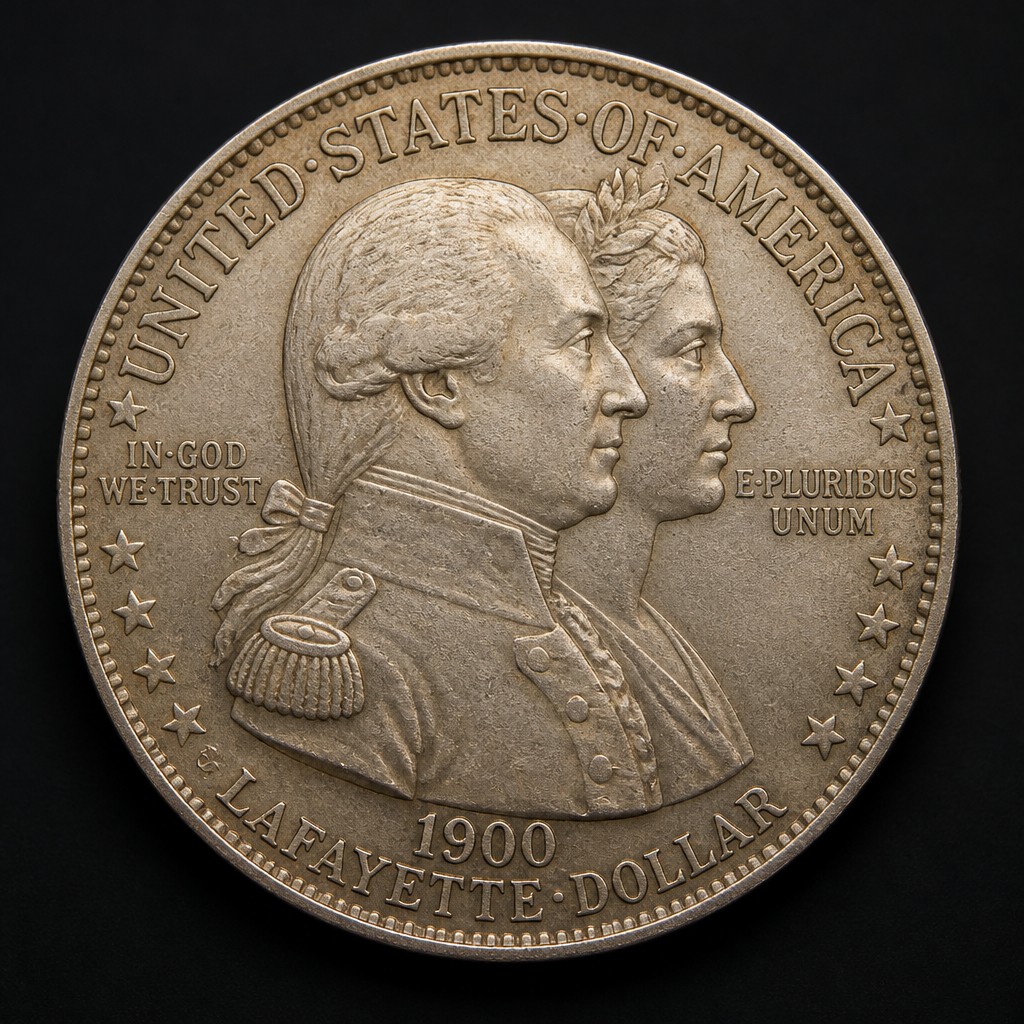
What It Is
The Lafayette Dollar was struck in 1900 to help fund a monument to the Marquis de Lafayette in Paris, commemorating French assistance during the American Revolutionary War. It holds the distinction of being the only silver dollar-denomination commemorative coin produced in the 19th century and one of the earliest U.S. commemorative coins overall.
Obverse Design and Inscriptions
The obverse features conjoined (overlapping) busts of George Washington and the Marquis de Lafayette facing right, with Washington's bust in front. Around the rim reads "UNITED STATES OF AMERICA" and "LAFAYETTE DOLLAR," with the date "1900" below the busts.
Reverse Design and Inscriptions
The reverse depicts Lafayette on horseback, based on an existing equestrian statue design, with the inscription "ERECTED BY THE YOUTH OF THE UNITED STATES IN HONOR OF GEN LAFAYETTE" encircling the design, referencing the fact that the monument was largely funded through public subscription.
Size, Weight, Metal, and Edge
The Lafayette Dollar matches standard silver dollar specifications of the era: approximately 38.1 mm in diameter, 26.73 grams, struck in 90% silver and 10% copper, with a reeded edge.
Mint Marks and Where to Find Them
All Lafayette Dollars were struck at the Philadelphia Mint and carry no mint mark, so there is no branch mint letter to search for on this issue, unlike many other silver dollars of the period.
Telling It Apart From Similar Coins
Because of its unique double-portrait obverse and equestrian reverse, the Lafayette Dollar is not easily mistaken for regular-issue Morgan or Trade dollars of the same silver dollar size. The key distinguishing features are the conjoined Washington-Lafayette busts on the obverse and the mounted rider on the reverse, both unlike any circulating dollar design of the time.
Judging Condition at a Glance
Check the high points of the design for wear: Washington's cheek and hair on the obverse, and Lafayette's arm, leg, and the horse's mane and flank on the reverse. Because this coin was often saved as a souvenir rather than circulated heavily, many surviving examples show only light to moderate wear, but cleaned or artificially brightened surfaces are common due to its popularity as a keepsake.
Authenticity Red Flags
Given its historical significance and value, this coin has been counterfeited, so weigh and measure any example against the standard 26.73 gram, 38.1 mm specifications, and examine the fine details of both portraits and the horse for softness or unnatural texture that might indicate a cast or struck counterfeit. Look also for die-like doubling or aberrant surfaces near the lettering, and be wary of coins that have been noticeably polished or altered to hide wear or defects, as this is common on frequently handled souvenir coins of this type.
Frequently asked questions
What event does the Lafayette Dollar commemorate?
It commemorates the Marquis de Lafayette's assistance to the American cause during the Revolutionary War and helped fund a statue of Lafayette erected in Paris.
Does the Lafayette Dollar have a mint mark?
No, all examples were struck at the Philadelphia Mint and carry no mint mark.
What makes the obverse design unusual?
It shows two conjoined portraits, Washington and Lafayette overlapping, rather than a single bust as seen on most U.S. coins.
How heavy is a Lafayette Dollar compared to a Morgan Dollar?
It shares the same specifications as the Morgan Dollar: about 26.73 grams and 38.1 mm in diameter, both struck in 90% silver.