
How to Identify the 1888/7 Morgan Dollar Overdate
A Morgan silver dollar variety in which traces of an earlier digit are visible beneath the final numeral of the date, the result of a working die being repunched with a new year.
Read the full 1888/7 Morgan Dollar Overdate encyclopedia entry →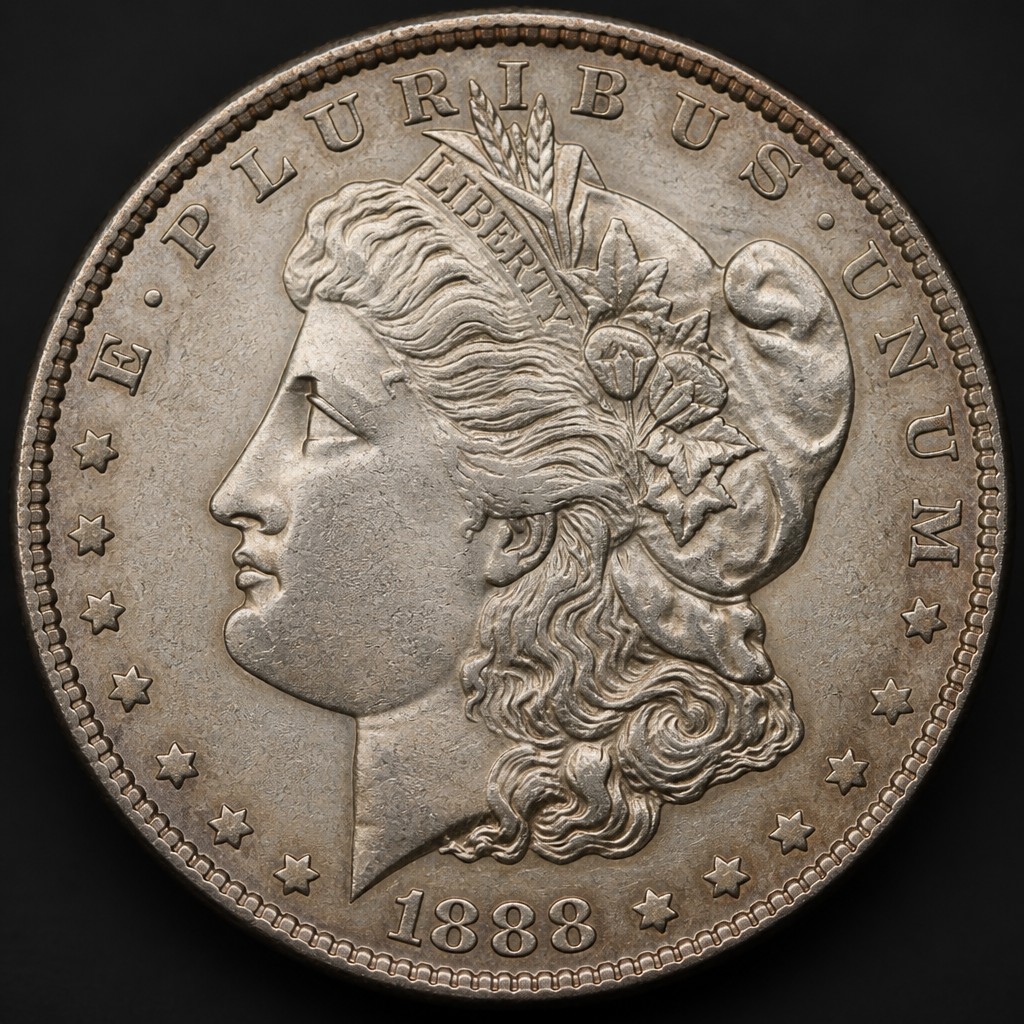
What the Coin Is
Overdates occur in the Morgan dollar series when a die originally prepared with one year's date was repunched with a new date, often to save on tooling costs. The 1888/7 designation refers to a die state where remnants of a "7" appear beneath the final "8" in the date, a variety collectors identify through close examination of the last digit.
Obverse Design & Inscriptions
The obverse features Lady Liberty's head facing left, wearing a cap inscribed LIBERTY and crowned with a wreath of wheat, cotton, and other crops. Stars surround the portrait, and the date sits at the bottom. This is the area to inspect closely for overdate evidence.
Reverse Design & Inscriptions
The reverse shows an eagle with wings spread, holding arrows and an olive branch, framed by a wreath. UNITED STATES OF AMERICA and IN GOD WE TRUST appear around the design, with E PLURIBUS UNUM above the eagle and ONE DOLLAR below the wreath.
Size, Weight, Metal & Edge
Morgan dollars measure 38.1mm in diameter, weigh 26.73 grams, are struck in 90% silver and 10% copper, and have a reeded edge.
Mint Marks
Morgan dollars carry their mint mark on the reverse below the wreath bow: no letter for Philadelphia, "O" for New Orleans, "S" for San Francisco, "CC" for Carson City, and "D" for the later Denver strikes of 1921.
Telling It Apart From Similar Coins
To confirm an overdate, use magnification and angled light on the last digit of the date. Genuine repunching typically leaves a faint curved or serif-like remnant peeking out from beneath or beside the final numeral, rather than a uniform, single-depth digit. Compare the suspect area against a normal-date example of the same year for reference.
Judging Condition at a Glance
Look at Liberty's cheek, the hair above her ear, and the eagle's breast feathers for smoothing, as these are the first areas to show wear. A well-struck coin will show crisp wheat kernels in the wreath and sharp feather detail on the eagle.
Authenticity Red Flags
Because overdate varieties can carry a premium, be cautious of dates that have been artificially altered with tooling or acid to fake a repunched appearance. Genuine die doubling shows raised, rounded metal consistent with the rest of the coin's relief, while an added or engraved "error" often looks flat, scratched, or interrupts the surrounding field texture.
Frequently asked questions
Where exactly should I look for the overdate feature?
Examine the last digit of the date closely under magnification; genuine repunching shows a faint remnant of an earlier numeral peeking from beneath or beside the final digit.
What is the difference between a Morgan dollar overdate and normal date wear?
Wear smooths down design elements evenly, while an overdate shows an extra raised line or curve that is part of the original die, not caused by circulation.
What metal are Morgan dollars made from?
They are 90% silver and 10% copper, weighing 26.73 grams.
How do I find the mint mark?
Look on the reverse just below the bow at the base of the wreath.