
How to Identify the 1883 No Cents Liberty Head Nickel
How to recognize the first-year Liberty Head Nickel design that omitted the word CENTS, once mistaken for gold coinage after gold-plating scams.
Read the full 1883 No Cents Liberty Head Nickel encyclopedia entry →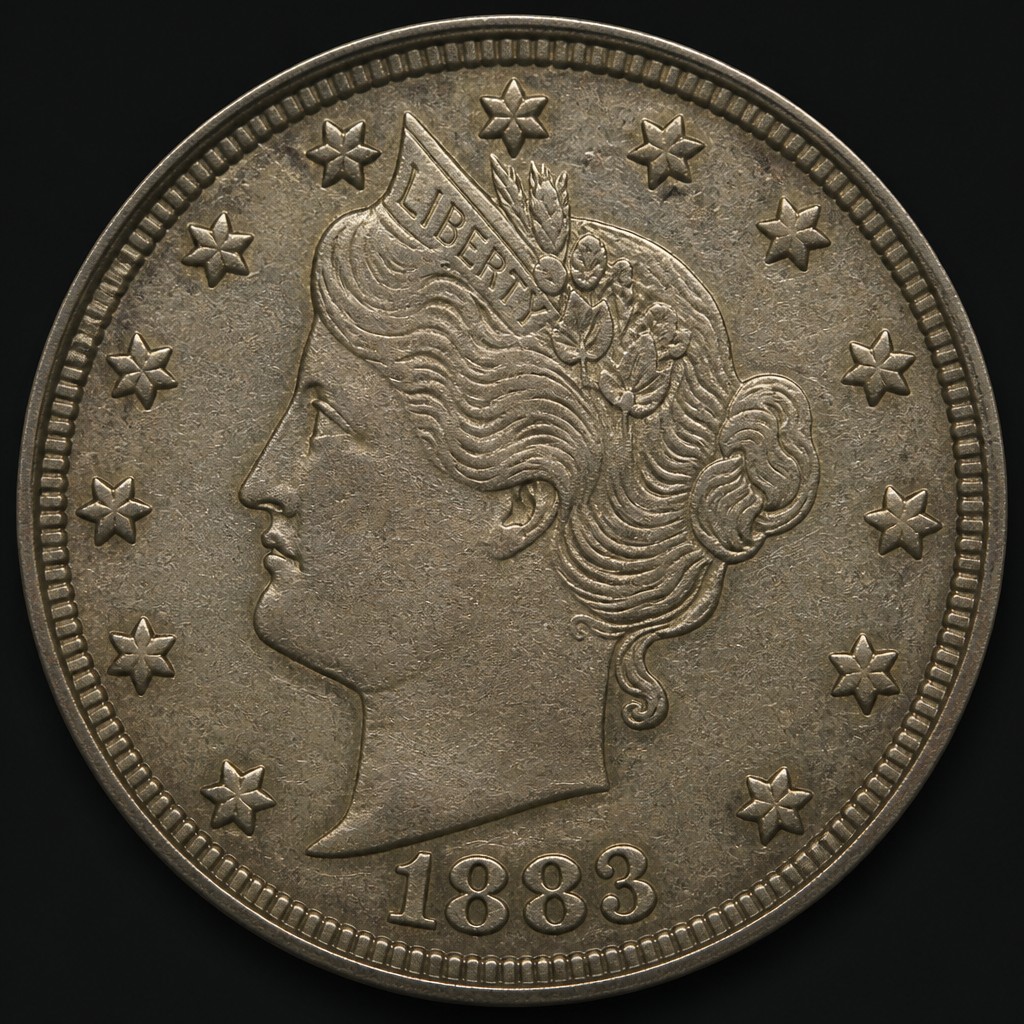
What It Is
The 1883 No Cents Liberty Head Nickel is the first-year version of the Liberty Head design, released before the word CENTS was added to the reverse. Its similarity in size and general design to the $5 gold half eagle led some people to gold-plate these coins and pass them off as gold, earning the nickname "Racketeer Nickel." Despite that colorful history, it is a common coin in the series and is prized more for its story and its role as a first-year type coin than for actual rarity.
Obverse Design
The obverse depicts Liberty's head facing left, with a coronet inscribed LIBERTY across the front. Stars surround the portrait near the rim, and the date sits below the bust.
Reverse Design
The reverse features a large Roman numeral V at the center, surrounded by a wreath of corn, wheat, cotton, and tobacco leaves. UNITED STATES OF AMERICA arcs around the top border. Unlike later issues struck later the same year, this version has no word CENTS anywhere on the reverse, which is the single most important identifying feature of the type.
Size, Weight, Metal, Edge
The coin is 21.2mm in diameter, weighs 5.00 grams, is composed of 75% copper and 25% nickel, and has a plain edge.
Mint Marks
All 1883 No Cents Liberty Head Nickels were struck at the Philadelphia Mint and carry no mint mark on the reverse, since Philadelphia coins of this period did not use a mint mark letter at all.
Telling It Apart from Similar Coins
The absence of the word CENTS below the wreath is the defining feature that separates this variety from the 1883 With Cents version and all later Liberty Head Nickels, which include CENTS beneath the wreath from later in 1883 onward. Some No Cents examples were gold-plated in period scams; a nickel with obvious plating, an unusual color, or a gold tone should be recognized today as an altered novelty piece from that era rather than a genuine gold coin of any kind.
Grading at a Glance
Wear appears first on Liberty's hair and cheek on the obverse. On the reverse, check the wreath's leaf detail and the ribbon at the bottom, which flatten with circulation fairly quickly. Because this date is common in absolute terms, condition plays a large role in how desirable and valuable a given example ultimately is compared to its peers.
Authenticity Red Flags
Watch for coins with visible plating, unusual yellow or gold coloring, or a worn, dull, or repeatedly handled look consistent with old gold-plating scams from more than a century ago. Also compare the reverse carefully to confirm CENTS is genuinely absent rather than removed or filed off a later coin, which would show damage, tool marks, or an unnatural surface where the word should otherwise appear.
Frequently asked questions
Why doesn't the reverse say CENTS?
It's the first-year design used briefly in 1883 before the Mint added the word CENTS to prevent confusion with gold coinage.
What is a 'Racketeer Nickel'?
A nickname for these coins after some were gold-plated and passed off as $5 gold pieces due to their similar size and design.
Is the 1883 No Cents nickel rare?
No, it was struck in large numbers and is a common coin, valued more for condition than scarcity.
How do I know if my coin is No Cents or With Cents?
Check the reverse below the wreath: if the word CENTS is absent, it's the No Cents variety; if present, it's the With Cents version.