
How to Identify the 1876-CC Twenty-Cent Piece
A guide to identifying the 1876-CC twenty-cent piece, the great rarity of the series believed to have been mostly melted, covering its design, mint mark, and why professional verification matters.
Read the full 1876-CC Twenty-Cent Piece encyclopedia entry →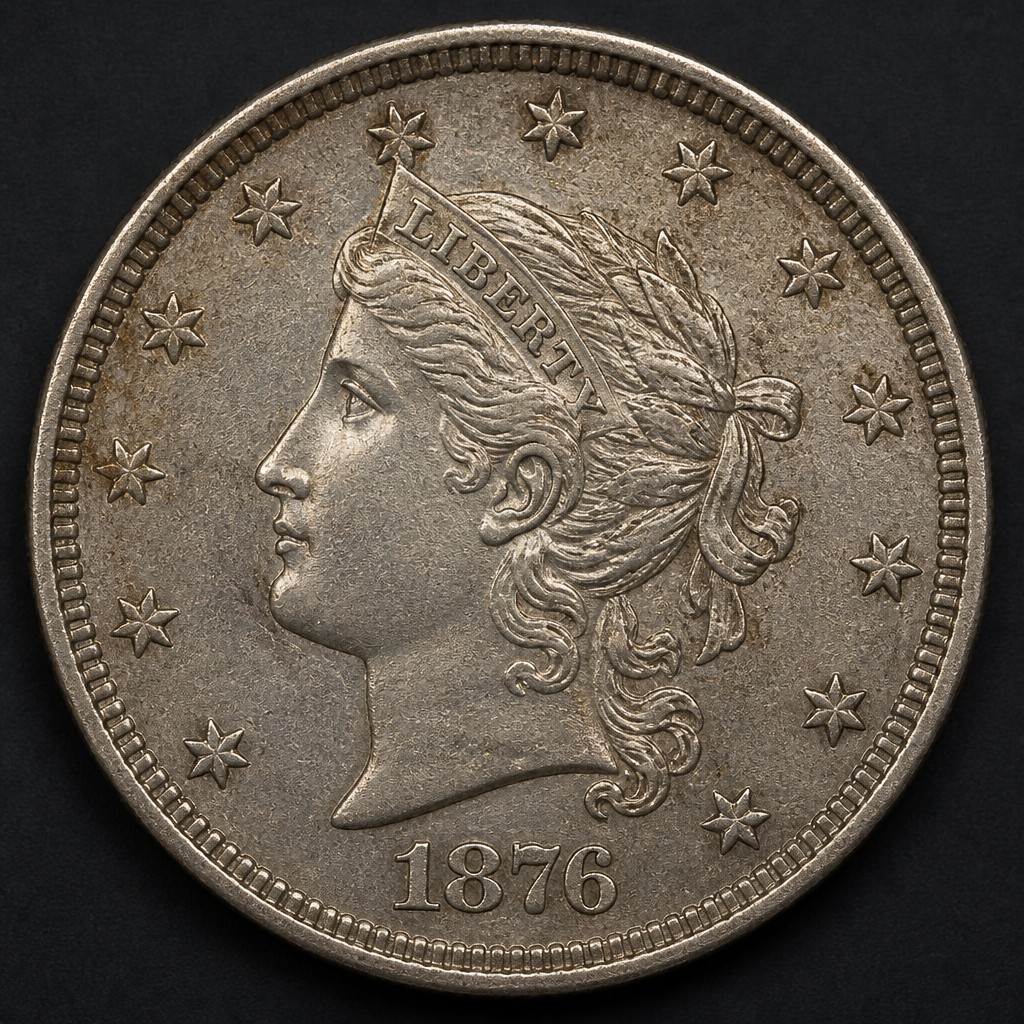
What It Is
The 1876-CC twenty-cent piece, struck at the Carson City mint, is the most famous rarity of the entire twenty-cent series. Historical records and long-standing numismatic accounts indicate that most of the original mintage was melted by the Mint rather than released into circulation, leaving only a small number of survivors known today among collectors and institutions.
Obverse Design
Liberty sits holding a shield inscribed "LIBERTY," with a liberty cap on a pole behind her, stars surrounding the border, and the date at the bottom, matching the standard design used throughout the series' short run.
Reverse Design
An eagle with spread wings grips arrows and an olive branch, with "UNITED STATES OF AMERICA" around the rim and "TWENTY CENTS" below.
Size, Weight, Metal & Edge
It measures 22mm in diameter, weighs 5 grams, is struck in 90% silver, and has a plain, smooth edge rather than a reeded one.
Mint Mark Location
The "CC" mint mark appears on the reverse, below the eagle and just above the "TWENTY CENTS" lettering, identifying it as a Carson City product.
Telling It Apart from Similar Coins
Confirm the "CC" mint mark carefully, since this is what separates it from the far more available Philadelphia and San Francisco issues of the same general design. The plain edge remains the quickest way to rule out confusion with a same-sized quarter dollar before turning attention to the mint mark itself.
Judging Condition at a Glance
Check Liberty's head, breast, and knee on the obverse, and the eagle's breast and wing feathers on the reverse for wear, keeping in mind that surviving examples span a wide range of grades from heavily worn pieces that clearly circulated to well-preserved examples with strong original detail.
Authenticity Red Flags
Given its extreme rarity and value, this date is a common target for an added or altered "CC" mint mark placed on a more common twenty-cent piece to misrepresent its origin. Compare the mint mark's size, font, and exact position closely to documented genuine Carson City strikes, and look for tooling marks or inconsistent surface texture around it. Because of the coin's outsized significance within the series, any candidate example should be verified by an established professional grading service before drawing conclusions.
Frequently asked questions
Why is the 1876-CC twenty-cent piece so rare?
Numismatic records indicate most of the original mintage was melted by the Mint rather than released, leaving only a small number of known survivors.
Where is the CC mint mark located?
On the reverse, below the eagle and just above the words TWENTY CENTS.
How can I tell if a CC mint mark has been added to a common coin?
Compare its size, font, and placement to documented genuine Carson City strikes, and check for tooling marks or an inconsistent surface around the mint mark.
What edge type should the coin have?
A plain, smooth edge, not the reeded edge found on quarters of similar size.
What grade range do surviving 1876-CC examples fall into?
Known survivors range from heavily circulated pieces to well-preserved examples, reflecting the small number that escaped being melted.