
How to Identify the 1873 Open 3 vs Closed 3 Indian Head Cent
An Indian Head Cent date variety where the final digit of 1873 was punched in two distinct styles, an open 3 with a wider gap and a closed 3 with the loops nearly touching.
Read the full 1873 Open 3 vs Closed 3 Indian Head Cent encyclopedia entry →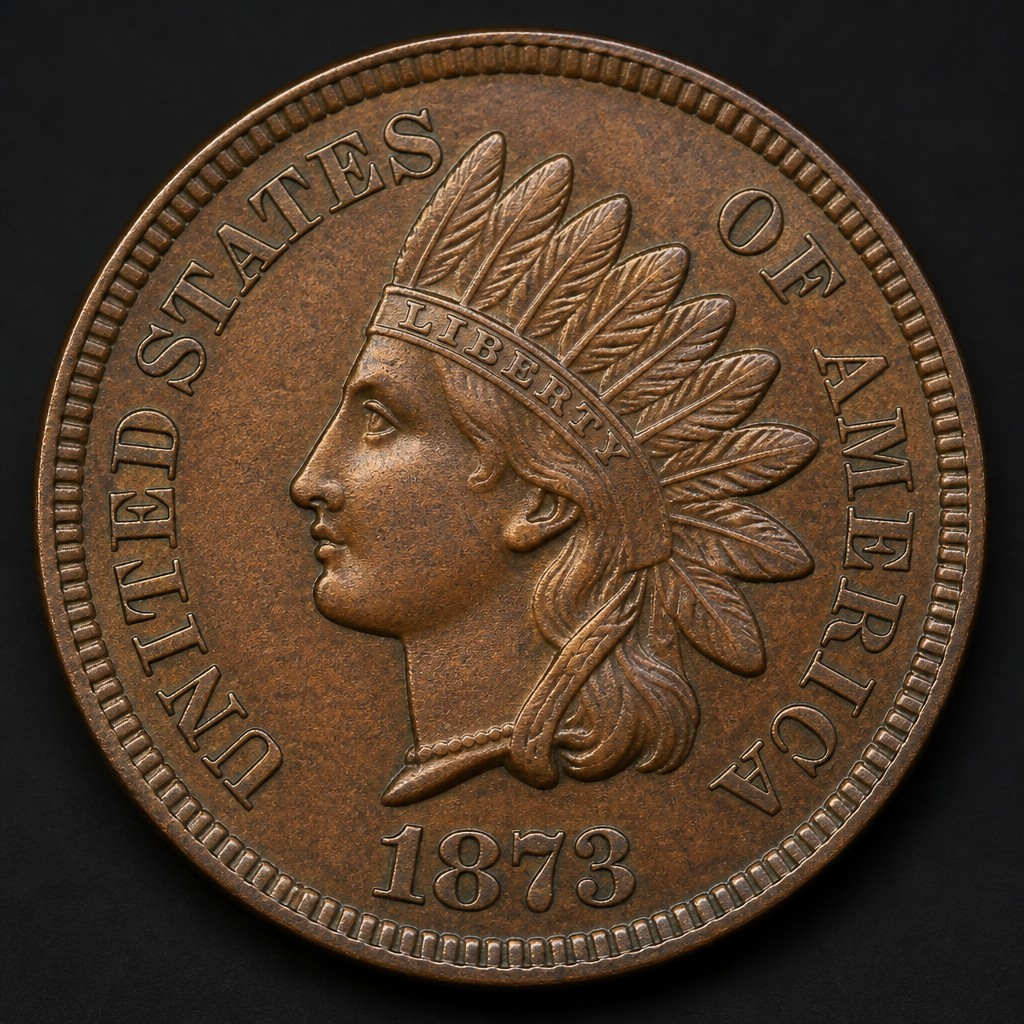
What It Is
The Indian Head Cent was struck from 1859 to 1909. In 1873, two different logotype punches for the numeral "3" were used during the year, resulting in two recognizable date styles on otherwise identical coins: the "Open 3," where the two loops of the numeral have a wide gap between them, and the "Closed 3," where the loops nearly meet, making the digit look more compact.
Obverse Design and Inscriptions
The obverse shows Liberty depicted as a Native American woman wearing a feathered headdress, with "UNITED STATES OF AMERICA" arcing above and the date at the bottom. The distinguishing feature between the two varieties is found entirely in the shape of the final "3" in the date.
Reverse Design and Inscriptions
The reverse displays the denomination "ONE CENT" within a wreath, tied at the bottom with a bow or ribbon. This design is identical on both the Open 3 and Closed 3 varieties, so the reverse offers no help in telling them apart.
Size, Weight, Metal, and Edge
Both varieties share the same specifications: 19 mm in diameter and 3.11 grams, composed of a bronze alloy of 95% copper with 5% tin and zinc. The edge is plain.
Mint Marks and Where to Find Them
All Indian Head Cents from 1873 were struck at the Philadelphia Mint and bear no mint mark, so there is no branch mint letter to search for when distinguishing these date varieties.
Telling It Apart From Similar Coins
The Open 3 and Closed 3 are best compared side by side or against reference images. On the Open 3, the top loop of the numeral curves away from the bottom loop, creating a visible gap; on the Closed 3, the loops curl in close enough to nearly touch, giving the digit a rounder, more compact appearance. Magnification helps when the coin shows wear, since a worn date can blur the distinction between the two styles.
Judging Condition at a Glance
Check the feathers of the headdress and the ribbon end for sharpness, as these are common high points that wear first. On the reverse, the bow knot and the tips of the wreath leaves show wear early as well. A coin with a clear, unworn date makes distinguishing Open 3 from Closed 3 much easier than a heavily worn example where the digit shape is less distinct.
Authenticity Red Flags
Because worn or low-grade 1873 cents can make the "3" ambiguous, be cautious of sellers definitively labeling a heavily worn coin as one variety or the other without clear photographic evidence. Also watch for coins where the date area shows signs of tooling, re-engraving, or an unnatural surface texture, which could indicate an attempt to alter a common variety into a scarcer one.
Frequently asked questions
What is the difference between Open 3 and Closed 3?
It refers to the shape of the final digit in the 1873 date: the Open 3 has a visible gap between its two loops, while the Closed 3 has loops that nearly touch, appearing more compact.
Does the variety affect anything besides the date?
No, the obverse portrait and reverse wreath design are identical on both varieties; only the shape of the last numeral in the date differs.
Can I tell the variety apart on a worn coin?
It can be difficult, since wear can blur the digit's shape. Magnification and comparison to reference images of both styles helps with less clear examples.
Where was the 1873 Indian Head Cent minted?
All examples were struck at the Philadelphia Mint, which produced no mint mark on coins of this era.