
How to Identify the 1873 Doubled Die Two-Cent Piece
The final year of the short-lived Two-Cent Piece series includes a doubled die variety, where doubling from a misaligned hubbing process is visible in the design and lettering.
Read the full 1873 Doubled Die Two-Cent Piece encyclopedia entry →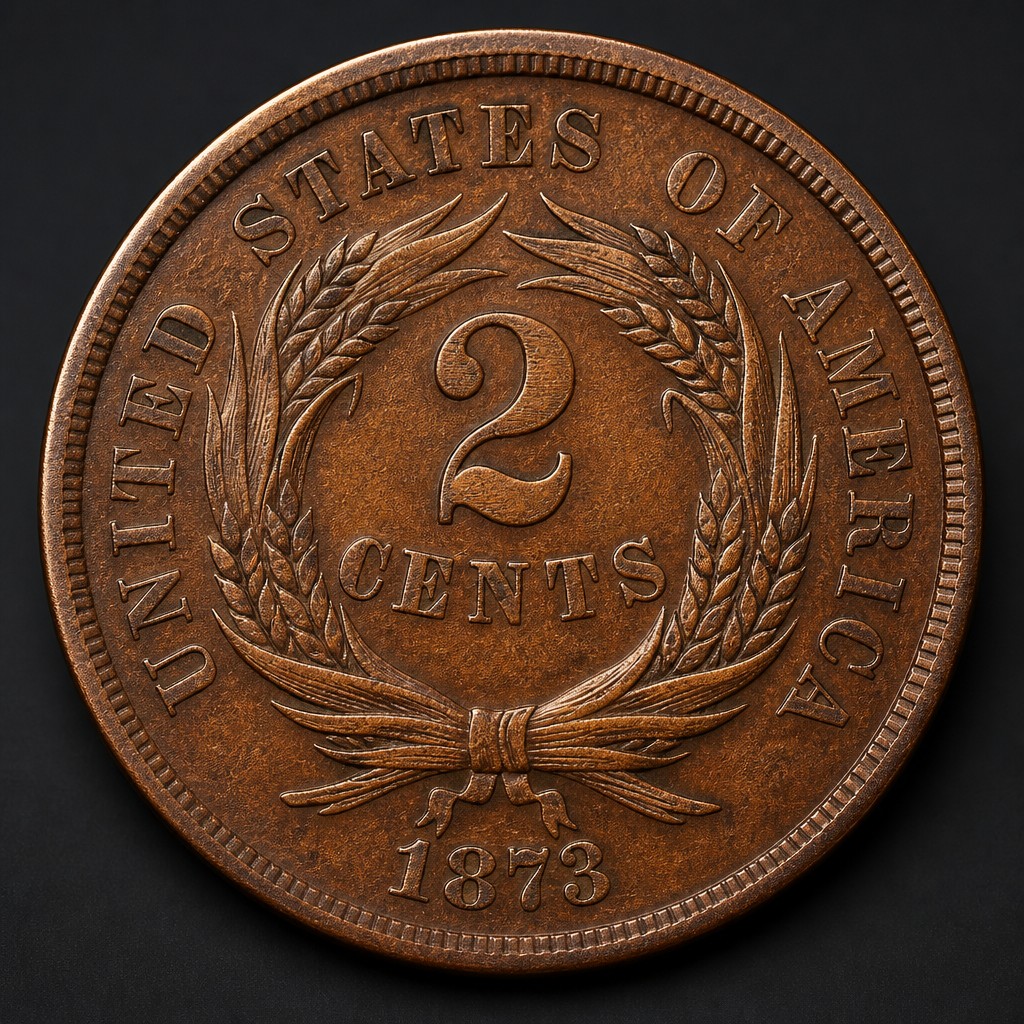
What It Is
The Two-Cent Piece was minted from 1864 to 1873, and it was the first U.S. coin to bear the motto "IN GOD WE TRUST." By 1873, the denomination was being phased out, and coins from that final year were struck in relatively small numbers, mostly as proofs for collectors. The doubled die variety shows evidence that the working die received two slightly misaligned hub impressions during its creation.
Obverse Design and Inscriptions
The obverse features a shield with a ribbon banner across it reading "IN GOD WE TRUST," with the date below the shield. On the doubled die variety, examine the motto lettering and date under magnification for a raised, secondary outline running parallel to the primary design elements, most often noted in the lettering of the motto.
Reverse Design and Inscriptions
The reverse shows the denomination spelled out as "2 CENTS" within a wreath of wheat and other grain, encircled by the words that make up the coin's identity. There is no additional lettering around the rim beyond the wreath and denomination.
Size, Weight, Metal, and Edge
The Two-Cent Piece measures 23 mm in diameter and weighs 6.22 grams, composed of a bronze alloy (95% copper, 5% tin and zinc). The edge is plain.
Mint Marks and Where to Find Them
All Two-Cent Pieces, including every 1873 example, were struck exclusively at the Philadelphia Mint and carry no mint mark, so there is no branch mint letter to check on this series.
Telling It Apart From Similar Coins
Since 1873 two-cent pieces are scarce and largely proof-only, compare any example carefully to known reference photos of the date and doubled die variety. The bronze composition and shield-and-ribbon obverse distinguish this denomination from the similarly sized Indian Head Cent, which uses a different obverse portrait and is made of a different bronze alloy composition with a somewhat different color over time.
Judging Condition at a Glance
Because most 1873 two-cent pieces are proof strikes intended for collectors, look for sharp, fully struck details on the shield's vertical stripes and the wreath's grain heads, along with mirror-like or deeply reflective fields typical of proof coinage, rather than the softer texture and wear pattern seen on circulated coins from earlier dates in the series.
Authenticity Red Flags
Because 1873-dated two-cent pieces are scarce and desirable, be cautious of coins with an unnaturally uniform or altered surface that might indicate cleaning, re-toning, or artificial enhancement of a common-date coin's shield to mimic doubling. Genuine doubling should appear as a natural, raised part of the coin's original strike, not a scratch, tool mark, or added material, and the coin's overall color and surface texture should be consistent across the entire piece.
Frequently asked questions
Why are 1873 two-cent pieces relatively scarce?
The denomination was being discontinued that year, and most 1873 pieces were struck in limited numbers, largely as proof coins for collectors rather than for circulation.
Does the two-cent piece have a mint mark?
No, all Two-Cent Pieces were made only at the Philadelphia Mint, so there is no mint mark to find on any date in the series.
Where does the doubling appear on this variety?
It is most often noted in the motto lettering and date on the shield side of the coin, visible as a raised secondary outline under magnification.
What metal is the Two-Cent Piece made of?
It is a bronze alloy of 95% copper with small amounts of tin and zinc, giving it a reddish-brown color typical of bronze coinage from this era.