
How to Identify the 1872-CC Seated Liberty Dime
A guide to the 1872-CC Seated Liberty dime's design, Carson City mint mark placement, low mintage, and how to screen for common mint-mark alterations.
Read the full 1872-CC Seated Liberty Dime encyclopedia entry →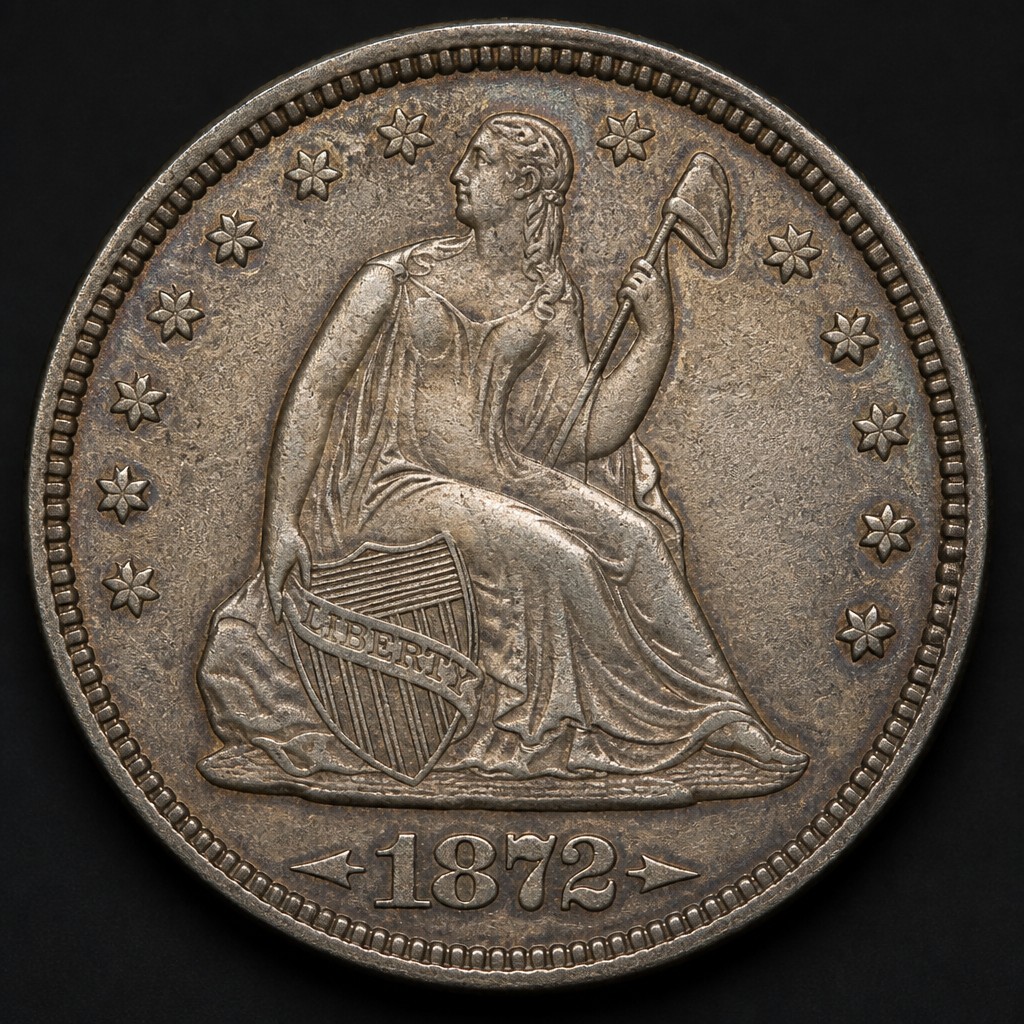
What It Is
The 1872-CC dime is a Seated Liberty dime struck during the Carson City Mint's second year of dime production. Like its 1871-CC predecessor, it had a small original mintage and is considered a key date within the series, one of a run of low-mintage Carson City dimes produced in the mint's earliest years of operation.
Obverse Design
Liberty sits on a rock, holding a liberty-cap-topped pole and a shield inscribed LIBERTY, with UNITED STATES OF AMERICA around the border and the date below, part of the "Legend" obverse design used from 1860 onward in place of the earlier ring of stars.
Reverse Design
The reverse reads "ONE DIME" within a wreath, with the "CC" mint mark in small letters at the base of the wreath, the same general placement used on all Carson City Seated Liberty dimes.
Size, Weight, Metal, and Edge
The coin measures about 17.9mm in diameter and weighs approximately 2.67 grams in a silver alloy, with a reeded edge and no edge lettering.
Mint Marks
The "CC" mint mark below the wreath identifies Carson City production, distinguishing it from the Philadelphia strikes of the same date, which carry no mint mark, and from any San Francisco strikes, which would show an "S" instead.
Telling It Apart From Similar Coins
Checking the mint mark is essential, since 1872 dimes were struck at more than one facility. Reading the date carefully also separates this issue from the similarly rare 1871-CC and 1873-CC dimes, which share the same general design, and comparing the overall strike quality to known genuine examples can help confirm consistency with authentic Carson City production of the period.
Judging Condition at a Glance
Wear first shows on Liberty's knee, breast, and head, and on the wreath ribbon on the reverse. Given the low original mintage, most surviving examples show real circulation wear, and coins with clear, legible design elements are considered desirable for the grade, while examples retaining sharp rims and a fully readable date are especially notable.
Authenticity Red Flags
Because of its rarity and value, the 1872-CC dime is sometimes imitated by adding a fake CC mint mark to a more common Philadelphia dime of the same date. Examine the mint mark under magnification for the correct size, font, and placement compared with verified genuine coins, and look for signs of tooling, filing, or an inconsistent surface around the letters. Certification from a recognized grading service is advisable given the value involved, since it provides an independent, expert check that a casual visual inspection cannot fully replace.
Frequently asked questions
Why is the 1872-CC dime considered scarce?
It had a small original mintage at the Carson City Mint during the mint's early years of dime production.
Where should I look for the mint mark?
At the base of the wreath on the reverse, where a small 'CC' identifies Carson City coinage.
How do I tell it apart from an 1871-CC or 1873-CC dime?
By reading the date; the coins share the same overall design but differ in the date digits.
What is the main authenticity concern with this coin?
Added or altered mint marks, since genuine CC examples carry a significant premium over common Philadelphia issues.