
How to Identify the 1864 Two-Cent Piece
A guide to the first-year 1864 Two-Cent Piece, the coin that introduced 'IN GOD WE TRUST,' including its Small Motto and Large Motto varieties.
Read the full 1864 Two-Cent Piece encyclopedia entry →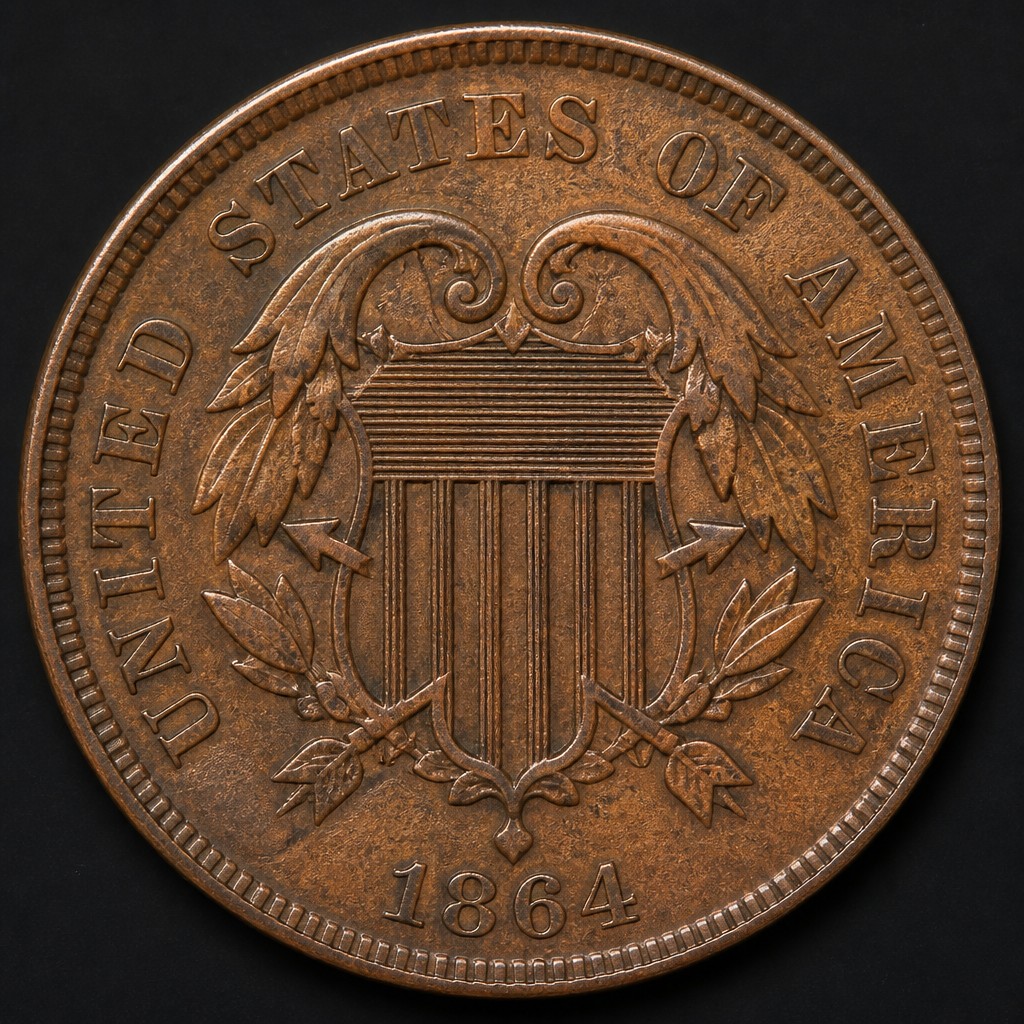
What It Is
The Two-Cent Piece debuted in 1864 and holds the distinction of being the first U.S. coin to carry the motto "IN GOD WE TRUST." It was designed by James B. Longacre and circulated until the series ended in 1873.
Obverse Design
The obverse features a shield, evoking a Union military shield, with two crossed arrows behind it and a laurel sprig at the base. Above the shield, a scroll or banner carries the words "IN GOD WE TRUST," and the date sits below.
Reverse Design
The reverse shows a wheat wreath encircling a large numeral "2," with "CENTS" beneath it, and "UNITED STATES OF AMERICA" arcing around the upper rim.
Size, Weight, Metal, and Edge
The Two-Cent Piece is bronze, 95% copper with 5% tin and zinc, weighing about 6.22 grams (96 grains) with a diameter of 23mm and a plain edge — noticeably larger and heavier than a cent of the same era.
Mint Marks
All Two-Cent Pieces were struck at the Philadelphia Mint only, so none carry a mint mark.
Telling It Apart from Similar Coins
Because 1864 was the transitional first year, two motto varieties exist: Small Motto, with thinner, more delicate lettering in "IN GOD WE TRUST" struck earlier in the year, and Large Motto, with bolder, thicker letters struck later and used for the remainder of the series. The Small Motto variety is considerably scarcer. Compare letter thickness and the shape of the "T" crossbars in the motto banner to distinguish the two. The coin can also be confused at a glance with a large cent due to its size, but the shield-and-motto obverse and "2" reverse make the Two-Cent Piece unmistakable once examined.
Judging Condition at a Glance
Look at the shield's vertical stripes and the arrowheads behind it, which wear down first, along with the leaves of the wheat wreath on the reverse. On higher-grade coins the scroll lettering of the motto stays crisp and fully separated from the shield behind it.
Authenticity Red Flags
Because Small Motto 1864 pieces are worth substantially more than Large Motto examples, some coins have had their motto lettering altered or re-engraved to mimic the scarcer variety. Examine the motto letters for uneven spacing, tool marks, or a texture that doesn't match the rest of the coin's surface. A genuine Small Motto piece should show natural, even wear consistent with the rest of the coin.
Frequently asked questions
Why is the 1864 Two-Cent Piece historically significant?
It was the first U.S. coin to bear the motto 'IN GOD WE TRUST,' introduced during the Civil War.
What's the difference between Small Motto and Large Motto 1864 pieces?
Small Motto coins have thinner, more delicate lettering in the motto and were struck earlier in 1864; Large Motto coins have bolder lettering and are more common.
What metal is the Two-Cent Piece made of?
It's bronze, composed of 95% copper and 5% tin and zinc, the same alloy later used for Indian Head and early Lincoln cents.
Does the Two-Cent Piece have a mint mark?
No, it was struck only at the Philadelphia Mint throughout its entire run from 1864 to 1873.