
How to Identify the 1860 Indian Head Cent (Oak Wreath)
A guide to the redesigned 1860 Indian Head cent reverse, which added an oak wreath and shield, becoming the standard design used through 1909.
Read the full 1860 Indian Head Cent (Oak Wreath) encyclopedia entry →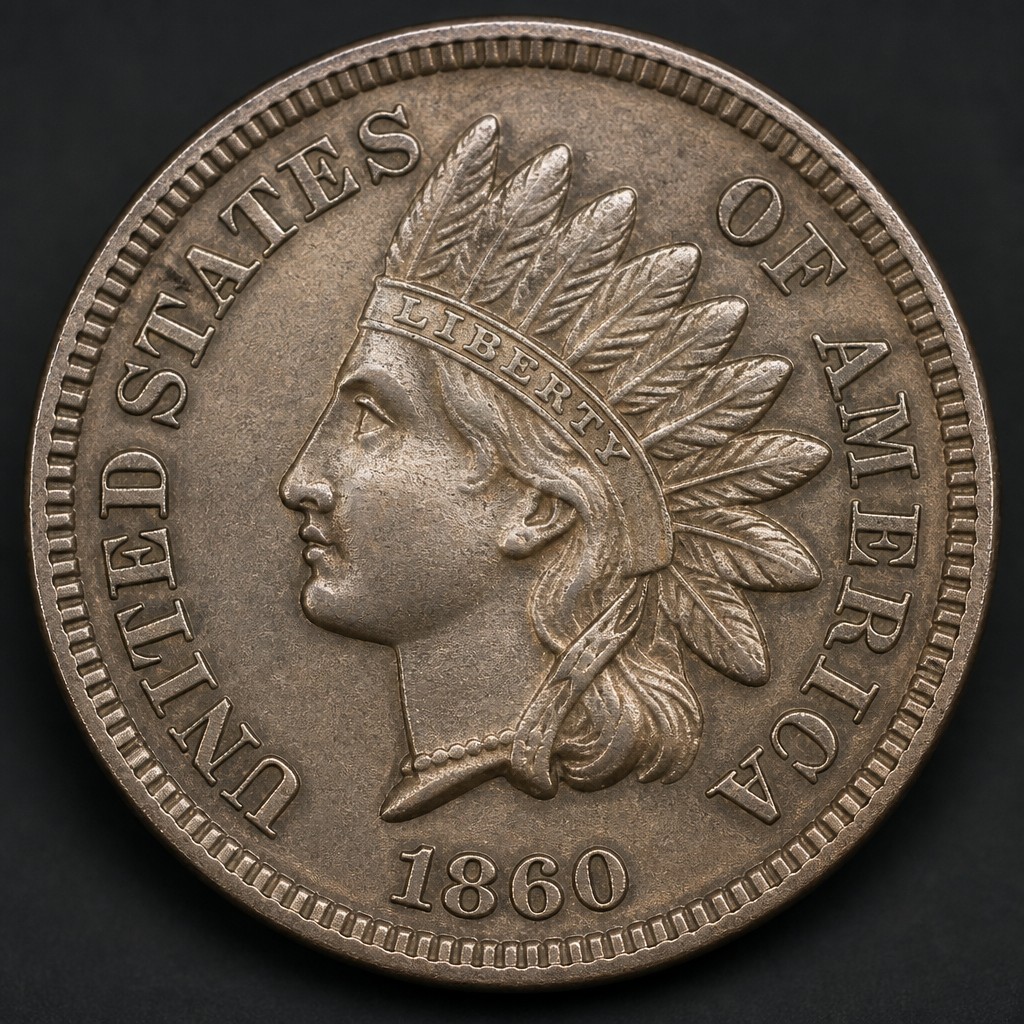
What It Is
In 1860, the Indian Head cent's reverse was redesigned just one year after its debut, replacing the 1859 laurel wreath with an oak wreath and a small shield. This updated design proved durable and was used, with only minor adjustments, for the remainder of the series through 1909.
Obverse Design
The obverse retains the familiar Indian Head portrait: Liberty facing left in a feathered headdress with "LIBERTY" on the headband, thirteen stars around the border, and the date below. Early 1860 coins are also known for a "pointed bust" variety, where the truncation of Liberty's bust comes to a sharper point, which was quickly modified to a more rounded bust shape later in the year.
Reverse Design
The reverse now shows an oak wreath, made of broader, rounder leaves than the earlier laurel wreath, tied with a ribbon bow at the bottom, with a small shield added at the top center. "ONE CENT" appears inside the wreath.
Size, Weight, Metal, and Edge
The 1860 cent is 88% copper and 12% nickel, weighing about 4.67 grams, with a diameter of 19mm and a plain edge, matching the composition used since the Flying Eagle cent. This copper-nickel composition continued through 1864, when the Mint switched to a lighter bronze alloy.
Mint Marks
The 1860 Indian Head cent was struck only at the Philadelphia Mint and carries no mint mark.
Telling It Apart from Similar Coins
The oak wreath with a shield at the top is the key feature separating 1860-1909 cents from the single-year 1859 laurel wreath type, which has no shield. Within 1860 itself, collectors distinguish the pointed bust variety, with a sharper point at the base of Liberty's neck, from the more common rounded bust variety introduced later that year. Comparing the shape of the bust truncation under magnification is the most reliable way to tell the two apart.
Judging Condition at a Glance
Look at the headdress feathers and the diamond device near Liberty's ear, which wear first, and check the oak leaves and shield lines on the reverse for crisp, unblurred detail. A well-struck, lightly worn coin will show clear separation between the ribbon, wreath, and shield.
Authenticity Red Flags
Because the pointed bust variety is scarcer and more sought after, watch for coins where the bust truncation has been reshaped or altered to mimic the pointed style. As with other coins in the series, inconsistent surface texture around the date or bust, or overall soft detail suggesting a cast rather than struck coin, are signs to examine more closely.
Frequently asked questions
What changed on the Indian Head cent in 1860?
The reverse was redesigned, replacing the 1859 laurel wreath with an oak wreath and adding a small shield at the top, a design used through 1909.
What is the pointed bust variety?
It's an early 1860 obverse variety where Liberty's bust truncation comes to a sharper point; it was replaced by a more rounded bust shape later that year.
What metal is the 1860 Indian Head cent made of?
It's 88% copper and 12% nickel, the same alloy used since the Flying Eagle cent, prior to the 1864 switch to bronze.
Does the 1860 cent have a mint mark?
No, it was struck only at the Philadelphia Mint.