
How to Identify the 1859 Indian Head Cent (Laurel Wreath)
A guide to the one-year-only 1859 Indian Head cent reverse, featuring a laurel wreath with no shield, distinct from every other year in the series.
Read the full 1859 Indian Head Cent (Laurel Wreath) encyclopedia entry →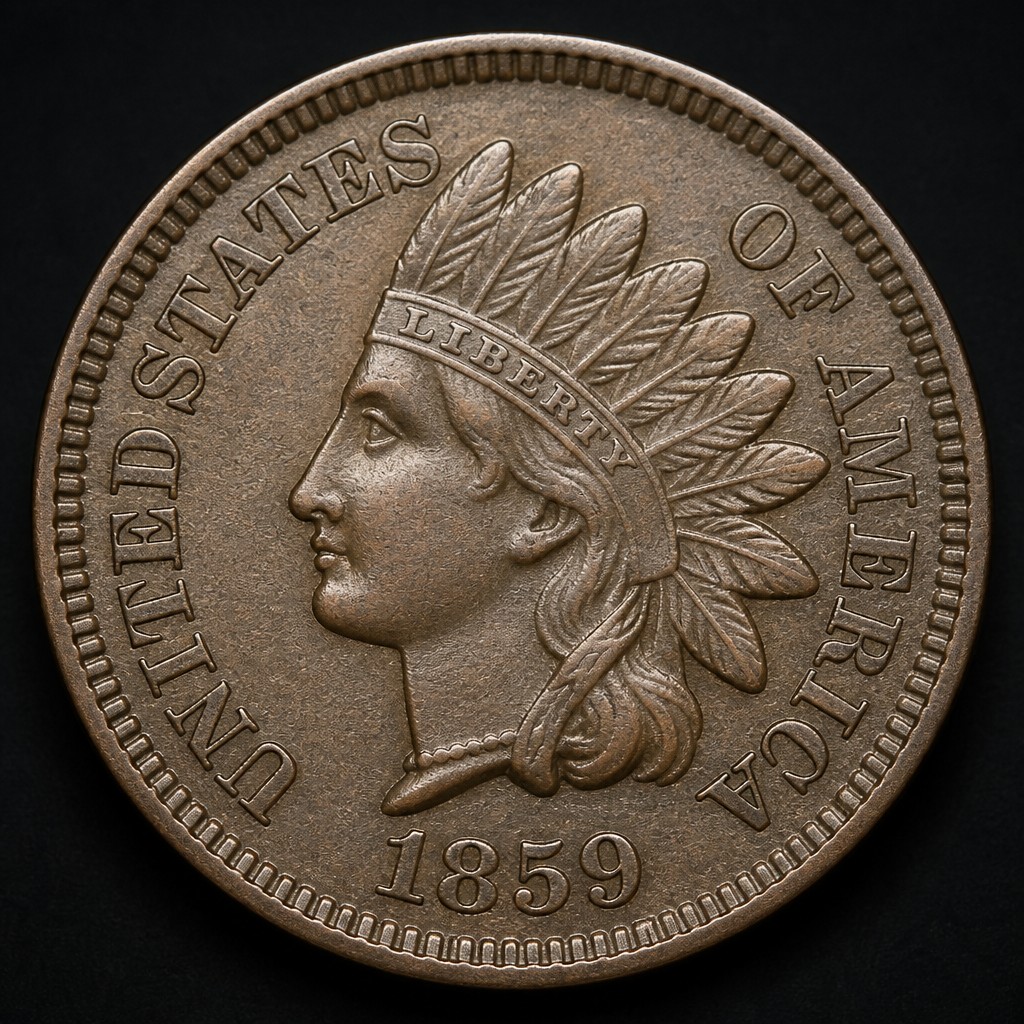
What It Is
The 1859 Indian Head cent marks the debut of the Indian Head design, but it used a reverse pattern that appeared in only that single year before being replaced. This makes the 1859 laurel wreath reverse a distinct one-year type within the broader Indian Head cent series.
Obverse Design
The obverse shows Liberty facing left in a Native American-style feathered headdress, with "LIBERTY" inscribed on the headband, thirteen stars around the border, and the date below.
Reverse Design
Unlike every other year of the series, the 1859 reverse features a laurel wreath, made up of thin, pointed leaves, encircling the words "ONE CENT," with no shield present at the top of the wreath. Starting in 1860, the Mint switched to an oak wreath design with a small shield added at the top, and that later design was used for the rest of the series through 1909.
Size, Weight, Metal, and Edge
The 1859 cent is made of 88% copper and 12% nickel, the same alloy used for the Flying Eagle cent it replaced, weighing about 4.67 grams with a diameter of 19mm and a plain edge. Its pale, light color reflects this nickel content, unlike the warmer bronze tone of cents from 1864 onward.
Mint Marks
The 1859 Indian Head cent was struck only at the Philadelphia Mint and carries no mint mark.
Telling It Apart from Similar Coins
The laurel wreath reverse, with no shield at the top, is the single clearest way to identify this one-year type; any Indian Head cent reverse showing a shield above the wreath is from 1860 or later. Compared to the Flying Eagle cent that preceded it, the obverse portrait of Liberty in a headdress replaces the flying eagle design, making the two easy to tell apart.
Judging Condition at a Glance
Check the headdress feathers and the diamond-shaped area of the headdress near Liberty's ear for wear, since these are usually the first points to flatten. On the reverse, examine the laurel leaves for full separation and the ribbon bow at the base of the wreath for sharp detail.
Authenticity Red Flags
Because the laurel wreath type is a distinct, single-year design, be wary of reverse dies or coins that mix elements inconsistently, such as a laurel wreath paired with an added shield, or a shield-type reverse claimed to be dated 1859. Any coin whose reverse doesn't clearly match one design or the other consistently across its whole surface should be examined more closely.
Frequently asked questions
What makes the 1859 Indian Head cent different from other years?
It uses a laurel wreath reverse with no shield, a design used only in 1859 before being replaced by an oak wreath with a shield starting in 1860.
What metal is the 1859 Indian Head cent made of?
It's 88% copper and 12% nickel, the same alloy used in the preceding Flying Eagle cent.
How can I tell a laurel wreath reverse from an oak wreath reverse?
The laurel wreath (1859 only) has thin, pointed leaves and no shield at the top. The oak wreath (1860 onward) has broader leaves and a small shield at the top of the wreath.
Does the 1859 cent have a mint mark?
No, it was struck exclusively at the Philadelphia Mint.