
How to Identify the 1858 Victoria Five Cents (silver)
Canada's first decimal silver five-cent coin, a tiny 1858-dated piece from the Province of Canada featuring young Queen Victoria, often nicknamed a 'fish scale' for its small, thin format.
Read the full 1858 Victoria Five Cents (silver) encyclopedia entry →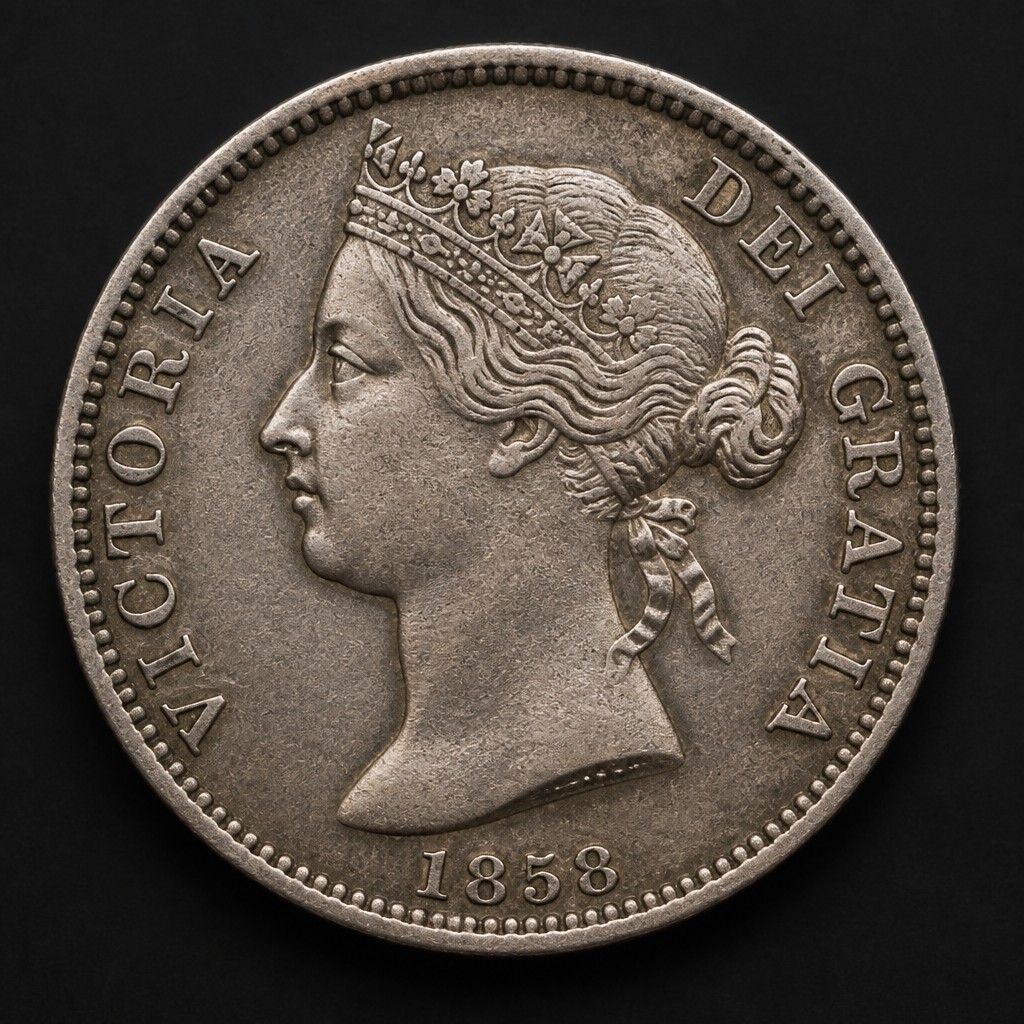
What It Is
Issued in 1858 by the Province of Canada, this coin introduced the five-cent denomination to Canadian decimal coinage for the first time, alongside the new cent and other silver denominations. It is a genuinely tiny coin, and its small, thin, easily-lost format earned it the popular nickname "fish scale" among collectors.
Obverse Design
The obverse features a young laureate portrait of Queen Victoria facing left, surrounded by the legend VICTORIA DEI GRATIA REGINA CANADA.
Reverse Design
The reverse is dominated by a wreath of maple leaves that encircles the value "5 CENTS" and the date "1858." There is no additional text on the reverse; the country name appears only on the obverse.
Size, Weight, Metal & Edge
The coin is struck in sterling silver (.925 fine), measuring only about 15.5mm across and weighing roughly 1.16 grams, with a reeded edge. Its small diameter and light weight make it easy to confuse with a modern dime by feel alone.
Mint Marks & Date Varieties
The 1858 issue was produced by the Royal Mint in London and carries no mintmark. Later Victorian five-cent pieces from the mid-1870s onward sometimes show a small "H" for Heaton's Mint in Birmingham, but this does not apply to the 1858 date. Collectors also commonly distinguish "large date" and "small date" numeral varieties among 1858 five-cent pieces, based on the size of the digits in the date. Careful comparison of the numeral style under magnification, rather than the numbers themselves, is needed to separate these varieties. Because this was the first year of issue and the mint was still refining its dies and processes, small differences in strike quality and die alignment can also be found from piece to piece.
Telling It Apart From Similar Coins
Because the coin is so small, it is easily mistaken at a glance for a worn dime of similar vintage; checking the wreath for "5 CENTS" versus "10 CENTS" settles the denomination immediately. Later Victorian five-cent coins share the same basic design, so the date is the main way to confirm this is the first-year 1858 issue rather than a later strike. It is also worth remembering that no five-cent pieces were issued in most of the years immediately following 1858, so an authentic, clearly dated 1858 example represents the true starting point of the entire series.
Judging Condition
Because of its low relief and small size, wear appears quickly on this coin. Check Victoria's hair curls and the band in her hair, plus the leaf veins in the wreath, for flattening. Even lightly circulated examples can show noticeable softness in these areas. Given the coin's age and the fact that it was carried loose in pockets and purses for decades, finding an example with sharp, unworn details is comparatively unusual.
Authenticity Red Flags
Given the coin's age, silver content, and historical importance as a first-year issue, verify weight and diameter with precise tools if a coin seems unusually heavy, light, or oversized. Watch for cleaned or artificially bright surfaces that can mask actual wear, and inspect the date closely for signs of re-engraving or added digits.
Frequently asked questions
Why is this coin called a 'fish scale'?
Its very small diameter and thin, light weight resemble a fish scale, a nickname widely used by collectors for Canada's early small silver five-cent coins.
What metal is it made from?
It is sterling silver, .925 fine, with the remainder made up mostly of copper for durability.
Does it have a mintmark?
No, the 1858 issue was struck at the Royal Mint in London and carries no mintmark.
How do I avoid confusing it with a dime?
Check the reverse wreath text, which reads '5 CENTS' rather than '10 CENTS,' since the two coins are similar in size and design style.
Are there different varieties of the 1858 five cents?
Yes, collectors recognize large-date and small-date numeral varieties, distinguished by close comparison of the digit style under magnification.