
How to Identify the 1858 Flying Eagle Cent
A guide to the final year of the Flying Eagle cent, covering its eagle-and-wreath design and the Large Letters versus Small Letters reverse varieties.
Read the full 1858 Flying Eagle Cent encyclopedia entry →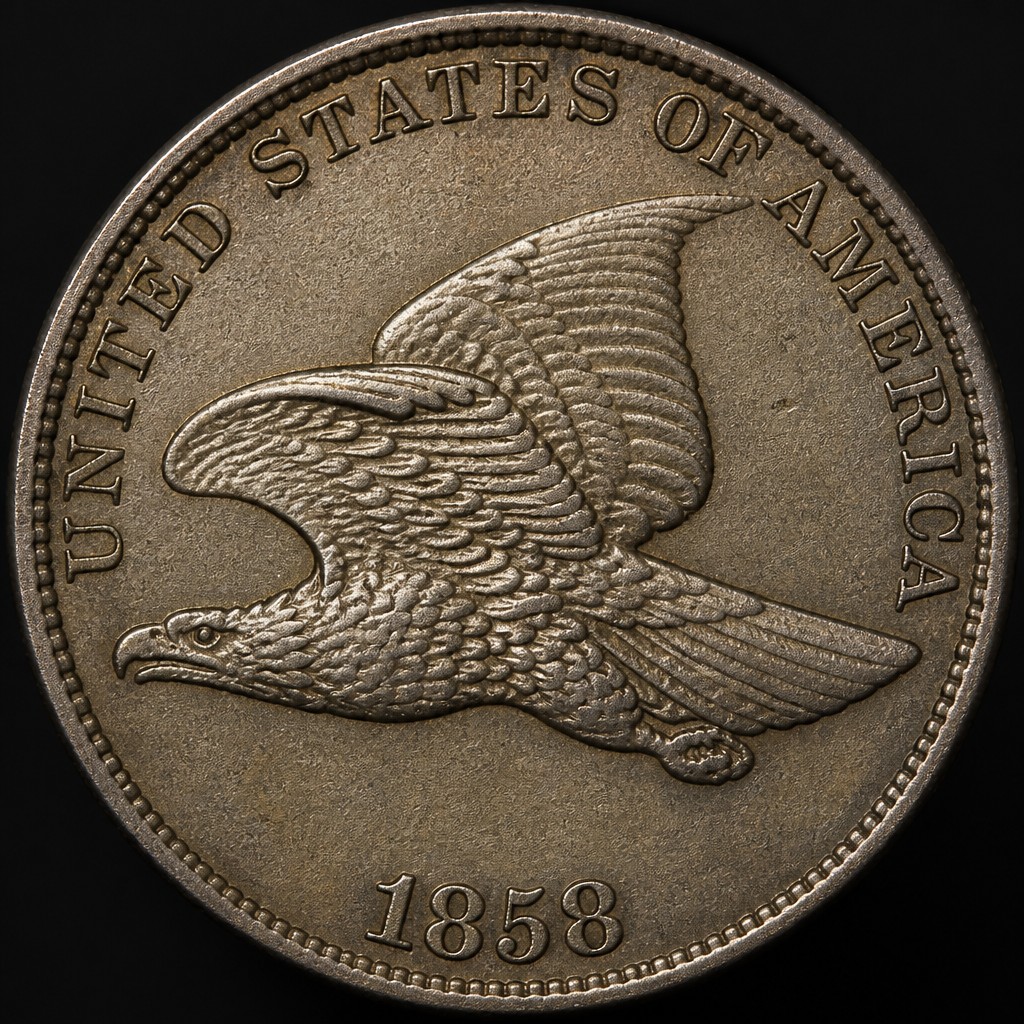
What It Is
The Flying Eagle cent was struck for circulation only in 1857 and 1858, making it one of the shortest-lived cent designs in U.S. history. It was created to replace the older, larger copper cent with a smaller, more convenient coin made of a copper-nickel alloy. The 1858 date represents the final year before the design was replaced by the Indian Head cent in 1859.
Obverse Design
The obverse shows an eagle in flight, a design element adapted from the earlier Gobrecht dollar, with "UNITED STATES OF AMERICA" around the border and the date below the eagle.
Reverse Design
The reverse displays a wreath made up of corn, wheat, cotton, and tobacco leaves, symbolizing American agriculture, encircling the words "ONE CENT."
Size, Weight, Metal, and Edge
The coin is 88% copper and 12% nickel, giving it a pale, slightly grayish "white" appearance compared to later bronze cents. It weighs about 4.67 grams, measures 19mm in diameter, and has a plain edge.
Mint Marks
All Flying Eagle cents were struck at the Philadelphia Mint, so none carry a mint mark.
Telling It Apart from Similar Coins
The 1858 date is known in two reverse varieties: Large Letters and Small Letters, referring to the size of the lettering in "AMERICA" on the reverse. In the Large Letters variety, the "A" and "M" in "AMERICA" are close together or touching; in the Small Letters variety, the letters are noticeably smaller and more evenly spaced. An 1858/7 overdate variety is also known, showing traces of an underlying "7" beneath the final "8" in the date. Compared to the Indian Head cent that followed, the Flying Eagle cent is easily told apart by its eagle obverse rather than a portrait of Liberty.
Judging Condition at a Glance
Because the eagle design sits in relatively high relief opposite the wreath on the reverse, look at the eagle's breast feathers and the wreath details directly opposite them; on many surviving coins, wear or weak striking can make these areas appear soft even on lightly circulated examples, so examine both sides carefully rather than relying on one.
Authenticity Red Flags
Given the popularity of the series, especially the rare 1856 pattern, be cautious of dates that have been altered to resemble a scarcer year, and watch for reverses with recut or added letters attempting to fake the more desirable Large Letters or overdate varieties. Suspiciously soft detail across the whole coin, inconsistent with a properly struck copper-nickel piece, can indicate a cast counterfeit.
Frequently asked questions
What's the difference between Large Letters and Small Letters 1858 cents?
It refers to the size of the lettering in 'AMERICA' on the reverse — Large Letters has bigger, closer-set letters (often with the A and M touching), while Small Letters has smaller, more evenly spaced letters.
How do I tell a Flying Eagle cent from an Indian Head cent?
The Flying Eagle cent shows an eagle in flight on the obverse, while the Indian Head cent shows a portrait of Liberty wearing a feathered headdress.
What metal is the 1858 Flying Eagle cent made of?
It's 88% copper and 12% nickel, giving it a pale, whitish appearance rather than the reddish-brown of later bronze cents.
Does the 1858 Flying Eagle cent have a mint mark?
No, all Flying Eagle cents were struck only at the Philadelphia Mint.