
How to Identify the 1857 Flying Eagle Cent
A guide to the first widely circulated Flying Eagle cent, explaining its eagle obverse, agricultural wreath reverse, and how it replaced the old large copper cent.
Read the full 1857 Flying Eagle Cent encyclopedia entry →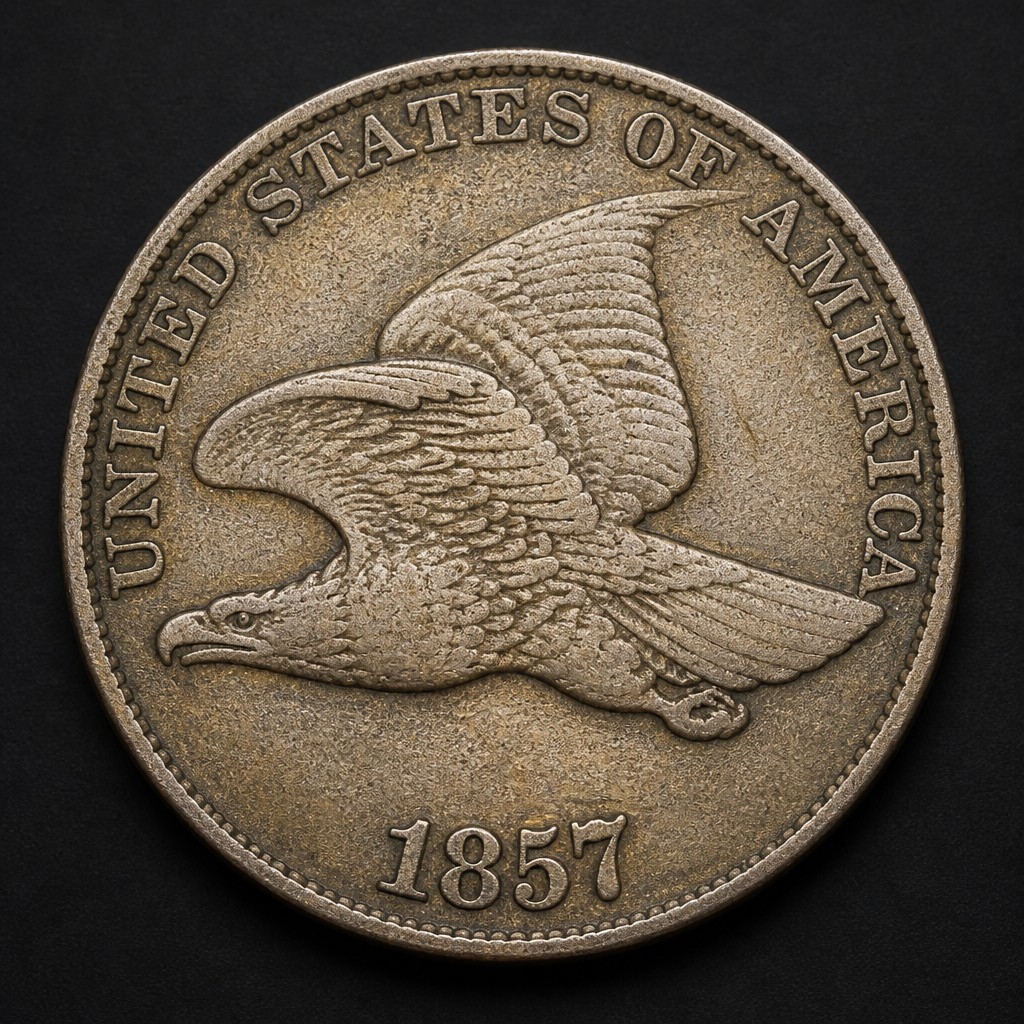
What It Is
The 1857 Flying Eagle cent marked a major change in American coinage: it was the first small-size cent struck for general circulation, replacing the much larger, pure copper "large cent" that had been in use since the 1790s. A limited number of Flying Eagle cents dated 1856 were made as patterns to promote the new design to Congress, but 1857 is the first date most people could actually receive in everyday change.
Obverse Design
The obverse depicts an eagle in flight, facing left, with "UNITED STATES OF AMERICA" curving around the upper rim and the date below the eagle.
Reverse Design
The reverse shows a wreath composed of corn, wheat, cotton, and tobacco leaves surrounding "ONE CENT," representing staple American crops of the period.
Size, Weight, Metal, and Edge
The coin is made of 88% copper and 12% nickel, an alloy that gives it a pale, light-colored appearance often described as "white." It weighs about 4.67 grams and measures 19mm across, with a plain edge — smaller and lighter than the large cent it replaced, but heavier than the bronze cents that followed after 1864.
Mint Marks
The 1857 Flying Eagle cent was struck exclusively at the Philadelphia Mint and carries no mint mark.
Telling It Apart from Similar Coins
Because 1857 was the first circulating year, it is far more common than the scarce 1856 pattern, which shares the same design but is a genuine rarity; the two are told apart simply by the date. Compared to the large cent it replaced, the Flying Eagle cent is noticeably smaller and lighter in color. Compared to the Indian Head cent that replaced it in 1859, the Flying Eagle cent shows an eagle rather than a portrait, making the two easy to distinguish at a glance.
Judging Condition at a Glance
The eagle's design sits opposite the wreath, and because the metal used didn't always strike up fully, look for weakness in the eagle's tail feathers and the wreath details directly behind them, which can appear soft even on coins with little actual wear. Genuine, well-preserved examples show clear feather detail and sharp separation in the wreath's leaves.
Authenticity Red Flags
Because the extremely rare 1856 pattern shares an identical design, watch for 1857 or 1858 dates that have been altered to appear as 1856, especially where the last digit shows signs of re-engraving or an unnatural surface texture around the date. As with other coins of this type, unusually soft or mushy overall detail can point to a cast counterfeit rather than an authentic struck coin.
Frequently asked questions
Why is 1857 an important date for the Flying Eagle cent?
It was the first year the new small-size cent was struck in quantity for general circulation, replacing the older large copper cent.
How is the 1857 cent different from the rare 1856 Flying Eagle cent?
They share the same design; the only difference is the date. The 1856 was a limited pattern issue, while 1857 was struck for wide circulation and is far more common.
What does the eagle design on this coin represent?
It's a flying eagle design adapted from the earlier Gobrecht silver dollar, chosen to give the new small cent a dignified national symbol.
Is there a mint mark on the 1857 Flying Eagle cent?
No, it was struck only at the Philadelphia Mint.