
How to Identify the 1851 Silver Three-Cent Piece
A guide to the tiny first-year silver three-cent piece, nicknamed the 'trime,' covering its star-and-shield design and how to spot the rare New Orleans issue.
Read the full 1851 Silver Three-Cent Piece encyclopedia entry →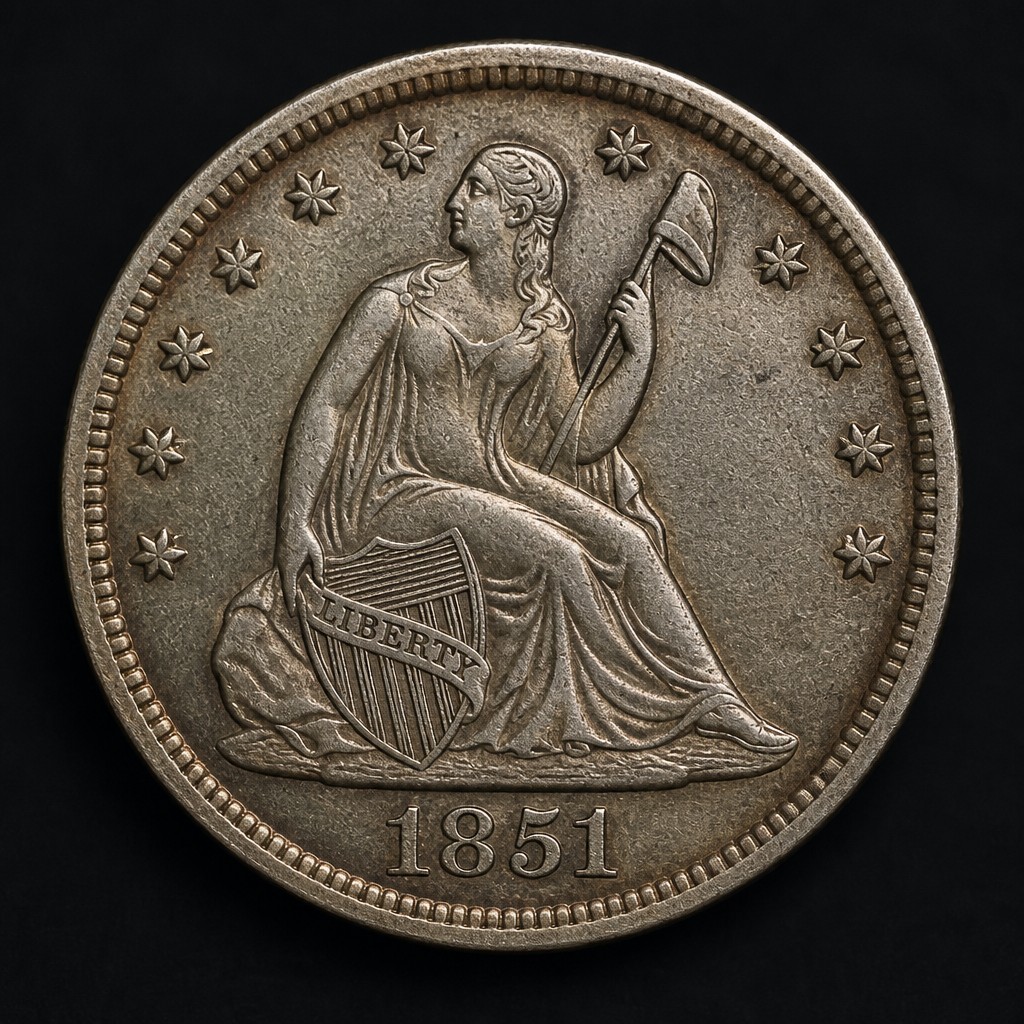
What It Is
Introduced in 1851, the silver three-cent piece, often nicknamed the "trime," was created to help make small postal and commercial transactions easier at a time when postage cost three cents. It is the smallest and thinnest silver coin the United States has ever regularly issued.
Obverse Design
The obverse shows a six-pointed star with a small shield in its center. "UNITED STATES OF AMERICA" runs around the border, and the date sits below the star. This first design, used from 1851 to 1853, has no additional outline or framing around the star, giving it a simple, uncluttered look.
Reverse Design
The reverse displays a large Roman numeral "III" set inside an ornamental scroll-like frame that curves around it, with a ring of thirteen stars near the border.
Size, Weight, Metal, and Edge
The 1851 issue is 75% silver and 25% copper, weighing only about 0.80 grams and measuring roughly 14mm across, with a plain edge. Its light weight and small size have earned it the nickname "fish scale" among collectors, and pieces are easily lost or overlooked in a coin jar.
Mint Marks
Most 1851 trimes were struck at Philadelphia and show no mint mark. A branch-mint version was also struck at New Orleans that year; those pieces carry a small "O" mint mark, located near the star design on the reverse.
Telling It Apart from Similar Coins
The 1851 design (Type I) is distinguished from later trimes by the absence of any outline around the star — from 1854 onward, the Mint added lines framing the star and small design changes to the reverse scroll. Because of its tiny size, this coin is also sometimes mistaken for a Half Dime, three-cent nickel, or even a small button; the star-and-shield obverse with a plain, unbordered star is the clearest tell for a genuine 1851 issue.
Judging Condition at a Glance
Given the coin's small size and low relief, check the points of the star and the shield lines at its center, along with the numeral "III" and scrollwork on the reverse, for crispness. Because trimes are thin and light, they can also show bends, creases, or edge nicks more readily than thicker coins, which should be factored into a condition assessment.
Authenticity Red Flags
Because trimes are small and low in silver content, outright fakes are less common than for larger silver coins, but watch for added "O" mint marks meant to mimic the scarcer New Orleans issue, or dates that have been altered from more common years. A coin that looks unusually thick, heavy, or has soft, mushy details compared to a well-struck example should be viewed with suspicion.
Frequently asked questions
Why is the silver three-cent piece nicknamed the 'trime' or 'fish scale'?
It got the nickname 'trime' from its three-cent denomination, and 'fish scale' because of how small, thin, and light it is compared to other coins.
How do I know if my coin is a Type I trime?
Type I coins, struck 1851-1853, show a plain star on the obverse with no outline or border around it. Later types add framing lines around the star.
Are there mint marks on the 1851 issue?
Most were struck in Philadelphia with no mint mark, but an 1851-O version from New Orleans carries a small 'O' near the reverse design.
What is the silver three-cent piece made of?
The 1851-1853 Type I coins are 75% silver and 25% copper, weighing about 0.80 grams.