
How to Identify the 1849 Double Eagle
The first-dated $20 gold double eagle, known today only as a unique pattern piece in the Smithsonian; genuine circulating 1849 double eagles do not exist.
Read the full 1849 Double Eagle encyclopedia entry →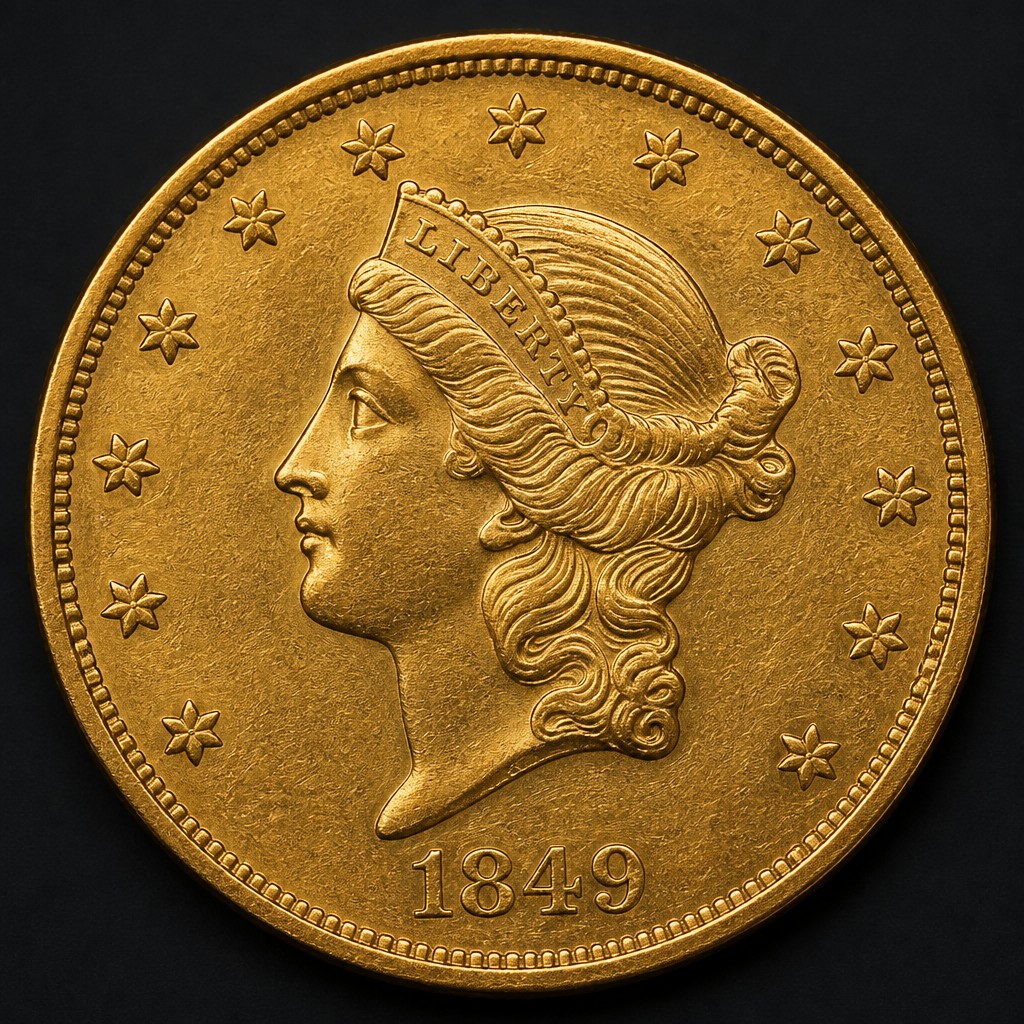
What It Is
The 1849 Double Eagle carries the first date of the $20 gold denomination, but no 1849-dated double eagles were ever released into circulation. The only known genuine example is a unique pattern or first-strike specimen held today in the Smithsonian's National Numismatic Collection, struck to test the new denomination before regular production began in 1850.
Obverse Design
The Liberty Head (Coronet) design by James B. Longacre shows Liberty facing left, wearing a coronet inscribed LIBERTY, hair gathered into a bun, thirteen stars around the border, and the date below.
Reverse Design
A heraldic eagle holds a shield on its breast, with arrows and an olive branch in its talons and rays and stars above. UNITED STATES OF AMERICA surrounds the design, with TWENTY D. below the eagle. No religious motto appears, since IN GOD WE TRUST was not added to double eagles until 1866.
Size, Weight, Metal & Edge
34mm diameter, about 33.44 grams, .900 fine gold, reeded edge — the same standard used for all Liberty Head double eagles through 1907.
Mint Marks
Not applicable to the unique genuine specimen, which was struck at Philadelphia and carries no mintmark. Once regular double eagle production began in 1850, later issues include coins from Philadelphia and, from 1854 onward, branch mints such as New Orleans (O) and San Francisco (S), with any mintmark placed on the reverse below the eagle.
Telling It Apart From Similar Coins
Because the only genuine 1849 double eagle is a museum-held unique piece, any coin offered for sale with this date should be assumed to be either a fantasy or novelty piece, or a common date such as 1859 or 1869 with an altered final digit. Compare the shape and spacing of the date digits against a known-genuine 1850 double eagle to help spot re-engraving.
Judging Condition at a Glance
Because no genuine circulating 1849 double eagles exist to evaluate, this section does not apply. For the broader Liberty Head double eagle series generally, wear shows first on the hair above Liberty's ear and on the eagle's breast feathers.
Authenticity Red Flags
An 1849-dated double eagle offered outside a documented museum context should be treated as essentially certain to be fake or altered. Look closely for tooling marks, file lines, or mismatched digit spacing in the date, which are the telltale signs of a common-date coin altered to appear as 1849.
Frequently asked questions
Can I find a genuine 1849 double eagle in a coin shop or auction?
It's extremely unlikely. The only known genuine example is a unique piece held in the Smithsonian's National Numismatic Collection, not available in the collector market.
Why wasn't the double eagle issued for circulation until 1850?
The 1849 coins were pattern or trial pieces struck to finalize the new denomination's design and specifications before regular production began the following year.
If I see an 1849 double eagle for sale, what should I assume?
Treat it with strong skepticism. It is likely either a novelty replica or a common-date double eagle with an altered final digit in the date.
What design does the 1849 double eagle use?
The Liberty Head (Coronet) design by James B. Longacre, the same basic design used on double eagles from 1849 through 1907, without the later IN GOD WE TRUST motto.