
How to Identify the 1827 Capped Bust Quarter
One of the rarest dates in the Capped Bust quarter series, with genuine period strikes seldom seen and most known examples being later restrikes from reworked dies.
Read the full 1827 Capped Bust Quarter encyclopedia entry →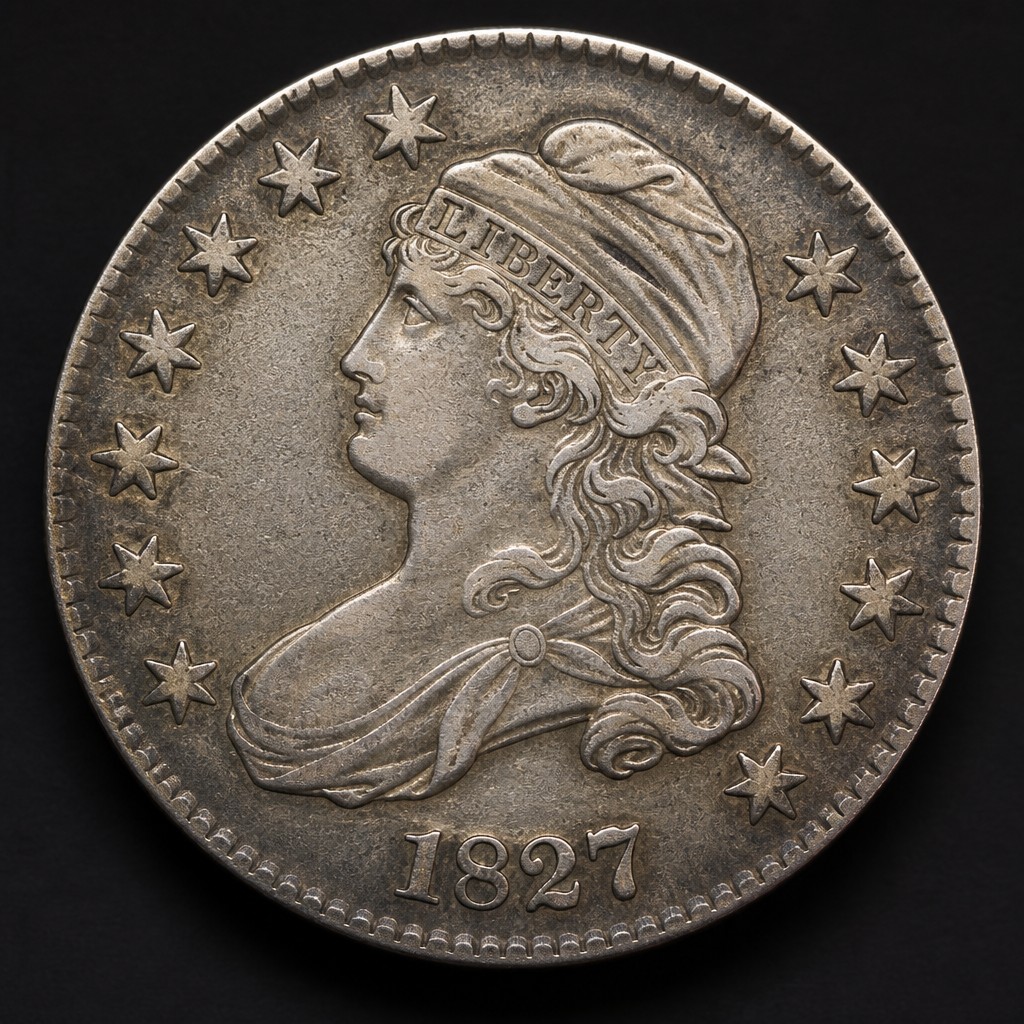
What the Coin Is
The 1827 quarter is among the great rarities of the Capped Bust series. Very few coins were struck for circulation that year, and most 1827-dated quarters known to collectors today are later restrikes produced from dies at the Mint well after 1827, using dies that had been altered or reworked, a story that makes this date one of the most talked-about in the entire quarter series.
Obverse Design & Inscriptions
Liberty faces left wearing a soft cap inscribed "LIBERTY," curled hair beneath, with thirteen stars around the border and the date "1827" below the bust, following the same general Capped Bust layout used on quarters throughout the 1820s.
Reverse Design & Inscriptions
The reverse depicts a large eagle with a shield on its breast, an olive branch and arrows in its talons, and "E PLURIBUS UNUM" on a scroll above. "UNITED STATES OF AMERICA" wraps around the top and sides with "25 C." as the denomination, matching the standard reverse used on other Capped Bust quarters of the period.
Size, Weight, Metal, Edge
As with other Capped Bust quarters, it is struck in silver, weighs about 6.74 grams, measures roughly 27 mm, and carries a reeded edge, physical specifications that any suspected example should be checked against.
Recognized Varieties
Collectors distinguish 1827 quarters by the shape of the "2" in the date — a "curled base 2" and a "square base 2" are the two recognized die varieties, both associated with later restrikes rather than coins struck and released in 1827 itself, and each variety has its own distinct history within numismatic reference literature.
Telling It Apart From Similar Coins
Because this date is so rarely encountered, any coin offered as a genuine 1827 quarter deserves close comparison of its date style, strike characteristics, and surface quality against published references for the known varieties, since the overall design otherwise matches other Capped Bust quarters of the late 1820s and offers few other distinguishing clues.
Judging Condition at a Glance
Given how few originals or restrikes exist, examples are typically evaluated individually rather than by general wear patterns seen on common-date coins. Sharpness of the eagle's feathers and Liberty's curls, along with original surface quality, matter a great deal for a coin this scarce, and even small differences in preservation can carry outsized significance.
Authenticity Red Flags
This is one of the most heavily counterfeited and altered dates in the series, so extreme caution is warranted — watch for an added or re-engraved "7" over a different final digit, mismatched date spacing, or surface characteristics inconsistent with genuine early silver. A coin's rarity does not exempt it from needing the same scrutiny for cast texture, tooling marks, and unnatural date fonts as any other suspect coin, and independent expert review is strongly advisable for a date this significant.
Frequently asked questions
Are most 1827 quarters original strikes?
No, most known examples are later restrikes made from reworked dies rather than coins struck and circulated in 1827 itself.
What varieties exist for this date?
Collectors recognize a curled base 2 and a square base 2 variety, distinguished by the shape of the second digit in the date.
Why is this such a commonly altered date?
Its rarity and desirability make it a frequent target for date alteration from more common nearby years.
What should I compare before trusting an 1827 quarter's date?
Compare the date style, spacing, and surface texture against published references for the known 1827 varieties.