
How to Identify the 1823/2 Capped Bust Quarter Overdate
A famous overdate variety where an 1822-dated die was repunched with 1823 digits, leaving traces of the earlier '2' visible under the final digit.
Read the full 1823/2 Capped Bust Quarter Overdate encyclopedia entry →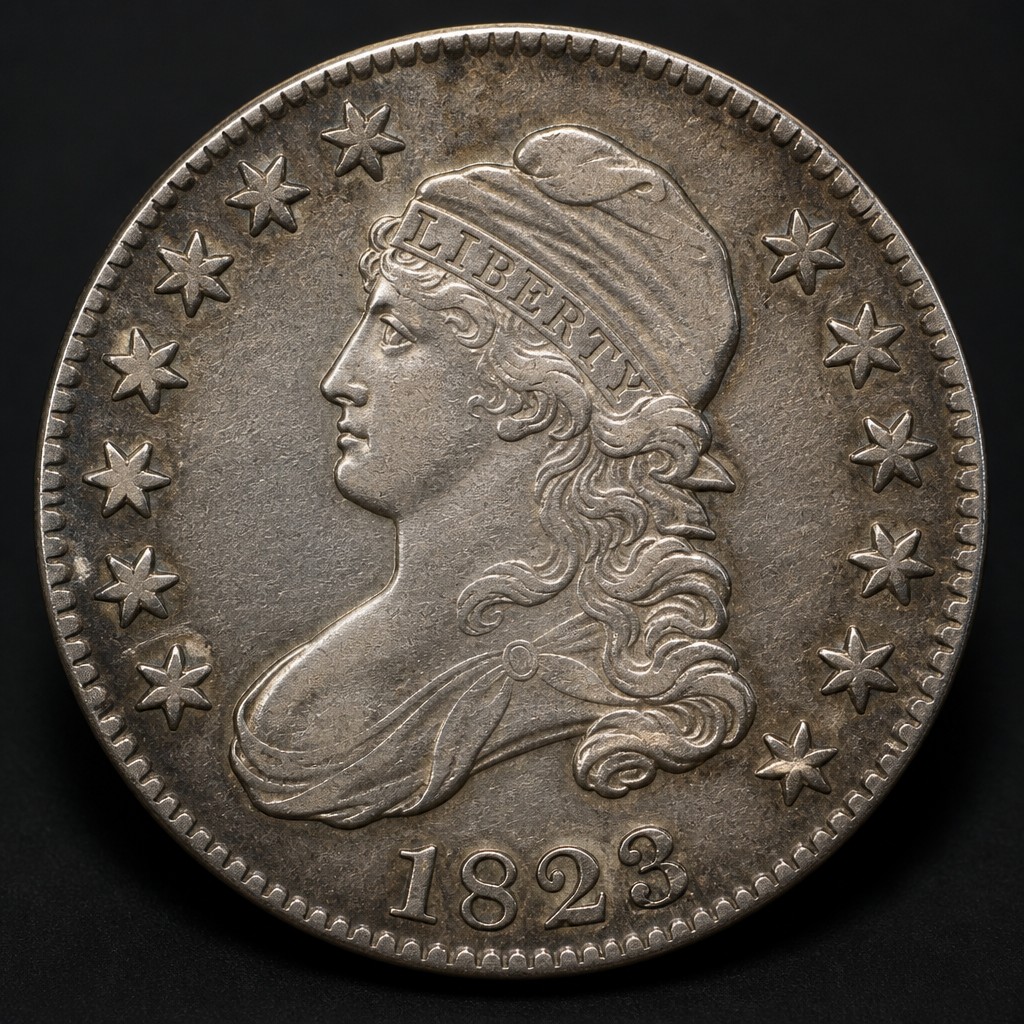
What the Coin Is
The 1823/2 quarter is a Capped Bust type coin struck from a die that was originally prepared with an 1822-style date and then repunched to read 1823, a common cost-saving practice at the early Mint when dies were reused across years. It is one of the key dates and lowest-mintage issues of the entire Capped Bust quarter series, and it enjoys a reputation among collectors as one of the more challenging dates to acquire in this run.
Obverse Design & Inscriptions
Liberty faces left in a soft cap inscribed "LIBERTY," with curled hair beneath the cap and stars surrounding the portrait. The date reads "1823" at the bottom, with the overdate feature located in the final digit "3," while the rest of the obverse follows the standard Capped Bust layout used throughout the series.
Reverse Design & Inscriptions
The reverse shows a large eagle with a shield on its breast, arrows and an olive branch in its talons, and "E PLURIBUS UNUM" on a scroll above its head. "UNITED STATES OF AMERICA" surrounds the top and sides, and "25 C." denotes the denomination near the bottom, matching other Capped Bust quarters from the 1810s and 1820s.
Where to Find the Overdate
Examine the last digit of the date under magnification. On a genuine 1823/2, remnants of an underlying "2" — a curved stroke or extra line — should be visible peeking out from beneath or beside the "3." This is best viewed with raking light and a strong loupe, and patience is often required since the underlying digit can be quite subtle on worn examples.
Size, Weight, Metal, Edge
The coin is struck in silver, weighs approximately 6.74 grams, measures about 27 mm across, and has a reeded edge, consistent with other Capped Bust quarters of the period and offering another useful sanity check against suspected fakes.
Telling It Apart From Similar Coins
Because nearly all surviving 1823-dated quarters share this overdate feature, confusing it with a "clean" 1823 without the underlying 2 is unlikely; the greater risk is confusing a worn or damaged date with a different nearby year, such as 1822 or 1824, so always confirm the full numeral sequence alongside the overdate detail before drawing a final conclusion.
Judging Condition at a Glance
Because so few examples exist and most seen in the market show significant wear, focus on whether the date and overdate feature remain legible, along with the condition of Liberty's curls and the eagle's shield lines. Even heavily worn survivors are considered notable due to this issue's low original mintage, so grading expectations should be set with that scarcity in mind.
Authenticity Red Flags
Given its rarity and value, this date is a common target for alteration — inspect the "3" carefully for filing, re-cutting, or an unnatural sheen that suggests a common date quarter was doctored to mimic this overdate. A genuine overdate shows the underlying digit as part of the coin's original metal flow, not as a separately scratched or tooled addition, and any suspicious texture around the date deserves close comparison against verified references.
Frequently asked questions
What does '1823/2' mean?
It indicates the die was first punched with an 1822 date and then repunched with 1823, leaving traces of the earlier '2' beneath the final digit.
Where exactly should I look for the overdate?
Focus on the last numeral of the date and use strong magnification with angled light to spot the underlying digit remnants.
Why is this coin considered scarce?
It comes from one of the lowest quarter mintages of its era, making surviving examples in any grade relatively hard to find.
How do I know if the overdate has been faked?
A genuine overdate blends naturally into the coin's surface from the original die, while an added or tooled overdate typically shows file marks or unnatural texture around the digit.