
How to Identify the 1822 Capped Bust Dime
A guide to recognizing the 1822 Capped Bust dime, its John Reich design, stated '10 C.' denomination, and the checks used to spot altered-date copies.
Read the full 1822 Capped Bust Dime encyclopedia entry →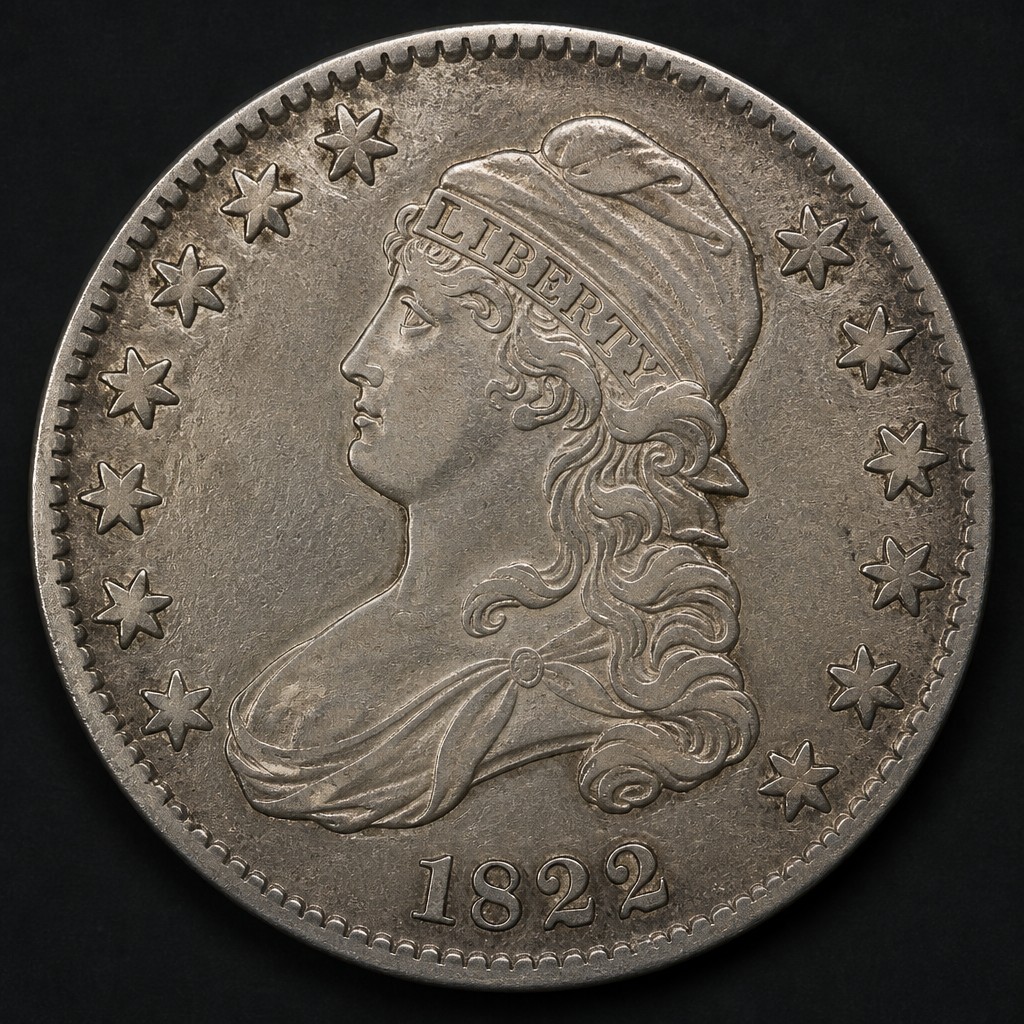
What It Is
The Capped Bust dime, designed by John Reich, was introduced in 1809 and continued (with design refinements) through 1837. The 1822 issue is a low-mintage date within this series and is regarded as one of its scarcer years, particularly in comparison to the more readily available dates surrounding it.
Obverse Design
Liberty is shown facing left, wearing a soft cloth cap inscribed LIBERTY across the headband, with drapery at the bust. Stars line the border and the date appears below the portrait, giving the design a bolder, more sculptural look than the earlier Draped Bust dime.
Reverse Design
The reverse features a naturalistic eagle with wings spread, a shield on its breast, an olive branch and arrows in its talons, and a banner above reading E PLURIBUS UNUM. UNITED STATES OF AMERICA circles the border, and for the first time in the dime series, the denomination is spelled out numerically as "10 C." near the bottom of the design.
Size, Weight, Metal, and Edge
The coin is about 18.8mm in diameter and weighs approximately 2.7 grams in a silver-copper alloy, with a reeded edge and no edge lettering.
Mint Marks
No mint mark is present; all Capped Bust dimes from 1809 through 1837 were struck exclusively at the Philadelphia Mint.
Telling It Apart From Similar Coins
The Capped Bust design is easy to distinguish from the earlier Draped Bust dime by the cap and the "10 C." denomination on the reverse, and from the later Seated Liberty dime by the standing bust portrait versus a seated figure. Among Capped Bust dates, 1822 is identified simply by reading the date, though die variety specialists further classify examples by small differences in star and letter placement (JR numbers) that can help confirm an example matches known genuine dies.
Judging Condition at a Glance
Check Liberty's hair curls beneath the cap, the cap's fabric folds, and the eagle's wing and shield details for the first signs of friction. Because the 1822 mintage was small, most surviving pieces show moderate to heavy circulation wear, and coins retaining sharp cap and drapery lines are considered scarce for the date.
Authenticity Red Flags
Because 1822 is a notably low-mintage date, it is sometimes created by altering the last digit of a more common nearby date. Examine the date under magnification for uneven spacing, tool marks, or a texture that does not match the surrounding surface. Confirm that weight and diameter fall within the expected 2.7-gram, 18.8mm range, and compare fine die details to published references or seek certification from a recognized grading service for a coin of this value. A coin that appears too smooth or too shiny for its stated grade also deserves a closer look, since undisclosed cleaning is a common way sellers try to mask problems.
Frequently asked questions
What does '10 C.' mean on the reverse?
It is an abbreviation for '10 cents,' the first time the dime denomination was spelled out numerically on the coin itself.
How is the Capped Bust dime different from the Draped Bust dime?
The Capped Bust design shows Liberty wearing a soft cap inscribed LIBERTY and includes the '10 C.' denomination on the reverse, features absent from the earlier Draped Bust dime.
Why is 1822 considered a key date?
It has one of the lowest mintages in the Capped Bust dime series, making genuine examples scarce in any condition.
Does the 1822 dime have a mint mark?
No, all Capped Bust dimes were struck at the Philadelphia Mint, which used no mint mark.