
How to Identify the 1804 Draped Bust Silver Dollar
An overview of the famous 1804 Draped Bust Dollar, the 'King of American Coins,' its design features, and why virtually all surviving examples are documented rarities rather than everyday finds.
Read the full 1804 Draped Bust Silver Dollar encyclopedia entry →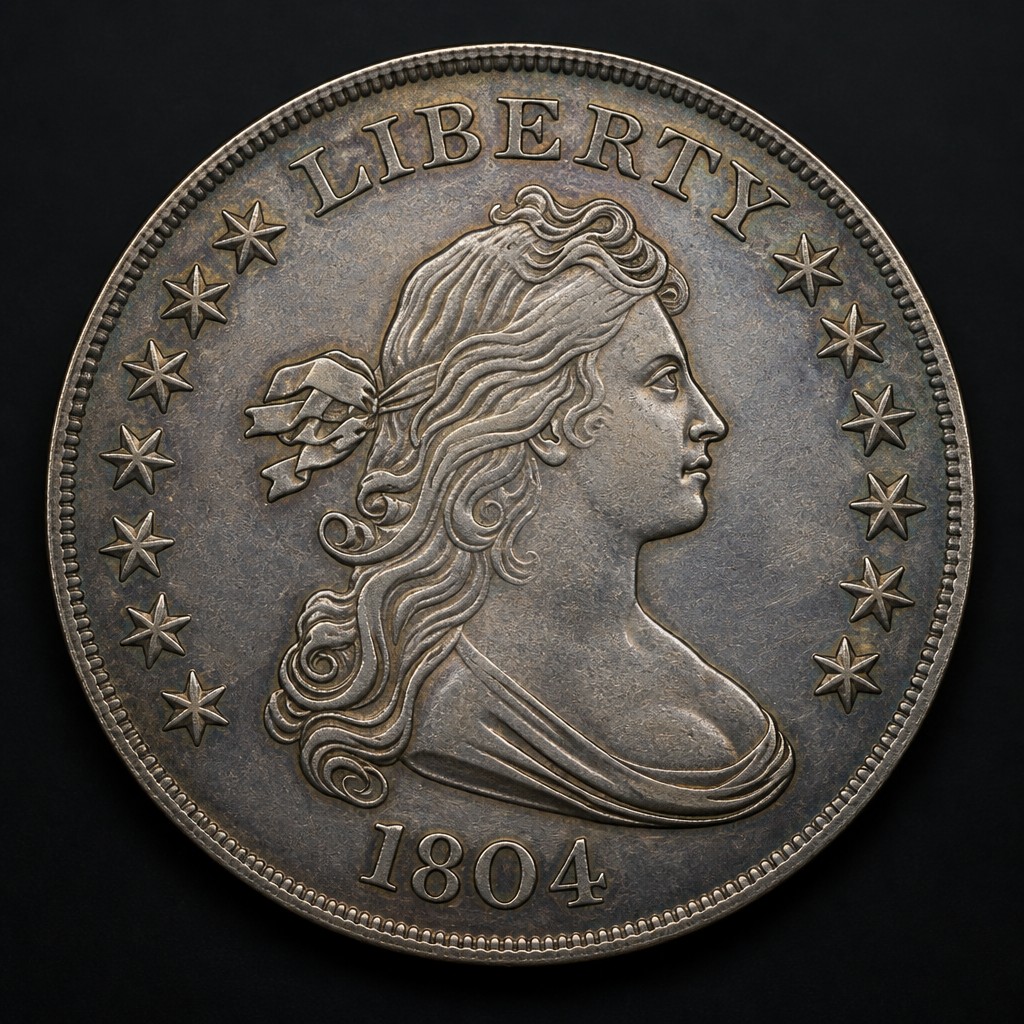
What It Is
The 1804 Draped Bust Silver Dollar is one of the most famous rarities in American numismatics, often nicknamed the "King of American Coins." Despite the date, these coins were actually struck years later, in the 1830s and beyond, for diplomatic presentation sets and later private collectors; no dollars were actually coined for circulation in 1804 itself. Only a small, well-documented number of genuine specimens exist, and they are traditionally divided by researchers into a few restrike classes based on subtle differences in the edge and fabric of each piece.
Obverse (Front)
The obverse shows Liberty in profile facing right, with flowing hair partly covered by a cloth cap, wearing a draped bodice (hence "Draped Bust"). "LIBERTY" arcs above her head, stars are arranged around the border, and the date "1804" appears below.
Reverse (Back)
The reverse depicts a small, spread-winged eagle (the "Heraldic Eagle" style used on this issue) holding an olive branch and arrows, with a shield on its breast, surrounded by "UNITED STATES OF AMERICA."
Size, Weight, Metal, and Edge
The coin follows the specifications of other early silver dollars of the design type: approximately 39-40 mm in diameter, roughly 26.96 grams, struck in 89.24% silver (early U.S. Mint standard), with a lettered edge reading "HUNDRED CENTS ONE DOLLAR OR UNIT" on most examples of this design type.
Mint Marks
No mint mark appears on this coin, as it was struck entirely at the Philadelphia Mint, the only U.S. Mint facility operating at the time.
Telling It Apart From Similar Coins
Because genuine 1804 dollars are extremely rare and individually documented (each known specimen has a recorded history and pedigree), any coin encountered with this date is far more likely to be a replica, a reproduction sold as a souvenir, or a coin with an altered date from a more common Draped Bust Dollar year (such as 1799 or 1800) with the last digit reworked to resemble a "4."
Grading at a Glance
On any Draped Bust Dollar type, check the hair detail around Liberty's face and the feather definition on the eagle for wear patterns, and note the overall strike quality and centering, since early Mint striking was often imperfect even on genuine period coins.
Authenticity Red Flags
Given the coin's fame, reproductions and replicas (often marked "COPY" on legitimate souvenir versions, though such markings can be removed or absent on deceptive fakes) are common. Warning signs include a date that looks re-engraved or has tooling marks around the last digit, a weight or diameter that doesn't match the type, and a lack of any documented pedigree, since every genuine 1804 dollar has a known ownership history. The lettered edge should also read correctly and show the natural wear or toning consistent with a coin's claimed age; a crisp, unworn edge on a supposedly well-circulated example is inconsistent and worth questioning.
Frequently asked questions
Were 1804 dollars actually struck in 1804?
No, research shows they were struck later, in the 1830s and after, for diplomatic gift sets and collectors, even though they carry the 1804 date.
How many genuine 1804 Silver Dollars exist?
Only a small number of examples are known and individually documented with recorded histories, making it one of the rarest and most studied U.S. coins.
What should make me suspicious of a coin dated 1804?
Tooling marks or unusual texture around the final digit of the date (suggesting an altered 1799 or 1800 dollar), incorrect weight or diameter, and no documented ownership history.
What does the reverse of the 1804 dollar look like?
It shows a heraldic eagle with a shield on its breast, holding an olive branch and arrows, surrounded by the national title.