
How to Identify the 1804 Draped Bust Dime
A visual identification guide to the 1804 Draped Bust dime covering its Heraldic Eagle reverse, star-count varieties, size and weight, and how to spot altered dates.
Read the full 1804 Draped Bust Dime encyclopedia entry →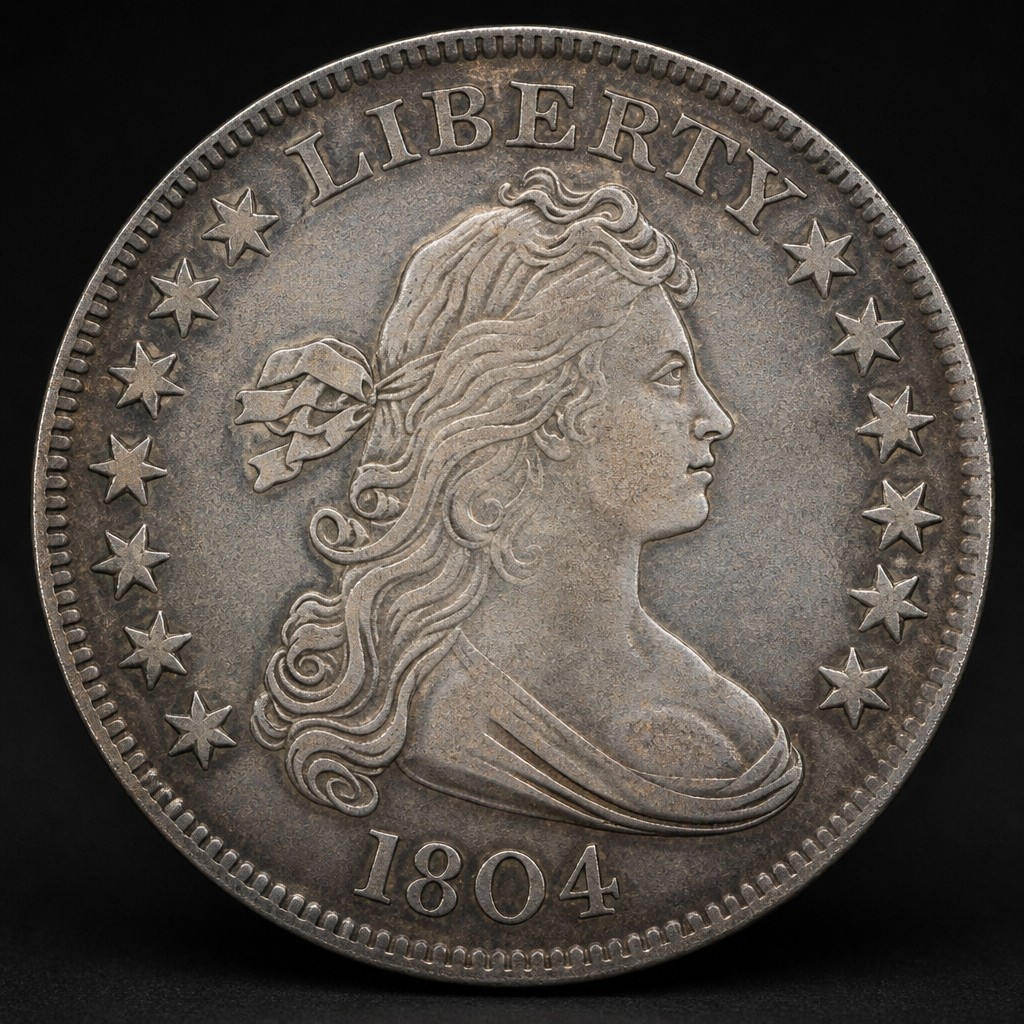
What It Is
The 1804 dime belongs to the Draped Bust series (1796-1807), paired with the Heraldic Eagle reverse adopted around 1798. With a low original mintage, it is one of the scarcest and most valuable dates among early United States dimes, and it is consistently ranked among the key dates of the entire dime denomination.
Obverse Design
Liberty is shown in right-facing profile with tied hair and draped shoulders, LIBERTY arching above her head, the date below, and stars around the border, typically 13 by this period, reflecting the standardized star count adopted once the Mint stopped adding a star for every new state.
Reverse Design
The reverse features a Heraldic Eagle bearing a shield on its chest, an olive branch and arrows in its talons, a banner above reading E PLURIBUS UNUM, and clouds with small stars overhead. UNITED STATES OF AMERICA surrounds the border. Two known reverse die varieties exist for this date, one with 13 stars in the clouds above the eagle and one with 14. Like other coins of this era, no numeral denomination appears on the coin.
Size, Weight, Metal, and Edge
The dime measures about 18.8mm in diameter and weighs roughly 2.7 grams, struck in the same silver-copper alloy used across early U.S. silver coinage, with a reeded edge and no edge lettering.
Mint Marks
No mint mark appears anywhere on the coin; only the Philadelphia Mint struck dimes at this time, as it remained the sole operating U.S. mint through this period.
Telling It Apart From Similar Coins
The Heraldic Eagle reverse separates 1804 and later Draped Bust dimes from the Small Eagle reverse used on 1796-1797 issues. Because the mintage was small, most attribution work for this date relies on comparing die varieties (the star count in the clouds above the eagle, and specific date and letter spacing) against published references rather than relying on the design alone. Specialists also check the spacing between the digits of the date, since genuine dies show a distinct, repeatable pattern.
Judging Condition at a Glance
The earliest wear shows on Liberty's hair above the ear and along the drapery folds at the bust, and on the eagle's head and wing tops on the reverse. Because surviving examples are scarce, even moderately worn, problem-free coins are considered desirable by collectors, and coins with an even strike and clear rims are valued highly regardless of the numerical grade.
Authenticity Red Flags
Given its rarity, the 1804 dime is a common target for date alteration, usually by modifying the final digit of a more common date. Inspect the date closely under magnification for signs of re-engraving, an unnatural surface texture around the digits, or a slightly different color or luster compared to the rest of the coin. Weight and diameter should be verified against the roughly 2.7-gram, 18.8mm standard, and any example lacking a clear ownership history or professional certification should be treated with caution.
Frequently asked questions
How many star varieties exist for the 1804 dime reverse?
Two: one variety shows 13 stars in the clouds above the eagle and the other shows 14 stars.
Does the 1804 dime say '10 CENTS' anywhere?
No, early Draped Bust dimes did not carry a numeral denomination; that feature was added later with the Capped Bust design.
Why is the 1804 dime considered rare?
It had a low original mintage, and relatively few examples have survived in any condition, making it a key date in the Draped Bust series.
What should I check if I think I have a genuine 1804 dime?
Verify weight (about 2.7 grams) and diameter (about 18.8mm), examine the date for signs of alteration, and compare die details to published references or seek certification from a grading service.