
How to Identify the 1796 Half Cent
A guide to the 1796 half cent, the key date of the entire series, covering its With Pole and No Pole varieties and the alterations used to fake this rare date.
Read the full 1796 Half Cent encyclopedia entry →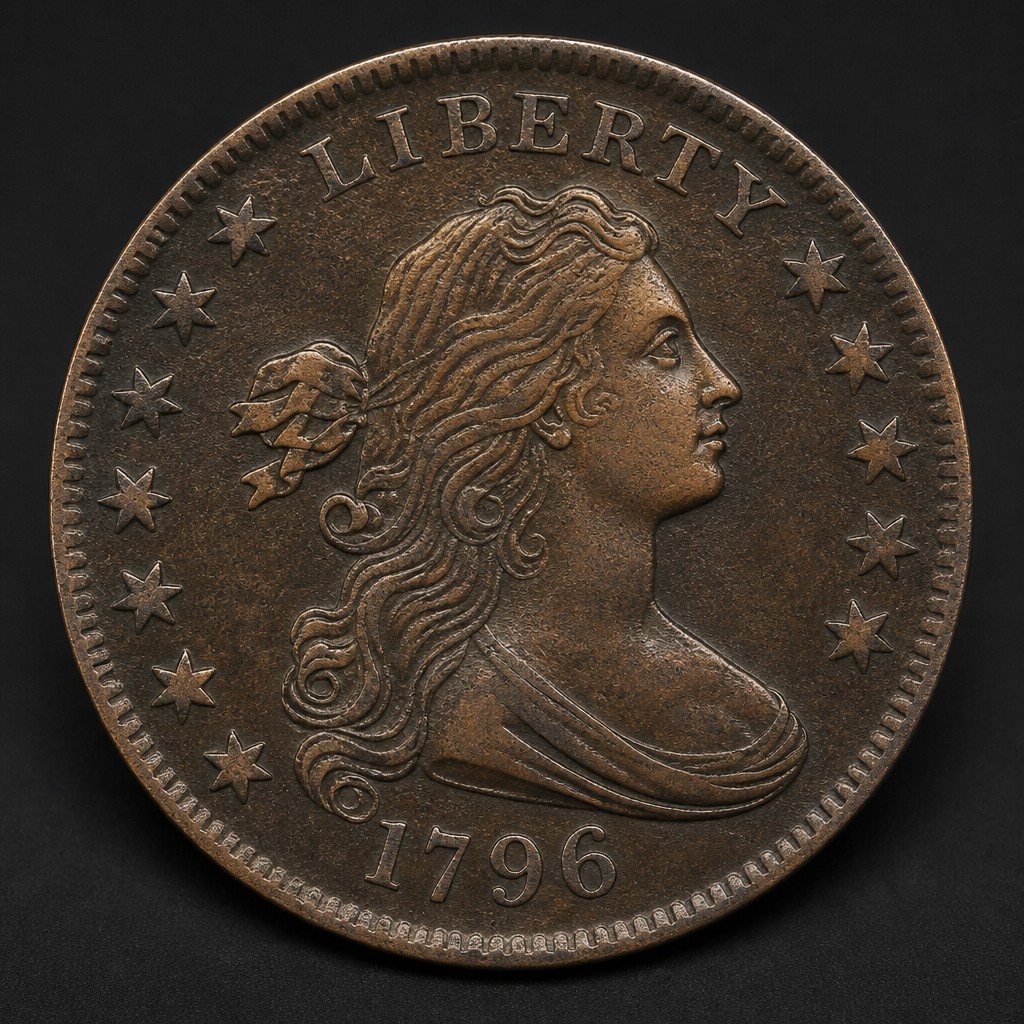
What It Is
The 1796 half cent is the key date of the entire half cent series, struck in an extremely small quantity that makes it one of the scarcest coins in all of U.S. copper coinage, and it is known in two recognized varieties, "With Pole" and "No Pole," referring to whether the pole behind Liberty's cap appears in the design.
Obverse Design
Liberty faces right wearing a soft cap; the "With Pole" variety shows a pole visible behind her head and shoulder, matching other half cents of the period, while the rarer "No Pole" variety lacks this element entirely on the die, likely due to a design or die-cutting difference rather than damage. "LIBERTY" arches above her portrait, with "1796" placed below.
Reverse Design
A wreath surrounds the denomination "HALF CENT" and the fraction "1/200," with "UNITED STATES OF AMERICA" arranged around the border of the coin.
Size, Weight, and Metal
Struck in pure copper, weighing about 5.44 grams (84 grains), measuring roughly 22 mm across.
Mint Marks
None; struck at the Philadelphia Mint, as with every half cent produced during this era.
Telling It Apart From Similar Coins
The date "1796" combined with either the presence or absence of the pole behind the cap identifies which specific variety a given coin represents. Because genuine surviving examples are so scarce, careful comparison of the portrait style, letter spacing, and wreath detail against documented genuine specimens is essential before assuming any coin claimed to be this date is authentic.
Judging Condition
Given the coin's extreme rarity, even heavily worn or otherwise problem examples draw significant interest from specialists who might overlook condition issues that would matter more on a common date. Grading still follows the same general criteria used for other half cents of the type: sharpness of Liberty's hair and cap, and the clarity of the wreath and lettering on the reverse.
Authenticity Red Flags
This is one of the most heavily replicated dates in the entire half cent series because of its rarity and desirability among collectors. Common issues include cast counterfeits with soft or grainy surfaces lacking the sharp detail of a genuinely struck coin, dates altered from more common nearby years to read "1796," and pole details either added or carefully removed in an attempt to convert a genuine "With Pole" coin into the rarer, more valuable "No Pole" variety. Any coin represented as a genuine 1796 half cent warrants especially close comparison to documented authentic examples before it is accepted as genuine.
Frequently asked questions
What is the difference between 'With Pole' and 'No Pole'?
It refers to whether the pole behind Liberty's cap appears on the die; the No Pole variety is the rarer of the two.
Why is 1796 considered the key date for half cents?
Its original mintage was extremely small, making genuine surviving examples very scarce.
How much should a genuine example weigh?
About 5.44 grams (84 grains).
What should I watch for with this date?
Cast counterfeits, altered dates from more common years, and pole details added or removed to fake the rarer variety.