
How to Identify the 1796 Draped Bust Half Dime
A visual guide to the 1796 Draped Bust half dime, covering its small eagle reverse, star-count varieties, and the well-known LIKERTY die error collectors look for.
Read the full 1796 Draped Bust Half Dime encyclopedia entry →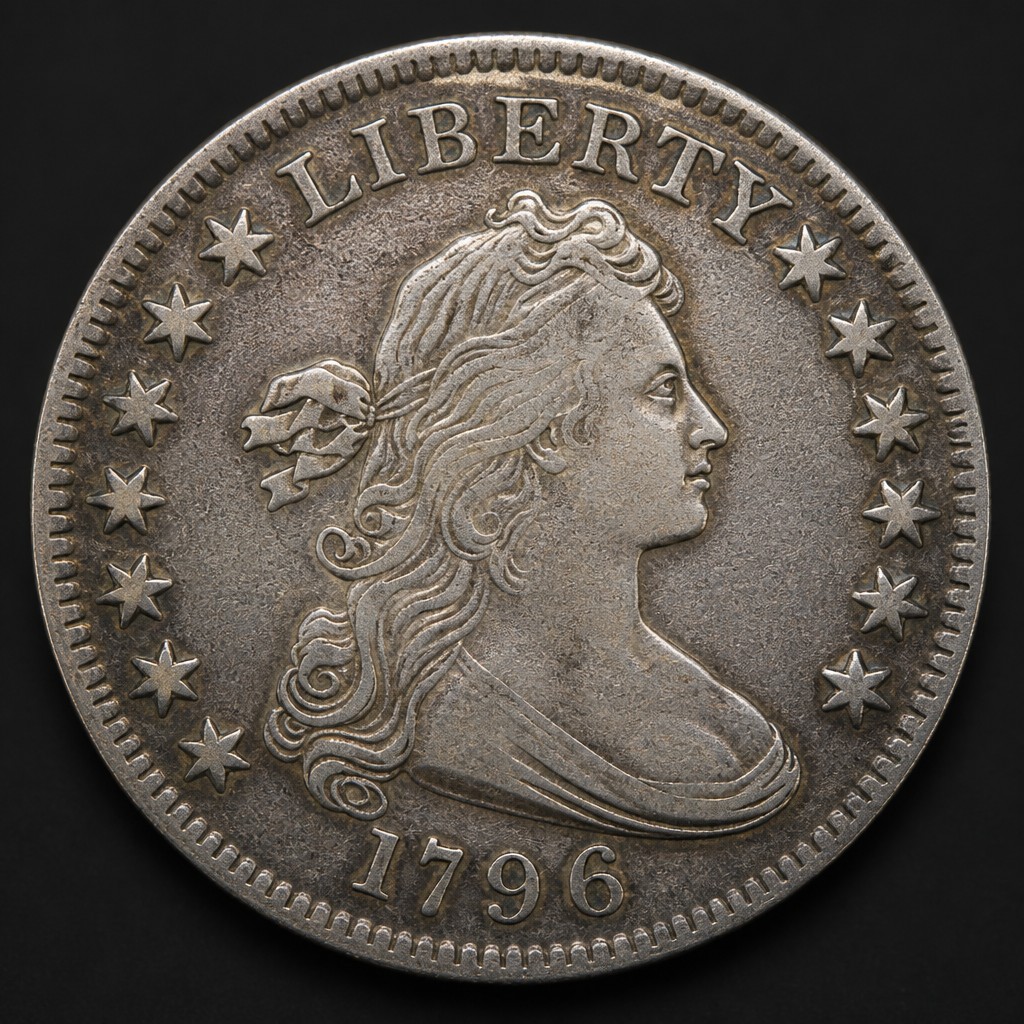
What It Is
The 1796 half dime introduced the Draped Bust obverse design, based on a portrait attributed to Gilbert Stuart and engraved by Robert Scot, replacing the earlier Flowing Hair type. It still uses the small eagle reverse first seen in 1794-1795, making 1796-1797 half dimes a transitional design pairing before the reverse itself was redesigned around the turn of the century.
Obverse Design
Liberty is shown in right-facing bust with hair pulled back and tied, drapery folds visible at her bust line. LIBERTY arches above, the date is below, and stars flank the portrait. 1796 half dimes are known with either 15 or 16 stars depending on the die used, reflecting the addition of Tennessee as the 16th state that year, a detail unique to dies cut during this transitional period.
Reverse Design
The reverse carries the small, spread-winged eagle standing on a cloud within a wreath, with UNITED STATES OF AMERICA around the border. No numeral value appears on the coin, consistent with all half dimes struck before the 1830s.
Size, Weight, Metal, and Edge
Diameter is about 16.5mm and weight about 1.35 grams, in the same roughly 89% silver alloy as other half dimes of the era, with a plain reeded edge and no edge lettering.
Mint Marks
There is no mint mark. All half dimes of this date were struck at the Philadelphia Mint, the only mint operating in the United States at the time.
Telling It Apart From Similar Coins
Compare star count and lettering carefully: a small number of 1796 dies show LIBERTY misspelled as "LIKERTY" due to a damaged letter punch, a well-known variety among specialists. Distinguishing 1796 from the 1794-1795 Flowing Hair type is done by the hairstyle (tied and draped versus loose and flowing), while distinguishing it from later 1800-1805 half dimes requires checking the reverse, since those later issues switched to a Heraldic Eagle design with a shield-bearing eagle rather than the small perched bird used here.
Judging Condition at a Glance
Check the high points of Liberty's hair and bust drapery folds, along with the eagle's breast on the reverse, for the first signs of wear. Coins with legible stars, a readable date, and visible drapery lines typically grade in the FINE to VERY FINE range; sharper hair strands and full feather detail indicate higher grades, while heavily worn coins reduce the portrait to a flat silhouette with only the date and outline of the stars remaining clear.
Authenticity Red Flags
This is a scarce, actively collected date, so weight and diameter should be checked against the roughly 1.35-gram, 16.5mm standard. Watch for soft or blurred lettering, uneven or seam-like edges suggesting a cast copy, and surfaces that look artificially smoothed or "whizzed" to imitate luster. Given the value involved, certification by a recognized grading service is the most dependable way to confirm authenticity, especially since photographs alone often cannot reveal subtle differences in strike and surface texture between a genuine coin and a well-made copy.
Frequently asked questions
What replaced the Flowing Hair design on the half dime?
The Draped Bust design, first used in 1796, which shows Liberty with tied hair and drapery at the bust instead of loose flowing hair.
Does the 1796 half dime have 15 or 16 stars?
Both varieties exist; some dies show 15 stars and others 16, reflecting Tennessee's admission as a state partway through the year.
What is the 'LIKERTY' variety?
A small number of 1796 half dime dies show LIBERTY misspelled as LIKERTY due to a damaged letter punch used by the engraver; it is a recognized die variety, not a separate coin type.
Is there a mint mark on this coin?
No, it was struck only at the Philadelphia Mint, which had no mint mark at the time.