
How to Identify the 1793 Liberty Cap Half Cent
A guide to the first-year 1793 half cent, the only year with a left-facing Liberty portrait, covering its design, specifications, and the reproductions to watch for.
Read the full 1793 Liberty Cap Half Cent encyclopedia entry →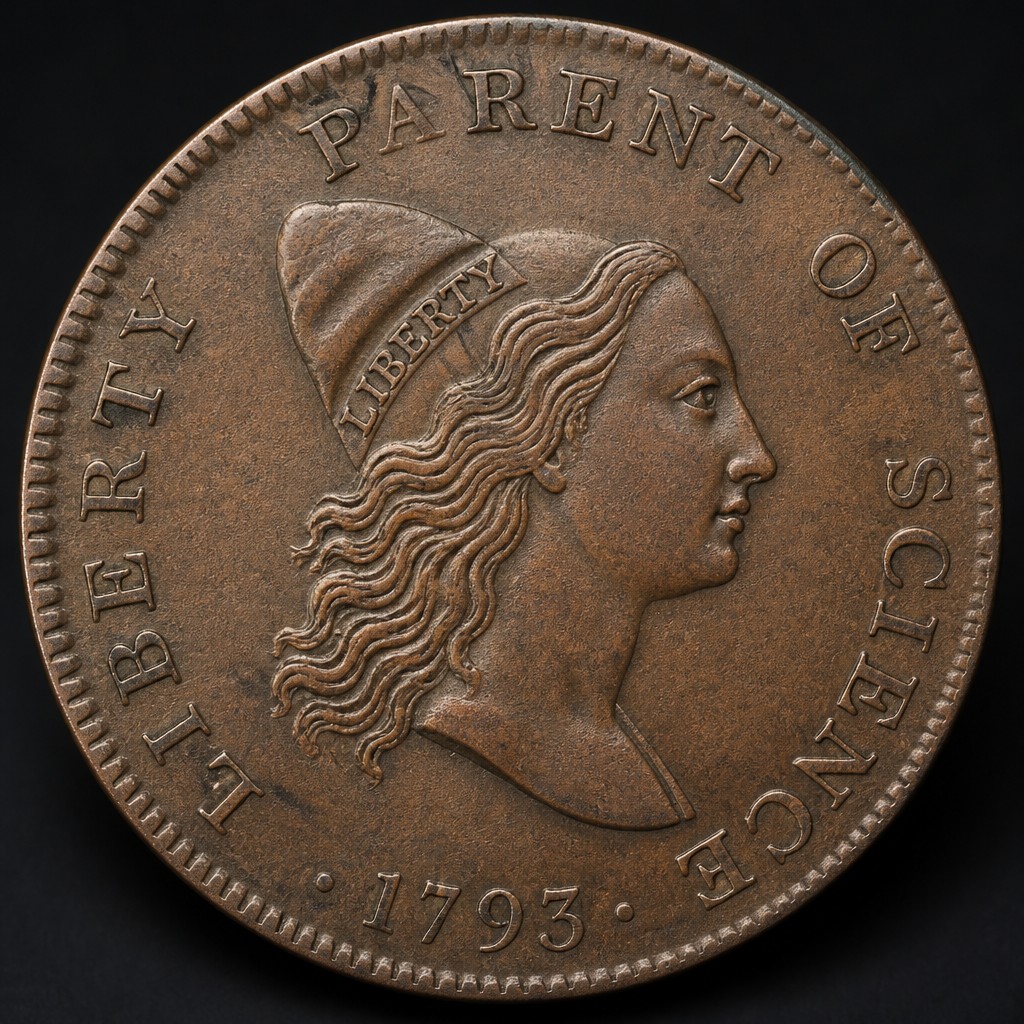
What It Is
The 1793 half cent is the first-year issue of the Liberty Cap type and the very first half cent design struck by the young United States Mint, produced in a single year with a unique portrait orientation not repeated afterward.
Obverse Design
Liberty faces left, wearing a soft cap mounted on a pole behind her head, a classical emblem of liberty. This is the only year the Liberty Cap half cent used a leftward-facing portrait before the design was changed to face right beginning in 1794. "LIBERTY" arches above her portrait, with "1793" placed below.
Reverse Design
A wreath surrounds the denomination "HALF CENT" and the fraction "1/200," with "UNITED STATES OF AMERICA" arranged around the rim.
Size, Weight, and Metal
Struck in pure copper, weighing about 6.74 grams, approximately 22 mm across, with an edge treatment typical of the Mint's earliest, somewhat higher-relief production methods before manufacturing was refined in later years.
Mint Marks
None; struck exclusively at the Philadelphia Mint, the only U.S. mint in operation in 1793.
Telling It Apart From Similar Coins
The left-facing portrait alone confirms the date, since no other year of the Liberty Cap half cent uses this orientation; every year from 1794 onward faces right instead. First-year coins of this series also tend to show a somewhat cruder, higher-relief style of striking characteristic of the Mint's earliest and still-developing equipment and dies.
Judging Condition
Given the coin's age and low original mintage, most surviving examples show notable wear, planchet flaws inherited from the coining process, or old environmental damage accumulated over more than two centuries. Grading focuses on the legibility of "LIBERTY," the definition remaining in Liberty's profile, and the wreath detail visible on the reverse.
Authenticity Red Flags
Because genuine 1793 half cents are rare and carry real value, be alert to cast reproductions, which often show a grainy or pitted surface texture, faint seam lines around the edge, or soft, mushy device edges rather than the sharp, crisp lines produced by an actual coining press. Also check that the overall style, lettering proportions, and portrait details match documented genuine die varieties recognized for this specific year.
Frequently asked questions
What makes the 1793 half cent unique?
It's the only year of the Liberty Cap type with Liberty facing left; every later year faces right.
Where was it struck?
At the Philadelphia Mint, the only U.S. mint operating in 1793.
How much does it weigh?
About 6.74 grams.
What are common signs of a cast fake?
A grainy or pitted texture, visible seam lines, and soft, mushy design details instead of crisp struck edges.