
How to Identify the 1787 Brasher Doubloon
A guide to the famous 1787 Brasher Doubloon, covering its New York arms design, sun-over-mountains reverse, EB punch mark placement, and why genuine originals are extraordinarily rare.
Read the full 1787 Brasher Doubloon encyclopedia entry →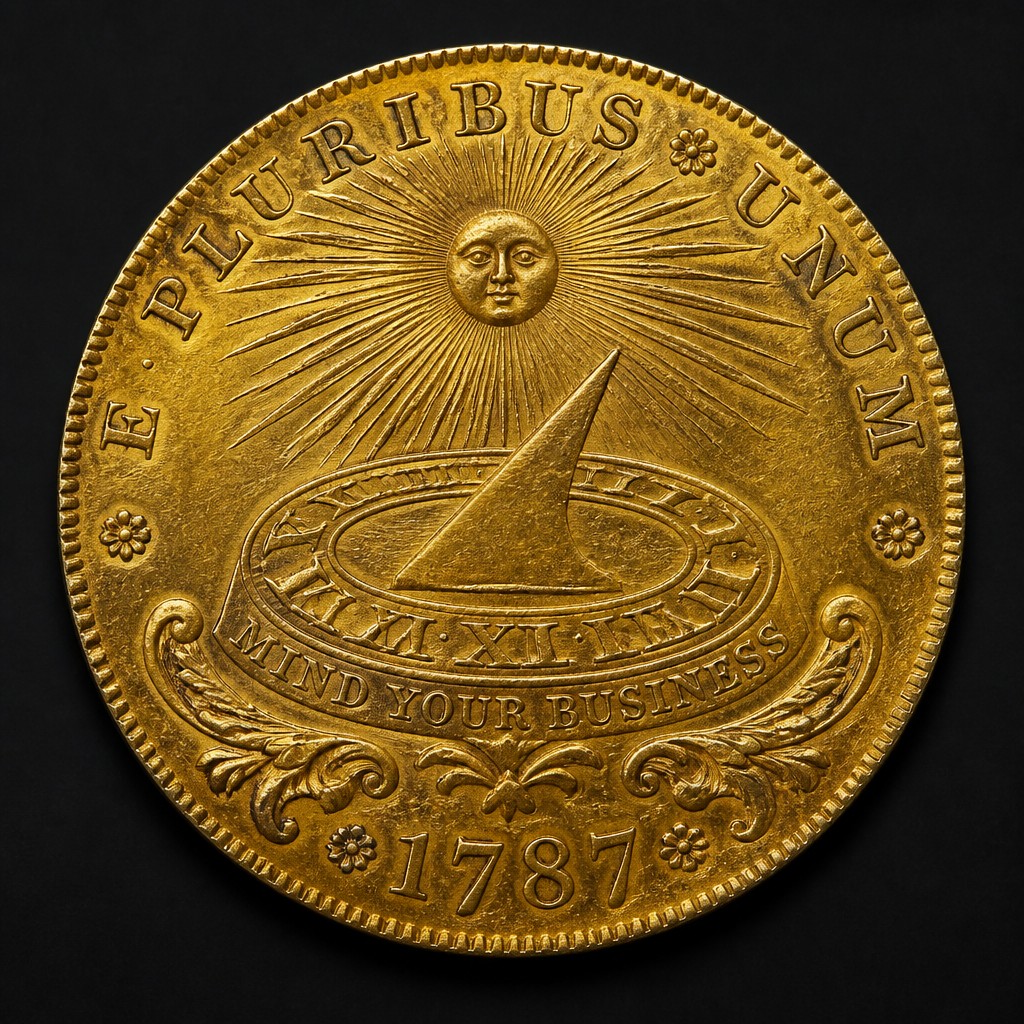
What Is the Brasher Doubloon?
The 1787 Brasher Doubloon is a privately struck gold coin made by New York goldsmith and assayer Ephraim Brasher, a neighbor of George Washington, during the period when the United States had not yet standardized a national coinage. It is one of the most celebrated coins in American numismatics and only a small number of originals are known to exist, most already in museum or notable specialty collections.
Obverse Design
The obverse depicts a coat of arms based on the New York state seal: a rising sun over a range of mountains, flanked by an eagle and other heraldic elements, surrounded by the Latin legend "NOVA EBORACA COLUMBIA EXCELSIOR" (New York, America, Ever Upward) and the date 1787.
Reverse Design
The reverse shows an eagle displayed (wings spread) with a shield on its breast, holding arrows and an olive branch, echoing the emerging Great Seal imagery of the young United States, with the legend "UNUM E PLURIBUS" around the border.
The EB Punch Mark
The single most distinctive identification feature is Ephraim Brasher's personal hallmark, his initials "EB" in a tiny oval punch, stamped into the coin after striking as his mark of quality and weight verification. This punch appears in different positions on different known specimens, most notably on the eagle's wing on some pieces and on the breast/shield area on others, and the exact placement is a key detail used to individually identify each surviving original.
Size, Weight, and Metal
The coin is struck in gold, sized and weighted to approximate the Spanish doubloon (a widely circulated gold trade coin of the era) at roughly 26-27 mm in diameter, reflecting its role as a private substitute for a national gold coinage that did not yet exist.
Why Genuineness Matters So Much
Because so few originals exist and each one is individually documented and traceable in numismatic literature, any coin claiming to be an original 1787 Brasher Doubloon should be treated as requiring expert, in-hand examination and provenance research rather than casual visual identification. The vast majority of "Brasher Doubloon" pieces encountered by the public are modern reproductions, replica sets, or fantasy pieces sold as souvenirs or decorative items, often clearly marked as copies or lacking the fine engraving detail and correct weight of an original.
Practical Identification Steps
When examining any piece presented as this coin, check the exact wording and letter spacing of the Latin legends against published references, the fine detail in the mountain and sun rays, the size and shape of the EB punch, and the coin's weight and diameter against the documented gold specification. Because of the extreme value and rarity involved, only a recognized grading service or specialist in early American numismatics can meaningfully confirm authenticity.
Judging Condition
For the rare original specimens studied in numismatic literature, condition is judged by the sharpness of the arms and eagle devices and the legibility of the legends, following the same visual criteria used for other 18th-century hand-struck gold coinage.
Frequently asked questions
What is the EB punch mark and why does it matter?
It is Ephraim Brasher's personal hallmark, a tiny oval stamp with his initials, applied to certify the coin's weight and quality; its exact placement helps identify individual known originals.
Are most 'Brasher Doubloons' people encounter genuine?
No. Only a small number of originals are documented and accounted for, so pieces encountered by the general public are almost always modern replicas or souvenir reproductions.
What design appears on the coin?
The obverse shows a New York-style coat of arms with a sun over mountains and a Latin legend; the reverse shows a spread-winged eagle with a shield, echoing early American seal imagery.
What was the purpose of this coin?
It was privately struck by a New York goldsmith to serve as a gold trade coin, sized like a Spanish doubloon, at a time before the United States had established its own national coinage.