
How to Identify the 12 Skilling
A collector's guide to confirming the early-modern Danish 12 skilling by its crowned lion shield, ornamental reverse, denomination, 1721 date, and copper fabric.
Read the full 12 Skilling encyclopedia entry →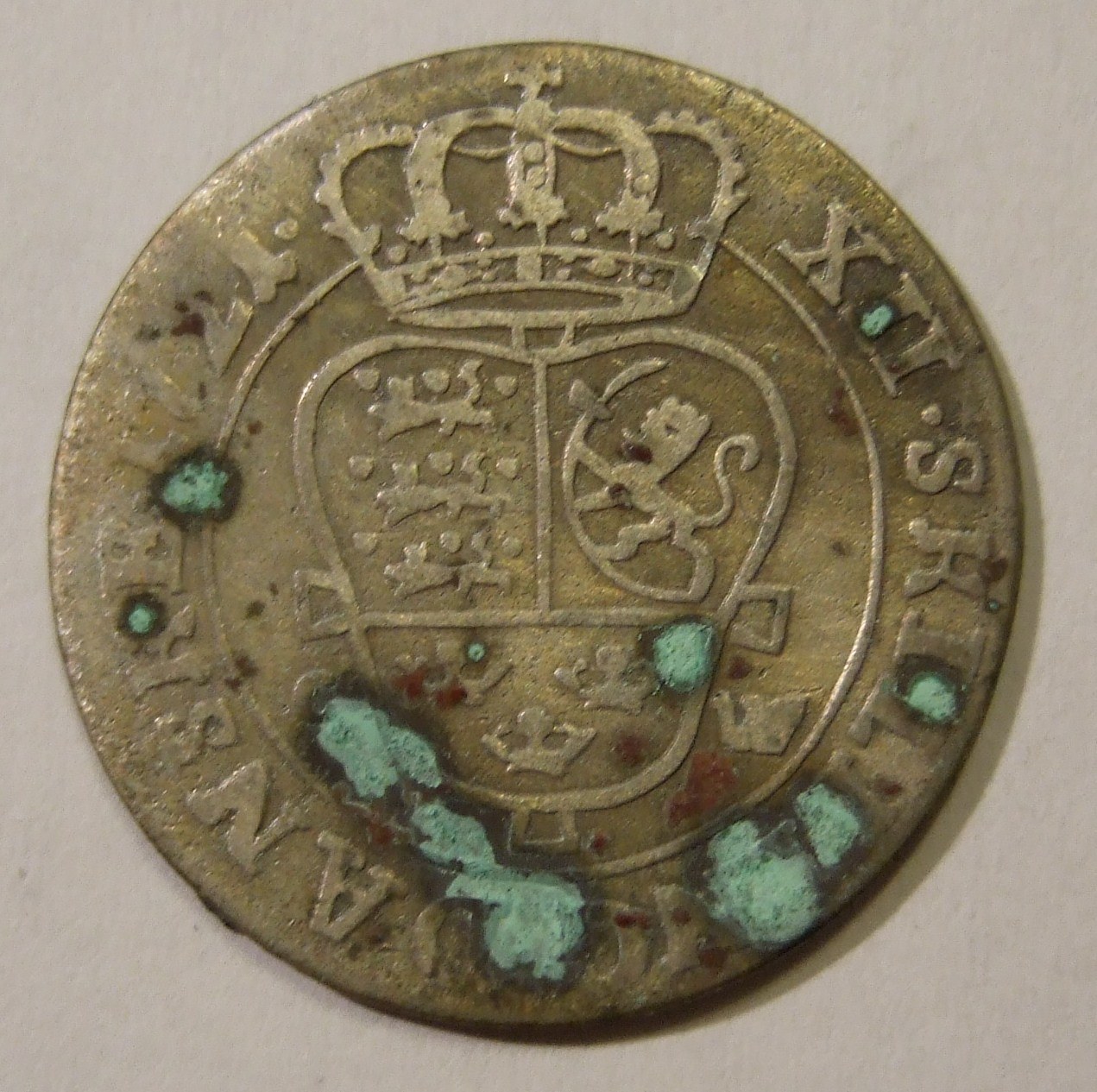
Start With the Crowned Shield
The fastest anchor is the obverse device: a crown set above an armorial shield bearing a lion. This crowned-shield composition is characteristic of Danish and Dano-Norwegian coinage of the early eighteenth century. Confirm that the crown sits above the shield and that a lion appears within the arms; the surrounding Latin legend should name the monarch and titles, which for an early-1720s piece points to Frederik IV.
Read the Ornamental Reverse and Value
Turn to the reverse, which on this type is a lettered, ornamental face rather than a portrait. Look for the stated denomination, the skilling value, along with decorative devices and, where preserved, the date and any mint or mintmaster marks. The 1721 date is a critical diagnostic: it should be legible in or near the reverse inscription and ties the coin to the correct reign. If the reverse carries a bust or a wholly different layout, you are likely looking at another denomination or ruler.
Check Metal, Size, and Strike
This is an early-modern, copper-toned small coin, not a bright silver crown. Expect the modest size and weight of a minor skilling denomination and the characteristics of period minting: a slightly irregular flan, softer relief, and honest toning. Hand-struck coins of this age often show minor centering and strike variation, which is normal and helps distinguish a genuine period piece from a too-perfect modern imitation.
Separate It From Look-Alikes
Denmark-Norway issued a family of skilling denominations (such as 2, 4, 8, 16, and 24 skilling) that can share crowns, shields, and lion heraldry but differ in stated value and size. Always read the denomination and measure the coin rather than relying on the heraldry alone. Also distinguish Danish issues from contemporary Norwegian and other Scandinavian coins that use similar royal imagery; the legend, value, and date together settle the attribution.
Authentication Cautions
For early-modern coins the main risks are misattribution, corrosion, and, for scarcer varieties, tooling or casting. Verify that the relief is struck rather than cast (cast fakes show soft, grainy surfaces and seams), that the date and legend are consistent with the type, and that any repairs or heavy cleaning are noted. Because value depends heavily on grade and legibility, confirm the crown, lion shield, ornamental reverse, denomination, and 1721 date all agree before finalizing, and consider specialist opinion for higher-value or unusual pieces.
Frequently asked questions
How do I confirm the date and reign?
Look for 1721 near the reverse inscription and read the obverse legend, which names the monarch. An early-1720s date with royal Dano-Norwegian titles points to Frederik IV, who reigned from 1699 to 1730.
How do I tell it from other skilling denominations?
Read the stated value on the reverse and measure the coin. Denmark-Norway struck several skilling values with similar crown-and-shield heraldry, so the denomination text and diameter, not the imagery alone, separate the 12 skilling from its neighbors.
What should the coin be made of and look like?
Expect a copper-toned, modestly sized early-modern coin with hand-struck character: a slightly irregular flan, softer relief, and natural toning. It should not resemble a large bright silver crown or a crisp modern machine strike.
How can I spot a fake or altered piece?
Genuine coins are struck, not cast, so beware soft grainy surfaces, seams, or a too-perfect look. Watch for tooling, added detail, or heavy cleaning, and get specialist authentication for scarce varieties or higher-grade examples.