
How to Identify the 1000 Reis (Discovery of India)
A collector's guide to attributing a late Kingdom of Portugal 1000 Reis by its royal portrait, Portuguese arms, denomination, and true metal.
Read the full 1000 Reis (Discovery of India) encyclopedia entry →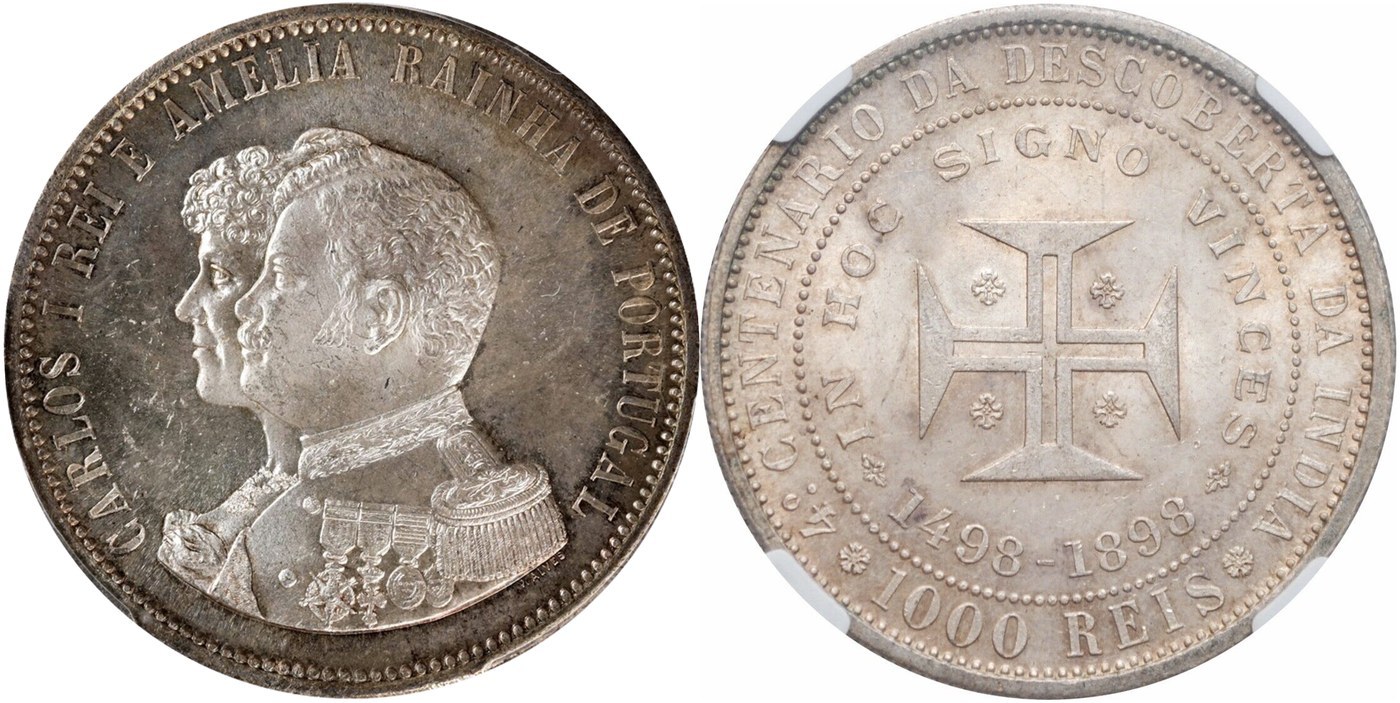
Read the Obverse Legend and Portrait
Begin with the portrait side. You should see a male royal profile facing right, encircled by a Portuguese-language legend naming the monarch and his titles. For a coin of the 1906-1910 period, look for CARLOS I and wording tying the ruler to Portugal. The date is worked into the design and should fall in the final years of the monarchy. A left-facing bust, a different name, or a republican legend would point to a different coin.
Verify the Reverse Arms and Denomination
The reverse is the most reliable diagnostic. Confirm the Portuguese royal coat of arms: a crowned central shield built from the cross-shaped grouping of small quina shields, surrounded by a border of castles. This specific cross-and-shields heraldry is Portuguese and rules out most other countries at a glance. Then find the denomination, 1000 REIS, in the reverse legend or field. Both the arms and the value text should be present and agree.
Confirm Metal, Size, and Weight
Because this piece looks gold, do not assume gold. Portuguese 1000 Reis were issued in silver as well, and gilding or heavy toning can fool the eye. Weigh and measure the coin and compare against reference specifications for the exact type you suspect; a gold piece and a silver piece of the same denomination differ markedly in density and weight. Correct metal and dimensions are what ultimately separate a genuine gold coin from a silver or plated look-alike.
Watch for Look-Alikes and Commemoratives
Several Portuguese types share the crowned-arms reverse, so a single feature is not enough. Standard circulating 1000 Reis and any Discovery-of-India commemorative can look broadly similar but differ in fine design, inscriptions, and sometimes an added commemorative motif or dates referencing 1498. Match the portrait, the exact legend, the arms style, and the denomination as a set before settling on an attribution.
Authentication Cautions
Coins in the gold-value bracket attract counterfeits and gilded fakes, so authentication matters. Be wary of pieces with mushy heraldic detail, wrong weight, seams, or solder marks from mounted jewelry use. For anything you plan to buy or sell at gold-coin prices, third-party grading or an expert opinion is strongly advised over a visual judgment alone.
Frequently asked questions
Which single feature best confirms the country?
The reverse arms. Portugal's crowned shield of small quina shields arranged in a cross within a border of castles is distinctive and quickly separates it from other national coats of arms.
How do I tell gold from a gilded or silver piece?
Weigh and measure it and compare against reference specs for the type. Gold is much denser than silver, so weight and diameter, not color, reveal the true metal. Gilding often shows wear or seams under magnification.
How do I know if it is the Discovery of India commemorative rather than a standard 1000 Reis?
Read the inscriptions and reverse design closely. Commemorative issues carry distinguishing wording or motifs, sometimes referencing the 1498 sea route to India, whereas a standard type shows only the usual portrait, arms, and denomination.
Should I get a coin like this authenticated?
Yes. Because it falls in a higher-value bracket and is a target for gilded or cast fakes, third-party grading or an expert appraisal is worthwhile before buying or selling.