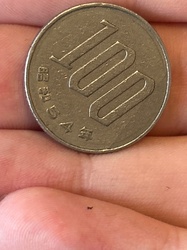
How to Identify the 100 Yen (Showa Silver)
A collector's checklist for Japan's Phoenix 100 Yen: reading the Showa date, confirming silver, and telling it apart from later cherry-blossom and cupro-nickel 100 Yen.
Read the full 100 Yen (Showa Silver) encyclopedia entry →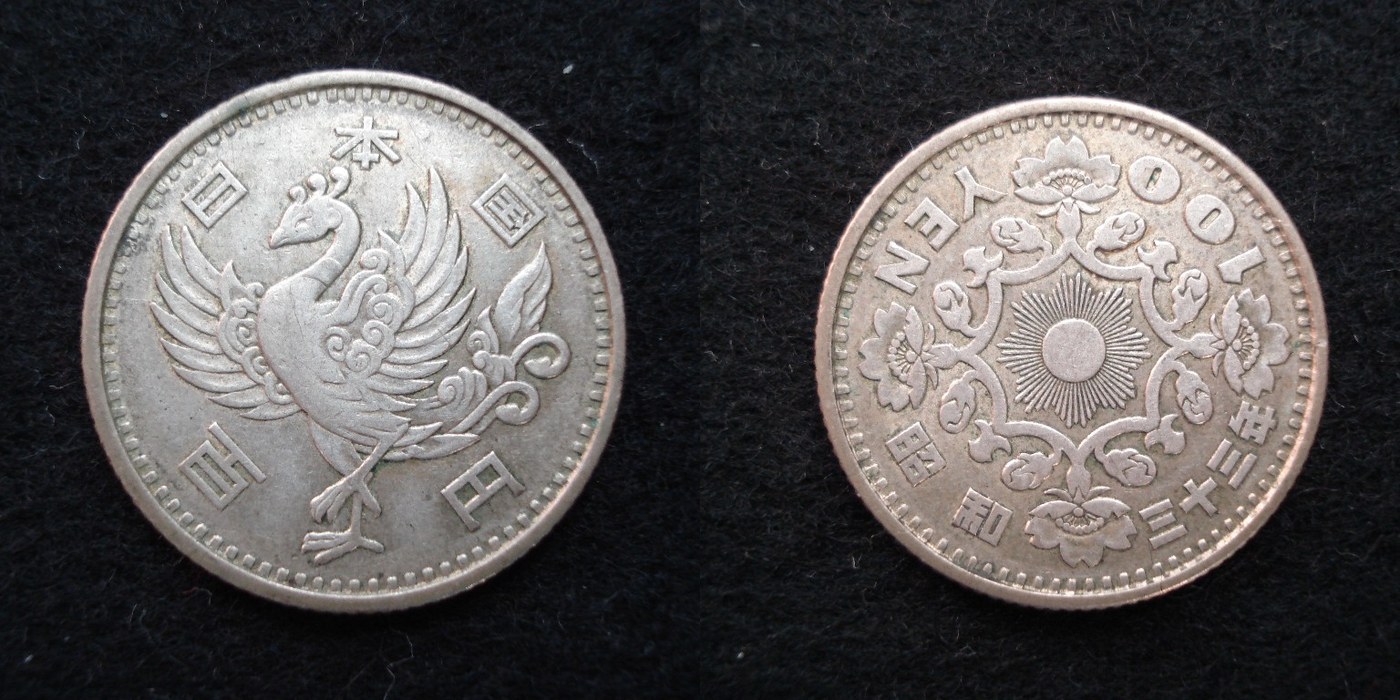
Start with the design pair, which is decisive. The silver Phoenix 100 Yen shows a phoenix in flight on the obverse and a large "100" over radiating lines on the reverse. Japan made three main 100 Yen designs: the phoenix (silver, 1957-1958), the cherry blossom (silver, 1959-1966), and the rice ears / sheaf (cupro-nickel, 1967 onward). If the obverse shows blossoms or grain rather than a bird, it is not the phoenix type.
Read the date in era-year form. Look for 昭和 (Showa), then the year numerals, then 年 ("year"). Add 1925 to the Showa year: Showa 32 is 1957 and Showa 33 is 1958, the only two years for this type. Read the numerals carefully, as Japanese legends can run in a different orientation than Western text and a misread character changes the year.
Confirm metal and size together. The coin is .600 fine silver, about 22.6 mm across and roughly 4.8 grams, with a reeded edge that should show a pale silver tone rather than a copper-colored core. A same-size cupro-nickel 100 Yen (1967 on) will lack any silver edge tone and ring differently; if you can see a coppery edge, the coin is not silver. The value 100 is in Western numerals on the reverse, so use that plus the phoenix to fix the denomination.
Watch for look-alikes within the 100 Yen family rather than outright fakes. The most common mix-up is confusing the phoenix silver piece with the later cherry-blossom silver coin (also .600 silver, similar size) or with the modern cupro-nickel coin. Because this is an inexpensive, high-mintage type, deliberate counterfeits are uncommon, but be cautious with any coin claimed to be a scarce variety or an exceptional grade.
For authentication, verify diameter, weight, and edge against the figures above and inspect the strike sharpness of the phoenix feathers and the radiating lines. For coins carrying a real premium (top-grade uncirculated examples), favor pieces certified by a major grading service, which confirms the metal, date, and grade.
Frequently asked questions
How do I tell the phoenix 100 Yen from the later silver 100 Yen?
Look at the obverse. The phoenix type (1957-1958) shows a bird in flight; the 1959-1966 type shows cherry blossoms. Both are .600 silver and similar in size, so the design is the deciding feature along with the Showa date.
How do I read the date?
Find the characters 昭和 (Showa), the year numerals, and 年 ("year"), then add 1925 to the Showa year. Showa 32 is 1957 and Showa 33 is 1958, which are the only two years of the phoenix type.
How can I confirm it is silver and not the modern coin?
Check the edge and weight. The silver phoenix coin is .600 fine silver, about 4.8 grams and 22.6 mm, with a pale silver-toned reeded edge. The modern 100 Yen (1967 on) is cupro-nickel with a different design and no silver edge tone.
Does it have a mint mark?
No Western-style mint letter is present. Japanese circulating coins of this era were struck at the Japan Mint and identified by design and era-year rather than a mint mark, so rely on the phoenix design and the Showa date.
100 Yen (Showa Silver) identified by the community
Recent 100 Yen (Showa Silver) coins identified with Coin Identifier.