
How to Identify the 100 Soles de Oro
A collector's walkthrough for identifying Peru's largest gold Sol de Oro by its size, gold content, fortress reverse, mint inscription, and denomination.
Read the full 100 Soles de Oro encyclopedia entry →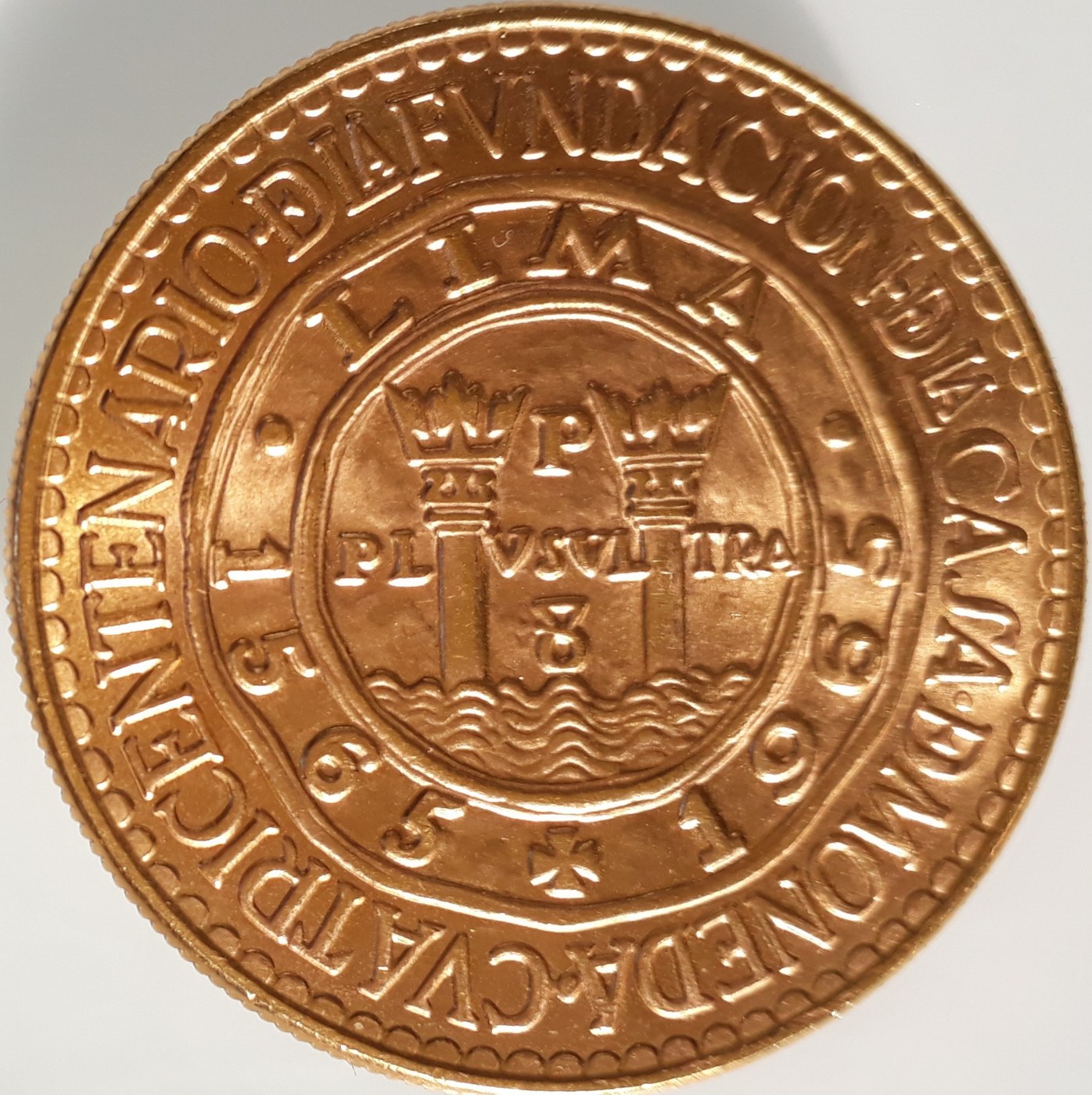
Start with size, weight and metal, because they screen out most fakes quickly. A genuine 100 Soles de Oro is a large, dense yellow-gold coin around 37 mm across, weighing close to 47 grams gross in .900 fine gold, with roughly 1.35 troy ounces of pure gold. It should feel notably heavy for its diameter and must show no attraction to a magnet. Confirming weight and diameter against reference figures is the fastest first check, though on a gold coin this valuable, weight alone never fully proves authenticity.
Read the reverse, which is the face shown in this photograph. Expect a castle or fortress device paired with the inscription “CASA DE MONEDA DE LIMA” and a date—here 1965. That legend names the Lima Mint and, with the date, anchors the coin's origin and year. Lettering and the emblem should be sharp and evenly struck; mushy or soft detail is a warning sign.
Confirm the denomination and check the obverse in hand. This is the 100 soles, the top value in a graduated gold series that also includes 5, 10, 20 and 50 soles, so verify the “100” and “soles” markings to be sure you are not looking at a smaller sibling that shares design elements but is lighter and smaller. Because this image is reverse-only, inspect the obverse directly on any coin you are evaluating rather than assuming its content.
Be aware of restrike dating. Peru's gold soles, like several other world bullion coins of the era, were struck over an extended period and often carry repeated or frozen dates, so the year on the coin does not always indicate the exact year of manufacture. This is normal for the type and does not by itself signal a problem.
Authenticate with care. High gold value makes this coin a target for cast copies, gold-plated base-metal fakes, and struck counterfeits in the wrong alloy. Casting seams, incorrect color, off weight, or blurry detail are red flags. For any purchase or sale of consequence, weigh and measure the coin, and consider third-party grading or an experienced dealer's opinion before committing.
Frequently asked questions
How do I tell the 100 soles from the smaller gold soles?
Check the denomination and the coin's size and weight. The 100 soles is the largest and heaviest of the series at roughly 37 mm and nearly 47 grams; the 50, 20, 10 and 5 soles are progressively smaller and lighter despite sharing design elements.
Does the 1965 date mean it was made in 1965?
Not necessarily. These gold coins were produced over many years and frequently carry frozen or restrike dates, so the year on the coin may not match the exact year of striking. This is typical for the type.
What should a genuine 100 Soles de Oro weigh?
About 47 grams gross in .900 fine gold, containing roughly 1.35 troy ounces of pure gold, at approximately 37 mm in diameter. Significant deviation in weight, size, or color is a red flag; confirm with a specialist for high-value pieces.
Is it safe to clean the coin?
No. Cleaning can leave hairlines and hurt value even on gold. Leave the surfaces as found and let a professional grader assess the coin, especially given its bullion and collector value.