How to Identify the 100 Lire
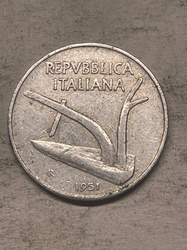
Spot Italy's 1979 FAO 100 Lire by its left-facing woman's profile, REPVBBLICA ITALIANA legend, and an allegorical figure beside 100 LIRE dated 1979.
Read the full 100 Lire encyclopedia entry →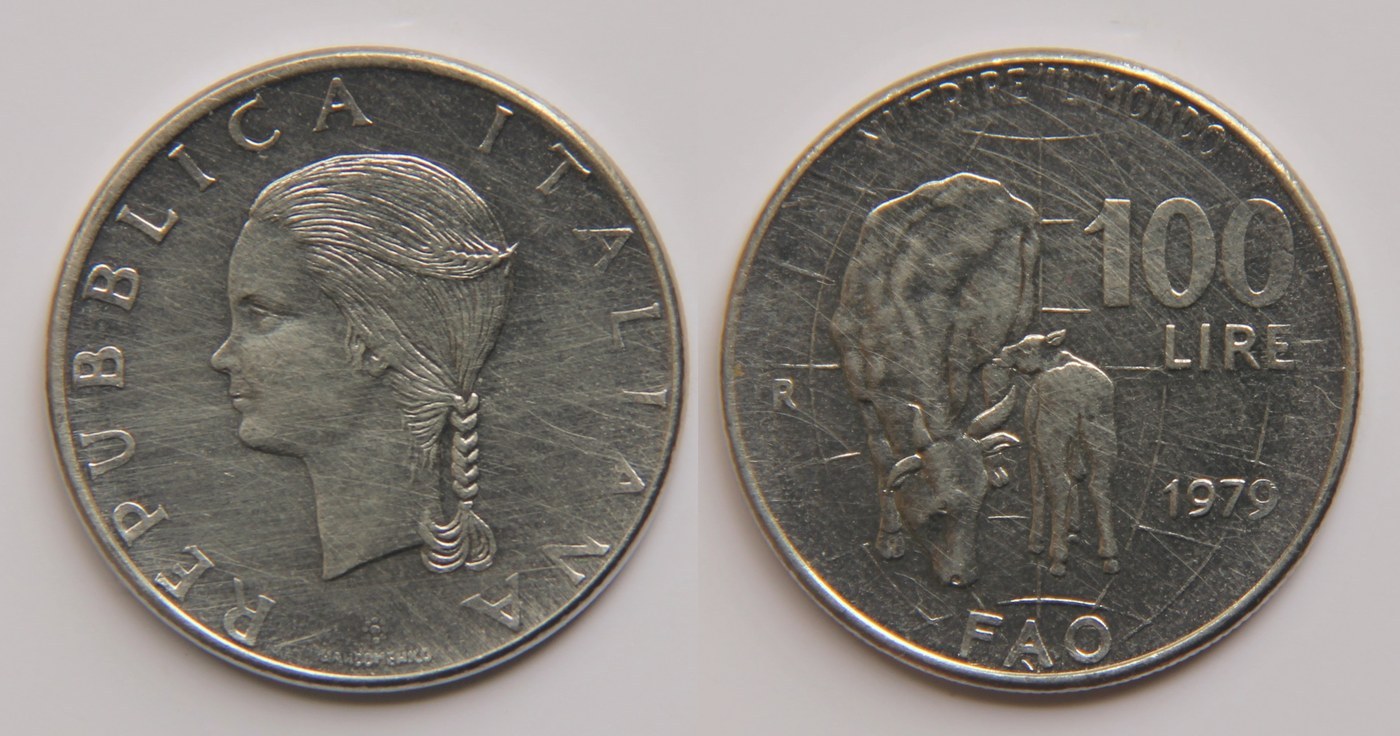
Start With the Reverse
The fastest way to identify this specific 100 Lire is the reverse. It pairs a large 100 LIRE denomination with an allegorical human figure, the year 1979, and an FAO reference. That FAO wording is the single most important diagnostic: it marks the coin as part of the Food and Agriculture Organization commemorative program rather than a standard circulation issue.
Read the Obverse Legend
The obverse shows a woman's head in profile facing left, wrapped by the legend REPVBBLICA ITALIANA. This confirms the issuing country as the Italian Republic. Note the exact spelling as struck; the country name plus the profile head together anchor the attribution before you even weigh or measure the piece.
Check Metal, Size, and Color
The coin is small, thin, and light, with a silvery, nickel-gray tone rather than a gold or copper hue. It is struck in a stainless steel-type alloy (Italy's "acmonital" family of metals), so it will look like an ordinary minor coin, not a precious-metal medal. A neodymium magnet test can help: steel-based alloys respond to a magnet, unlike copper-nickel or silver.
Separate It From Look-Alikes
Italy's regular circulating 100 Lire of this era shows the helmeted goddess Minerva and carries no FAO wording; do not confuse that common type with this commemorative. Also distinguish it from other FAO denominations Italy issued (such as larger-value FAO coins), which differ in size and stated value. The 100 LIRE figure plus the 1979 date narrows it precisely.
Authentication Cautions
Because this is a low-value modern coin, deceptive counterfeits are rare, but wear, cleaning, and corrosion are common. Harsh cleaning leaves hairline scratches and dulls the surface, reducing collector appeal. Confirm the date and FAO reference are crisp and match the expected design, and be wary of pieces with altered dates or unusual weight, which suggest damage or tampering rather than a genuine, original strike.
Frequently asked questions
How do I tell this from the regular Minerva 100 Lire?
The regular circulating 100 Lire shows the helmeted goddess Minerva and has no FAO wording. This commemorative shows an allegorical figure with an FAO reference and the 1979 date on the reverse.
Is it magnetic?
It is struck in a steel-based (acmonital-type) alloy, so it typically reacts to a magnet, unlike copper-nickel or silver coins. This is a quick check to confirm the metal.
What confirms it is the 1979 FAO issue specifically?
The combination on the reverse of the 100 LIRE value, the year 1979, and the FAO mark, together with the REPVBBLICA ITALIANA obverse legend, pins it to this exact type.
Does cleaning it increase the value?
No. Cleaning almost always lowers collector value by leaving hairlines and killing the original surface. Leave the coin as found.
100 Lire identified by the community
Recent 100 Lire coins identified with Coin Identifier.