
How to Identify the 100 Lei
A collector's guide to confirming a 1939 Romanian gold 100 Lei by its Carol II portrait, crowned arms, gold metal, and small dense form.
Read the full 100 Lei encyclopedia entry →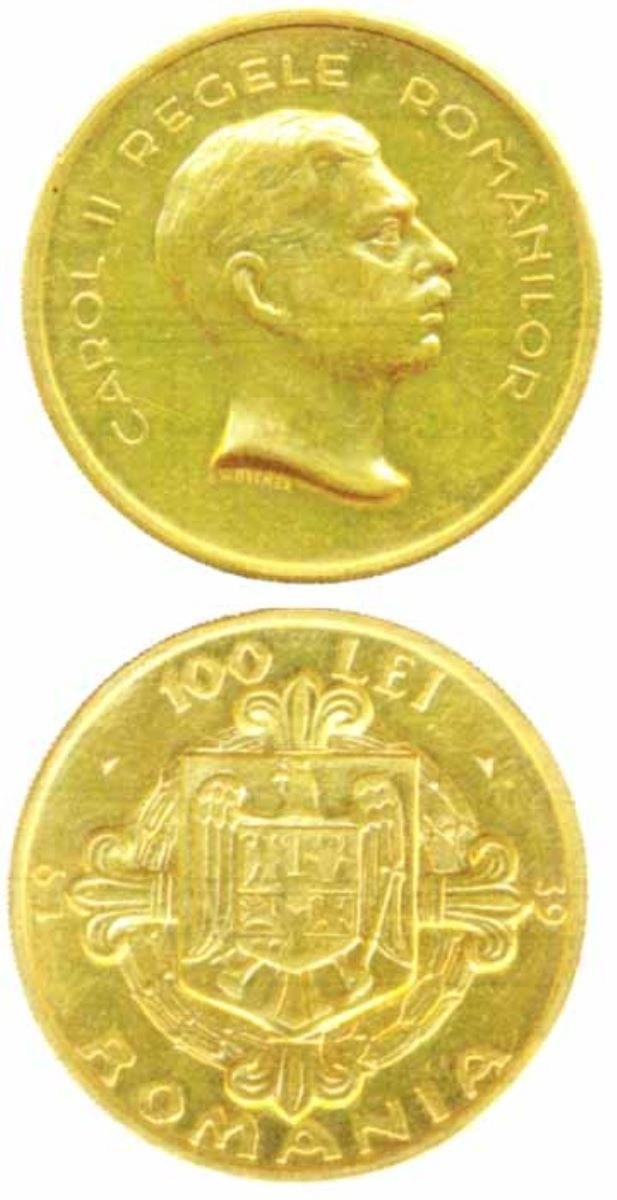
Confirm the Portrait and Legend
Start with the obverse. This type shows King Carol II facing right, surrounded by a Romanian legend that names him as king, usually CAROL II with a royal title such as REGELE ROMANILOR. The date should read 1939. A left-facing bust, a different monarch such as Carol I or Mihai I, or a republican design means you have a different coin.
Match the Reverse Arms and Value
The reverse must carry the crowned coat of arms of the Kingdom of Romania: a shield quartered with the arms of the historic provinces, topped by the royal crown and often set on a mantle. The value 100 LEI should be present. Confirming both the Carol II portrait and this specific crowned-arms reverse together is what pins down the type rather than a generic royal coin.
Check Metal, Size, and Weight
This is a gold coin, so it should be a warm yellow throughout, not silver-white or coppery, and it should feel heavy and dense for its small diameter. Gold does not tarnish or corrode, so genuine surfaces stay bright. A 100 Lei of the same date in silver or base metal is a different, far more common circulating coin, not this gold issue; metal color and heft are the fastest way to separate them.
Rule Out Look-Alikes and Restrikes
Romania issued 100 Lei in several metals during the 1930s and 1940s, so a same-denomination, same-portrait coin in nickel, cupro-nickel, or silver is the most common source of confusion. Also be aware that Romanian royal gold has been reproduced, and that gold-plated base-metal copies exist. Weight and diameter that do not match published specifications for the gold type, or a coin that is magnetic, are immediate red flags, since gold is not magnetic.
Authentication Cautions
Because the gold content alone makes forgery profitable, treat authentication as essential. Look for crisp, original detail in the hair, crown, and shield, correct edge finish, and specifications that match reference data for the gold 100 Lei. Avoid coins that have been polished, mounted, or bent, as these are often either damaged genuine pieces or disguised fakes. For a coin at this value level, independent certification by a recognized grading service is the safest confirmation.
Frequently asked questions
How do I tell the gold 100 Lei from the common circulating 100 Lei?
Check the metal and weight. The gold coin is warm yellow throughout and feels dense for its small size, while circulating 100 Lei coins of the era are silver-white or gray base metal and lighter. Same denomination and portrait can appear on both, so color and heft are decisive.
Is a magnet test useful?
Yes as a quick screen. Gold is not magnetic, so any attraction to a magnet means the piece is not solid gold and is likely a plated or base-metal fake. A magnet test cannot prove gold by itself, but it can rule out obvious counterfeits.
Which features confirm the exact type?
The combination of a right-facing Carol II portrait, a Romanian royal legend naming him king, the 1939 date, the crowned Kingdom of Romania coat of arms, the 100 LEI value, and solid gold metal together confirm this specific issue.
Should I get it authenticated before buying?
For a scarce gold royal coin, yes. Its precious-metal content makes counterfeiting worthwhile, so independent certification, verified weight and diameter, and original surfaces are important before paying a collector price.