
How to Identify the 100 Forint (Commemorative)
A collector's guide to confirming a Hungarian bi-metallic 100 Forint by its two-tone build, coat of arms, winged bird motif, and value legend.
Read the full 100 Forint (Commemorative) encyclopedia entry →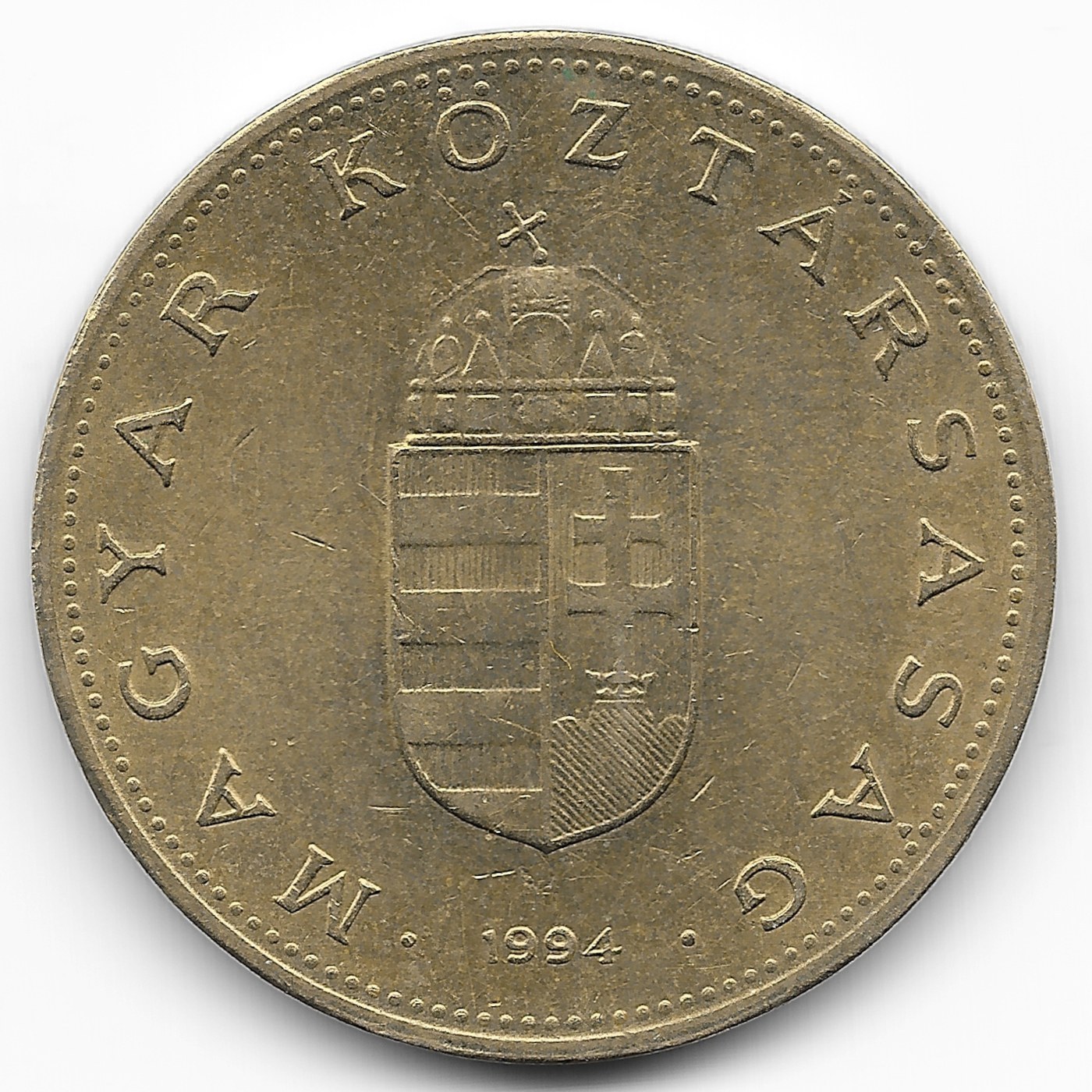
Confirm the Bi-Metallic Format and Value
Start with the physical construction. This coin is bi-metallic: a lighter, silver-toned outer ring bonded to a warmer, gold-toned center disc. Then read the denomination, which appears as the numeral 100 with the word FORINT. Together, the two-tone build and the 100 FORINT value place the coin as Hungary's higher circulating denomination rather than a smaller mono-metallic forint piece.
Read the Country Name and Date
Hungarian coins carry the country name as MAGYARORSZAG on more recent issues, or MAGYAR KOZTARSASAG on earlier ones. The date is your key to which commemorative you hold, since the 100 forint has been struck in more than one design. Note any extra legend or inscription running around the field, as commemorative issues usually name or reference the occasion being marked.
Match the Obverse and Reverse Devices
On this example the obverse shows the Hungarian coat of arms, the shield of Arpad stripes and the double cross on a mound beneath the Holy Crown, here set among additional patriotic symbols and a badge-like emblem. The reverse shows a bird of prey in flight with decorative detail, a Turul or eagle motif. If your coin instead shows a plain arms-and-value pairing with no bird, you likely have the standard circulation type rather than this commemorative design.
Rule Out Look-Alikes
Other bi-metallic coins can resemble this one at a glance, including 200 forint pieces and two-tone euro-area coins from neighboring countries. Always confirm the FORINT wording and the Hungarian arms rather than judging by the two-tone look alone. Also distinguish commemorative 100 forint issues from the ordinary circulating 100 forint, which shares the format but carries standard, non-commemorative designs.
Authentication and Condition Notes
This is an inexpensive base-metal coin, so it attracts little counterfeiting, and authentication is rarely a concern beyond confirming the design and date. Focus instead on grade: check the high points of the arms and the bird for wear, and look for original luster on uncirculated pieces. Avoid cleaned or polished coins, which lose value, and where a coin came in original mint packaging, keeping it intact helps preserve any collector premium.
Frequently asked questions
How do I tell a commemorative from the regular 100 forint?
Both share the bi-metallic format and value, so read the designs and date. A special reverse such as a bird in flight, plus any commemorative legend, signals a commemorative rather than the standard circulating type.
Could this be a coin from another country?
Other nations issue similar two-tone coins, so confirm the word FORINT and the Hungarian coat of arms with the Holy Crown. Those markers, not the two-tone look alone, identify it as Hungarian.
Do I need to authenticate this coin?
Rarely. It is a low-value base-metal issue that attracts little forgery. Concentrate on identifying the exact year and theme and on assessing condition rather than on authentication.