How to Identify the 10 Yen (Gold)
A collector's checklist for the Japanese gold 10 Yen: reading the Meiji date, telling New Type from Old Type, and confirming size, metal, and authenticity.
Read the full 10 Yen (Gold) encyclopedia entry →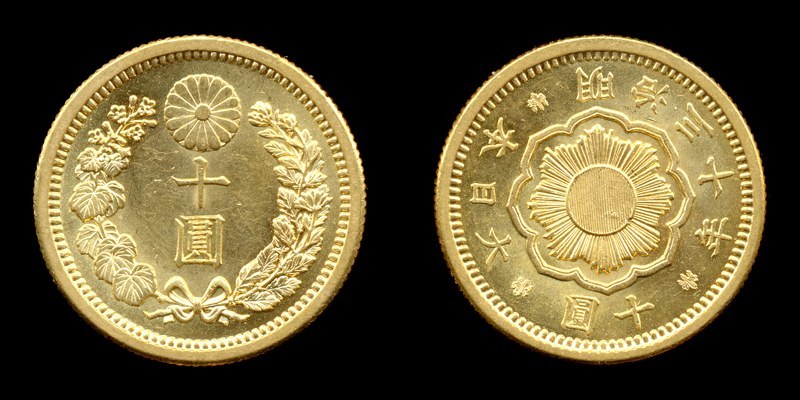
Start by separating the two 10 Yen gold types. The coin here is the New Type: a small gold piece of about 16-17 mm with a chrysanthemum crest over radiating rays on the obverse and an ornate wreath framing the value and imperial crests on the reverse. If instead you see a large coin with a coiled dragon, you are holding the earlier Old Type, a different and heavier issue. The presence or absence of the dragon is the fastest sorting test.
Read the date in era-year form. Look for the characters 明治 (Meiji), then the year numerals, then 年 ("year"). This example reads Meiji 30, or 1897, the first year of the New Type. Japanese legends run in a different orientation than Western text, so read the numerals carefully; 三十 (thirty) versus other combinations can shift the year by decades and change the coin's rarity.
Check metal, size, and weight together. The New Type 10 Yen is .900 fine gold, about 8.3 grams, and small in the hand. Genuine gold has a warm, non-magnetic feel and the expected heft for its diameter; a coin that is too light, too large, or attracted to a magnet is suspect. The value 10 Yen and the country name appear in kanji, not Western numerals, so confirm the denomination through the characters in the wreath.
Be alert to look-alikes and countermarks. Japanese gold coins were minted at the Osaka mint without Western-style mint letters, so do not expect a mint mark. Related denominations (5 Yen and 20 Yen gold) share the same design family but differ in size and value characters, so verify the denomination and diameter rather than the general look.
Apply firm authentication caution. Meiji gold is among the more frequently counterfeited world series, including cast copies and altered dates. Weigh and measure the coin, examine the strike sharpness of the rays and wreath, and compare the date characters against reference images. For any coin carrying a real premium, favor examples certified by a major grading service, which screens for fakes and confirms the date and grade.
Frequently asked questions
How do I tell the New Type from the Old Type 10 Yen?
Look for the dragon. The Old Type is a large gold coin with a coiled dragon; the New Type shown here is smaller and uses a chrysanthemum-and-sunburst obverse with a wreath reverse and no dragon.
How do I read the date?
Find the characters 明治 (Meiji), the year numerals, and 年 ("year"). Add the Meiji year to 1867 to get the Western year; Meiji 30 is 1897. Read the numerals carefully, as a misread character can change the year significantly.
Does it have a mint mark?
No Western-style mint letter is present. Japanese circulating gold of this era was struck at the Imperial Mint in Osaka and identified by design and date rather than a mint mark, so rely on the type, denomination characters, and date.
How can I check it is genuine?
Confirm the diameter near 16-17 mm and weight near 8.3 grams, verify it is non-magnetic, and inspect the sharpness of the rays and wreath. Because Meiji gold is widely faked, have valuable examples authenticated by a major grading service.
10 Yen (Gold) identified by the community
Recent 10 Yen (Gold) coins identified with Coin Identifier.