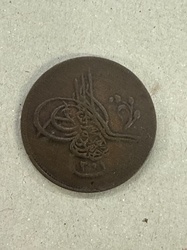
How to Identify the 10 Para
A collector's guide to confirming an Ottoman silver 10 Para of AH 1280 by its calligraphic tughra, Arabic-script legends, Hijri date, and small silver format.
Read the full 10 Para encyclopedia entry →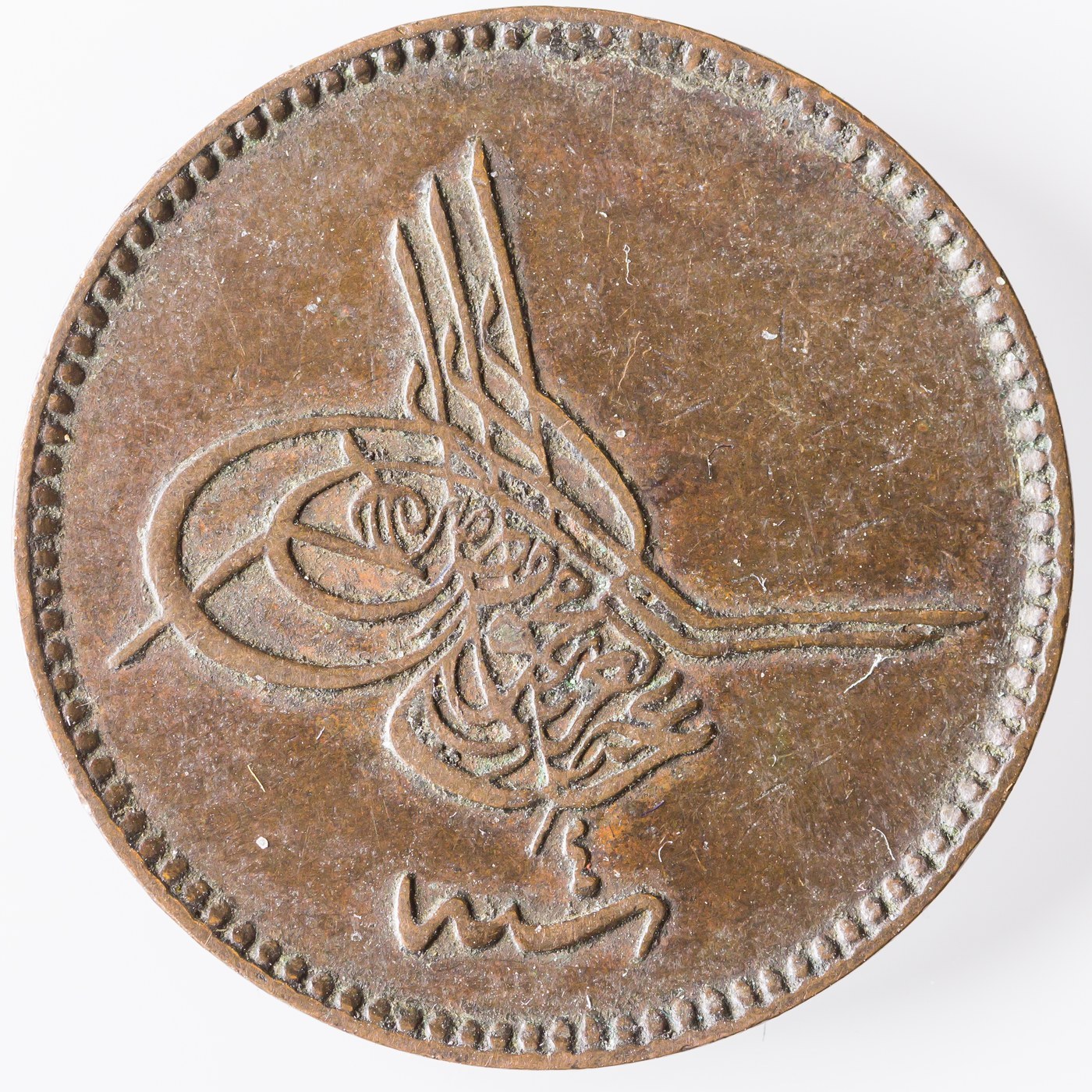
Find the Tughra
Start with the tughra, the sultan's calligraphic monogram, which dominates one face of the coin. It appears as a dense cluster of tall vertical strokes with sweeping loops to the left, usually surrounded by ornamental flourishes. This device is unique to Ottoman coinage and immediately separates the coin from European or other Islamic issues. If there is a human portrait or a coat of arms instead, it is not an Ottoman para of this type.
Read the Reverse Inscription and Date
Turn the coin over to find an ornamental Arabic-script inscription arranged in lines or around the field. It states the denomination and includes the Hijri date, which on this coin reads 1280 AH (about 1863-1864 CE). Ottoman legends read right to left and often also name the mint and include a regnal numeral. Confirming the AH 1280 date and the Arabic numerals is central to attributing the coin, since there is no Latin lettering to rely on.
Check Size, Metal, and Weight
This is a small silver minor coin, only a couple of centimeters across and light in the hand, consistent with a quarter-kurus para denomination. The tone should be that of low-grade silver, pale to grey rather than the bright white of high-fineness pieces. A large, heavy, or obviously base-metal coin of similar design is more likely a different denomination or a later imitation, so match the small format to the design.
Rule Out Look-Alikes
The Ottoman mints struck a whole family of para and kurus coins in the same tughra-and-inscription style, including 5, 10, 20, and 40 para and larger kurus pieces, which differ in size and in the value stated in the inscription. Read the Arabic denomination carefully rather than assuming from the style alone. Coins of neighboring Islamic states and of other Ottoman reigns can look broadly similar, so match the tughra, the value, and the AH 1280 date together, and compare the tughra form to references for the correct sultan.
Authentication Cautions
Small Ottoman silver is often found cleaned, corroded, bent, or holed, all of which reduce originality and value, so inspect the surfaces for harsh brightness, tooling, or mount marks. Because the script and date are the key diagnostics, be wary of coins with weak, altered, or recut legends. For anything beyond a common circulated example, compare the tughra and inscription against trusted catalog images and consider third-party authentication for higher-grade or unusual pieces.
Frequently asked questions
How do I tell a 10 Para from other Ottoman denominations?
They share the tughra-and-inscription style, so read the Arabic value on the reverse. The 5, 10, 20, and 40 para and the larger kurus coins differ in the stated denomination and in size, with the 10 para being a small piece.
How do I read the date?
The date is given in Arabic numerals as a Hijri (AH) year, here 1280, corresponding to roughly 1863-1864 CE. Ottoman legends run right to left, and the coin uses Arabic script rather than Latin lettering.
What size and metal should it be?
Expect a small, light silver coin only a couple of centimeters across, with the pale or grey tone of low-grade silver. A large, heavy, or clearly base-metal piece of the same design points to a different coin.
Is it worth authenticating?
For common circulated examples, usually not. But because these coins are often cleaned, corroded, or altered, verify the tughra, denomination, and AH 1280 date against references, and consider certification for scarce or high-grade pieces.
10 Para identified by the community
Recent 10 Para coins identified with Coin Identifier.