
How to Identify the 10 Lepta (Phoenix)
A collector's guide to confirming the 1828 Greek copper 10 lepta by its Phoenix-in-flames obverse, cross, oak-wreath reverse, date, and hand-struck copper fabric.
Read the full 10 Lepta (Phoenix) encyclopedia entry →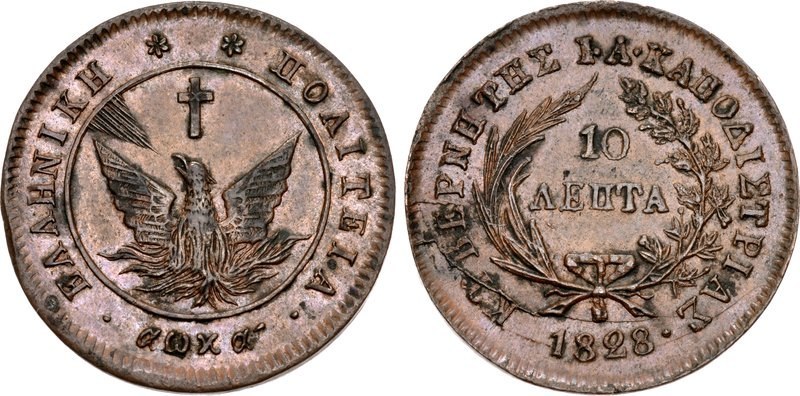
Start With the Phoenix Obverse
The single most decisive feature is the obverse Phoenix: a standing long-necked bird surrounded by flames, with rays or a glory around it and a small cross directly above. This resurrection emblem belongs specifically to the Kapodistrias-era Hellenic State. If your coin shows a crowned coat of arms, a royal portrait, or a seated figure instead, it is a later Greek drachma-era coin, not a Phoenix issue.
Confirm the Reverse and Date
Turn the coin over and look for the denomination written in Greek as 10 ΛΕΠΤΑ, framed by a wreath of oak leaves, with the date 1828 present. Read the Greek numerals and letters carefully, because the Phoenix series was issued in several copper values (such as 1, 5, 10, and 20 lepta) that share the same obverse but differ in stated denomination and size. The 10 ΛΕΠΤΑ legend and the wreath together confirm this specific value.
Check Metal, Size, and Strike
This is a copper coin, so expect a reddish-brown to dark chocolate patina, not the bright white of silver. It was struck by hand on crude early equipment, so irregular or slightly off-center strikes, uneven flans, planchet flaws, and variation in exact diameter and weight are all normal and even expected. A suspiciously perfect, machine-even coin with sharp uniform rims deserves a closer look.
Rule Out Look-Alikes and Restrikes
Distinguish the genuine 1828 circulation piece from the rest of the Phoenix family by matching denomination and size, and be aware that the type has attracted both contemporary forgeries and later copies. Compare the style of the Phoenix, the lettering, and the wreath against trusted reference images. Casts often show a grainy surface, soft mushy detail, a seam on the edge, or the wrong weight; struck fakes may have unnaturally crisp, tooled-looking devices.
Authentication Cautions
Because this is a historically important and collectible type, authentication carries real weight here. Weigh and measure the coin and compare to published specifications, examine the edge and surfaces under magnification for casting seams or tooling, and be wary of coins that have been cleaned or artificially patinated to hide problems. For any higher-grade or higher-value example, third-party grading or expert verification is worthwhile before paying a premium.
Frequently asked questions
How do I tell a Phoenix coin from a later Greek coin?
Look for the Phoenix rising from flames with a cross above on the obverse. Later Greek coins of the monarchy show a crowned coat of arms or a royal portrait instead, so the Phoenix emblem is the quick separator.
How do I know it is the 10 lepta and not another value?
Read the reverse. The denomination is spelled in Greek as 10 ΛΕΠΤΑ within an oak wreath. Other Phoenix coppers share the same Phoenix obverse but state different values and come in different sizes, so match the legend and diameter.
Are crude, uneven strikes a sign of a fake?
Not by themselves. These coins were struck on primitive equipment, so off-center strikes, irregular flans, and planchet flaws are normal. Genuine examples often look rough; suspiciously perfect, uniform pieces warrant more scrutiny.
Should I have one authenticated?
For worn, low-value pieces it is optional, but because the type is desirable and has been counterfeited, any clean or higher-value example is worth verifying through weight, measurement, edge inspection, or third-party grading before paying a premium.