
How to Identify the 1 Yen (Silver)
A collector's checklist for the Japanese silver yen: reading the dragon and crest designs, the Meiji date, size and fineness, and spotting fakes.
Read the full 1 Yen (Silver) encyclopedia entry →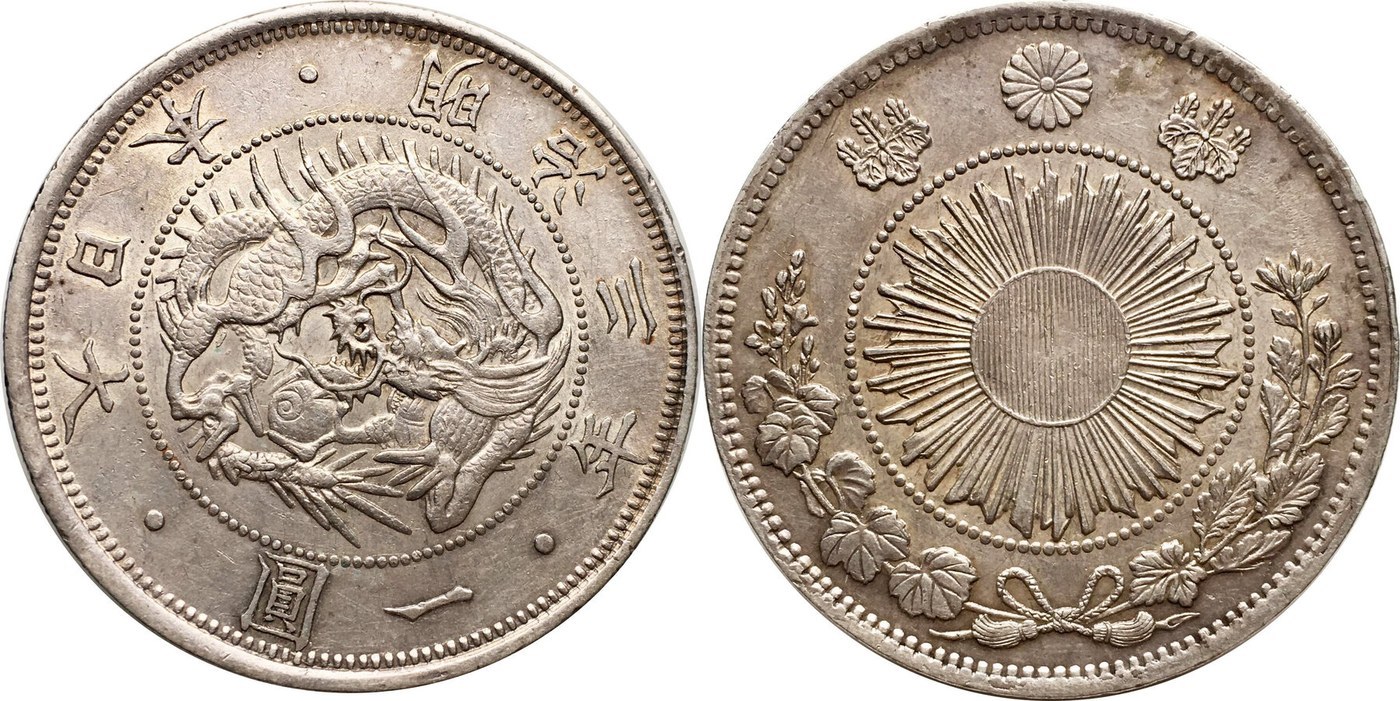
Start with the two main designs, which are the quickest way to recognize the type. One face carries a coiled dragon among clouds with a radiating, sun-like background and a beaded rim; the other shows an ornate wreath enclosing the imperial chrysanthemum crest with paulownia and floral elements. Together these identify the piece as a modern Japanese silver yen rather than an earlier hand-struck coin.
Read the date and legends carefully. The year appears as a Japanese era phrase in kanji, here Meiji 3 (1870), not as Western numerals, so learning to read the era and year characters is essential. The dragon side also carries the denomination and silver fineness, combining Japanese characters with Western-style value and fineness markings; these confirm both the one-yen value and the silver standard.
Check size and metal. The silver yen is a crown-sized coin, noticeably larger and heavier than the smaller yen fractions, and it should feel and ring like a substantial silver piece. Weighing and measuring the coin and comparing against published specifications for the type is a strong first authenticity test, since many fakes are underweight or dimensionally off.
Beware look-alikes and varieties. The silver yen was struck over many years with multiple sub-types, and some genuine pieces bear a small countermark (a gin character) applied for regional use. Distinguish the Meiji 3 issue from later dates by reading the era characters precisely, and be alert to altered dates where a common year is reworked to imitate a scarcer one.
Apply careful authentication. This series is heavily counterfeited, so watch for soft or mushy detail, wrong weight or diameter, casting seams, and unnatural surfaces or toning. Because early dates carry premiums that reward fakery, professional grading and comparison against documented examples give the most reliable confirmation before you accept a date, variety, or value.
Frequently asked questions
How do I read the date on this coin?
The date is a Japanese era legend in kanji, not Western numerals. This example reads Meiji 3, which corresponds to 1870. Learning the era name and year characters lets you place any coin in the series accurately.
Which side is the dragon and which is the crest?
One face shows a coiled dragon in clouds with a radiating field and beaded border; the opposite face shows a wreath enclosing the imperial chrysanthemum crest with paulownia and floral elements. Both together confirm the silver yen type.
How can I tell a genuine silver yen from a fake?
Check weight and diameter against published specifications, and look for crisp engraved detail, correct silver color and ring, and no casting seams. Soft detail, wrong weight, or artificial surfaces suggest a counterfeit; professional authentication is advised for early dates.
What is the small stamped character some coins have?
Some genuine silver yen carry a countermark, a small gin (silver) character applied for regional circulation. It is part of the coin's history and should be distinguished from damage or an alteration when identifying the piece.