
How to Identify the 1 Skilling
A collector's guide to confirming the Danish copper 1 skilling by its crowned obverse, inscribed value-and-date reverse, 1771 date, size, and copper fabric.
Read the full 1 Skilling encyclopedia entry →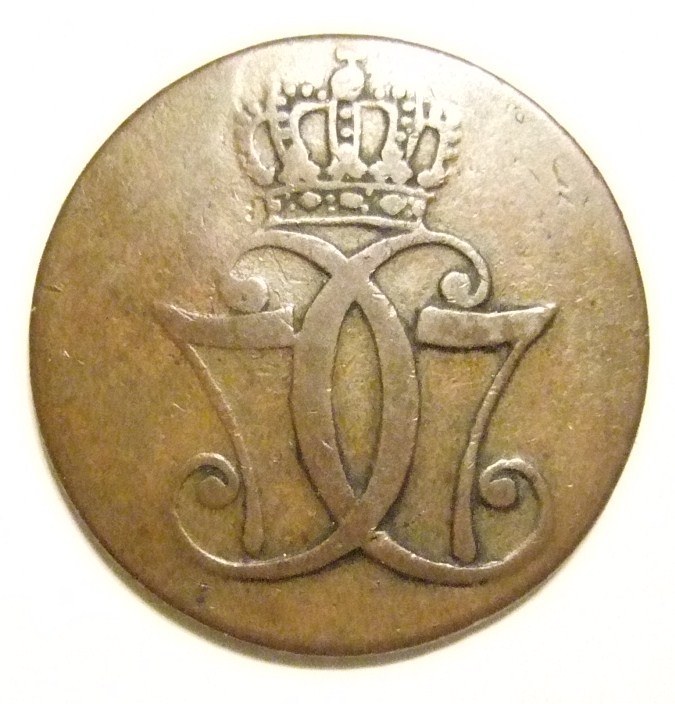
Start With the Crown and the Date
Begin with the two strongest cues. A genuine coin of this type shows a royal crown above ornamental elements on one face and an inscription carrying the value and the year 1771 on the other. The crown marks it as a royal Danish issue, and the 1771 date fixes it to the reign of Christian VII. Read the date carefully, since crown-and-inscription skillings were struck across several years and reigns.
Confirm Both Sides Match the Type
One face should be dominated by the crown over ornament; the opposite face should present a decorative field with lettering stating the denomination and date rather than a portrait or a coat of arms. If your coin shows a royal bust, a full heraldic shield, or a monogram instead of this crown-and-inscription layout, it is a different Danish issue or a different denomination.
Check Size, Metal, and Wear
This is a small, light copper coin, warm brown or coppery in tone rather than bright silver-white. Expect the thin, modest diameter of a single-skilling piece and, on most survivors, softened crown detail and partly flat inscriptions from long circulation. A heavy, silver-toned, or much larger coin of similar motifs is a higher skilling value or a different denomination, so weigh size and metal together with the date.
Rule Out Look-Alikes
Denmark struck a family of skilling denominations, including larger silver skillings and higher copper values, that share royal symbolism but differ in size and stated value; always read the denomination and gauge the diameter. Also distinguish this from the copper skillings of neighboring Sweden and of Norway, which was joined to Denmark in this era, since those can look broadly similar but carry different legends and national marks.
Authentication Cautions
As a common, low-value copper coin, the 1 skilling is not a frequent target for counterfeiting, so the practical focus is correct attribution and honest grading. Confirm the exact date and denomination rather than assuming, since many similar years and values exist, and judge condition by the sharpness of the crown and the legibility of the inscription. Avoid cleaning, which harms even inexpensive copper and leaves telltale bright, hairlined surfaces, and match all cues, crown, inscription, date, denomination, size, and copper fabric, before finalizing the identification.
Frequently asked questions
How do I tell this from a larger Danish skilling?
Check size and metal. This is a small, light copper coin; larger skilling values and silver skillings are bigger, heavier, or bright silver-white. Reading the stated denomination confirms which value you hold.
What should the two sides show?
One side should carry a royal crown above ornamental elements, and the other a decorative field with an inscription giving the value and the 1771 date. A portrait or full heraldic shield instead points to a different issue.
Could this be a Swedish or Norwegian coin?
It can resemble neighboring copper skillings, so read the legend and national marks. Norway was joined to Denmark in this period, and both realms struck similar minor coppers, so the inscription is the deciding cue.
Is it worth authenticating?
Usually not. As a common, low-value copper coin it is rarely faked, so effort is better spent confirming the exact date, denomination, and grade than on formal authentication.