
How to Identify the 1 Penni
A quick visual guide to spotting Finland's 1 penni by its numeral-and-SUOMI obverse, geometric-line reverse, tiny size, and plain edge.
Read the full 1 Penni encyclopedia entry →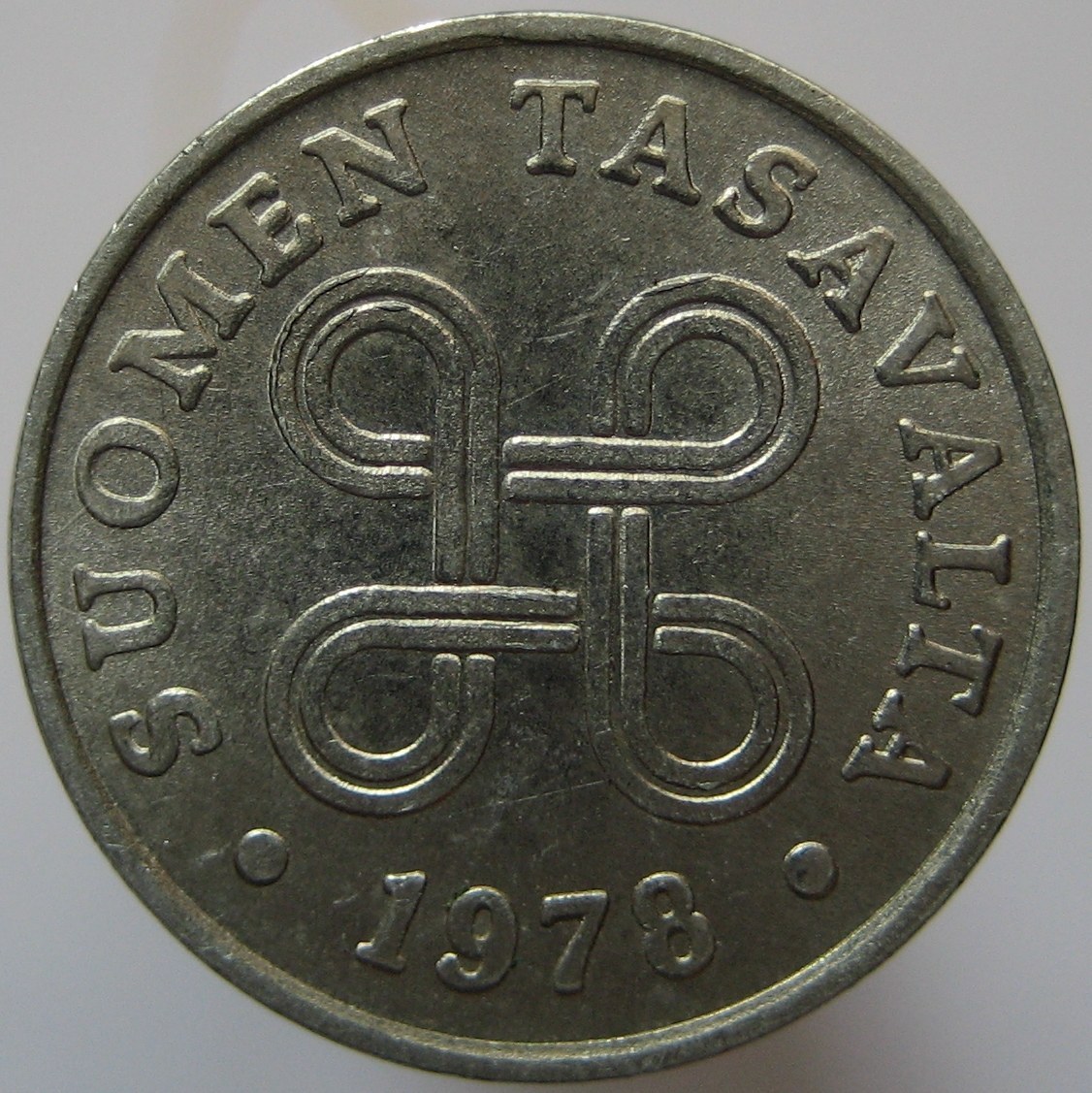
What It Is
The 1 penni was the smallest coin of Finland's markka-era decimal system (100 penniä = 1 markka), struck by the Mint of Finland in Helsinki. The coin shown here is dated 1978 and belongs to the later, aluminium-type issues of this denomination.
Obverse (Front)
The front is dominated by a large numeral "1" paired with a small heraldic shield motif. Around it you will find the legend SUOMI and a four-digit year. This clean, modern layout, with the value spelled out as a single big digit, is the fastest way to recognize the coin.
Reverse (Back)
Instead of a crest or figure, the reverse carries a stylized geometric pattern of lines. This abstract design is unusual for a circulation coin and is a reliable identifier for the Finnish penni minors of this era.
Size, Metal, and Edge
The 1 penni is small and very light, about the size of a fingernail, with a plain (smooth) edge rather than a reeded one. Its pale, matte tone reflects an inexpensive base-metal composition generally catalogued as aluminium or aluminium-bronze. If your coin has a reeded edge or feels heavy for its size, reconsider the attribution.
Mint Marks and Look-Alikes
Check for a tiny mint master's initial beside the design, which collectors use to pin down the exact issue. Be careful not to confuse the 1 penni with the similar-looking 5 penni (read the numeral) or with other small European minors; the word SUOMI settles the country. Because these coins have negligible value, deliberate counterfeits are essentially nonexistent, so authentication is really a matter of correctly reading the numeral, legend, and year rather than testing for fakes.
Frequently asked questions
How do I tell a 1 penni from a 5 penni?
Read the large numeral on the front: a "1" is the penni, while a "5" is the five-penni coin. Both share the SUOMI legend and similar styling.
Which side shows the country and date?
The obverse carries the numeral, the word SUOMI, and the year; the reverse holds the geometric line pattern with no country name.
Does the edge help identify it?
Yes. The 1 penni has a plain, smooth edge. A reeded (ridged) edge suggests you are looking at a different coin.
Do I need to worry about counterfeits?
No. With such low value there is no incentive to fake it, so identification is about reading the design correctly rather than authenticating metal.