
How to Identify the 1 Koruna
A collector's guide to confirming the wartime Slovak 1 Koruna by its double-cross shield, 1 Ks value with wheat ears, and light aluminum fabric.
Read the full 1 Koruna encyclopedia entry →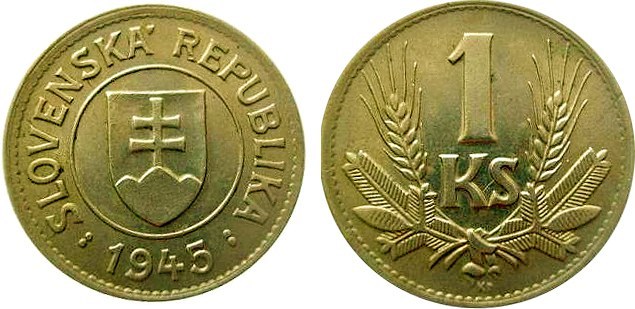
Read the Obverse Emblem and Date
Start with the coat of arms. A genuine coin of this type shows the Slovak shield bearing a double cross set on a base of hills, usually with the country name and a date such as 1945. The double-cross-on-hills emblem is the decisive marker that identifies the piece as Slovak rather than from a neighboring country.
Confirm the Reverse Value
The reverse must show the value as the large numeral 1 above the abbreviation Ks, with an ear of wheat curving up on each side. Ks stands for koruna, so the coin reads as one koruna. If the reverse shows a different abbreviation, a different numeral, or lacks the flanking wheat ears, you are looking at another coin or denomination.
Test the Metal and Feel
This is an aluminum coin, so it should feel strikingly light and thin for its diameter and be non-magnetic. Aluminum has a dull silvery-gray tone that often develops dark spots or a chalky film with age. A coin of this design that feels heavy, has a coppery or golden color, or sticks to a magnet does not match the genuine aluminum fabric.
Rule Out Look-Alikes and Sort the Dates
Other small Central European coins of the 1930s and 1940s use similar simple heraldic-and-value layouts, and Czechoslovak coinage also uses the koruna; always confirm both the Slovak double-cross shield and the 1 Ks value together rather than relying on one side alone. Within the wartime Slovak series the koruna was struck in more than one year, so check the date to place your specific coin, noting that 1945 is a late issue.
Authentication Cautions
This is a low-value coin, so it is rarely counterfeited, but it is easily damaged. Watch for bends, edge dents, corrosion, and pitting typical of soft aluminum, and be wary of harshly cleaned surfaces that leave hairlines or an unnatural shine. Grade honestly on eye appeal and originality, since surface quality, not rarity, drives most of the value in this type.
Frequently asked questions
How do I confirm the coin is Slovak?
Look for the coat of arms on the obverse: a shield with a double cross standing on a base of hills. That double-cross emblem is the historic Slovak national symbol and identifies the coin's origin.
How can I tell it is aluminum and not silver?
Aluminum is extremely light and thin for its size and non-magnetic, with a dull gray tone that spots with age. Silver coins feel much heavier and denser. The lightness confirms an aluminum, non-precious piece.
What distinguishes it from similar Czechoslovak koruna coins?
Check both sides together. This coin shows the Slovak double-cross shield and the value 1 Ks with wheat ears. Czechoslovak koruna coins use different national emblems and designs even though they share the koruna unit.
Does it need professional authentication?
Usually not. It is a common, low-value coin that is seldom faked. Focus instead on assessing condition, checking for bends, corrosion, and cleaning, since surface quality determines most of its worth.